



Out-of-hospital cardiac arrest remains one of the most serious medical emergencies. With sadly, only around one in 12 people surviving despite the emergency service’s best efforts. Thanks to the quick actions of community first responders, NWAS ambulance crews, the North West Air Ambulance Charity and members of the public, around 60 percent of patients in the North West have their hearts successfully restarted; still leaving 40 percent of patients who are unable to be saved.
Together with partners, the clinical team at the North West Air Ambulance Charity are exploring a question that has never been tested before: for those patients that cannot be saved, could organ donation be possible following an out-of hospital cardiac arrest?
This question would be investigated through the conducting of a formal research study which would be the first of its kind in the UK. Planning for the study is well underway within the North West. If it proves successful, it could change how organ donation is approached in these circumstances. It could offer new hope to thousands of people waiting for a transplant, whilst bringing comfort to bereaved families knowing they were able to honour their loved one’s last wishes.
Research of this nature is complex and involves difficult ethical considerations, particularly around end-of-life care, consent, and how families are supported during some of the most challenging moments they will ever face. Getting this right is essential.
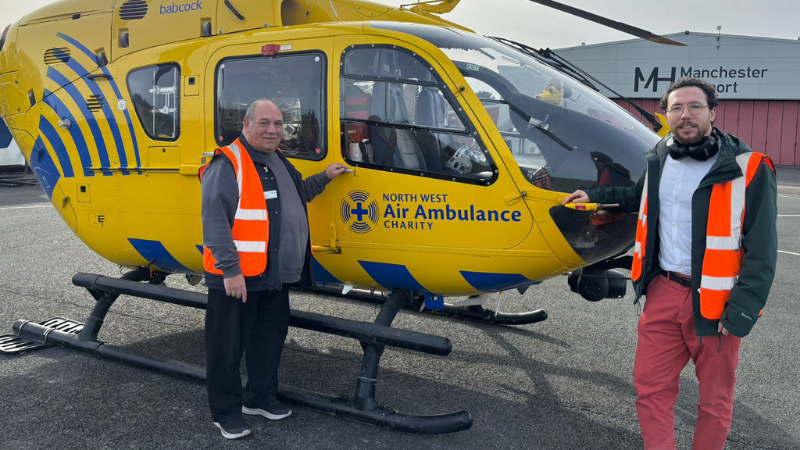
That’s where our patient and public panel volunteers, like Alfredo (right) and Alex (left), are playing such an important role in the development of this study. By sharing their lived experiences and perspectives, they’re helping researchers think through these sensitive issues carefully and openly. Their involvement is key to ensuring that the research proposal is shaped not only by clinical expertise but also by public values and expectations.
Through honest discussion and thoughtful challenge, patient and public panel members are helping to strengthen the research development, its proposal, and guide its approach to increase its chances of successful application and ultimately long-term impact.
Dr Ian Tyrrell-Marsh, from North West Air Ambulance Charity, says, “As part of our continuous drive to provide the best care possible to our patients, we’re always looking to innovate and be at the forefront of care delivery.
“It is vitally important, when we conceive and design projects like this, to include the public in the process to ensure our work addresses priority areas and is as effective as possible. NWAS’ patient and public panel is a fantastic resource for us to engage with for this.
“This latest collaboration shows what’s possible when clinicians, researchers and the public work together. Should this proposal come to fruition, it could create new opportunities for organ donation while ensuring decisions are made with care, dignity and compassion, keeping patients and their families firmly at the centre of care. These volunteers have played a fundamental role in shaping the design and application.
“Research isn’t a fast process; as formal research, this latest project has several stages of national application to process through before it can commence. If this process is successful, it is expected to last approximately three years from the stages of setting up to the publication of its results.”
*Data from NHS Blood and Transplant