



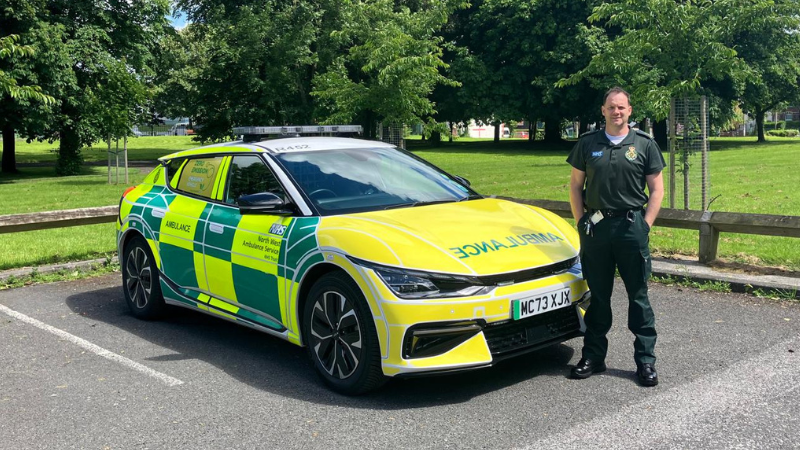
Although Mark was told he may have dyslexia while at school, he never received a formal diagnosis. Growing up in the 1990s, there was little follow-up support available, and he struggled throughout his education.
“I didn’t do very well in my GCSEs and ended up working in a factory,” Mark recalls. “After six months, I realised I couldn’t see myself doing that for the rest of my life, so I walked into the army careers office and signed up that morning.”
Mark spent ten years in the army before joining the ambulance service in 2006. Throughout his career, he developed his own ways of managing challenges with reading, writing and retaining information, often without understanding exactly why he found certain tasks more difficult than others.
It wasn’t until 2016, when he returned to university to complete his paramedic diploma, that he sought a formal assessment.
“I knew I was going to struggle with the academic side, so I decided to get assessed. That’s when I received an official diagnosis of dyslexia and, unexpectedly, dyspraxia as well.”
Following his diagnosis, Mark was able to access a range of support through university, including specialist software, assistive technology and study techniques tailored to his needs.
After getting support and workplace adjustments, he says the difference was significant: “They gave me a laptop and showed me how to use speech-to-text software, mind mapping and other tools to structure my work. The support was incredible and made a huge difference.”
Many of those techniques continue to help Mark in his role today. He regularly uses voice-to-text technology, digital templates and AI-powered tools to support documentation and written communication.
“Technology has been a game changer. I often dictate my notes and reports, and I use AI tools to help check grammar and structure. I wish some of these tools had been around when I was at school.”
Despite the progress made in awareness and support, Mark believes there is still work to be done.
For many years, he chose not to disclose his dyslexia because he worried about how others might perceive him.
“I spent a lot of my career hiding it because I didn’t feel supported. There was always that fear that people would think I wasn’t capable.”
One experience that stands out involved a spelling error in an email that led to public criticism from a colleague.
“It was embarrassing and knocked my confidence. Experiences like that show why awareness is so important. Sometimes people don’t realise the impact their words can have.”
Mark says that understanding from colleagues and managers can make a significant difference.
“If people are aware of learning disabilities and how they affect individuals differently, it creates a much more supportive environment.”
While dyslexia and dyspraxia can present challenges, Mark believes they have also shaped many of his strengths.
“I’m very practical and hands-on. I like solving problems and finding workarounds. If there’s something to fix or improve, I’d rather be doing that than sitting behind a desk.”
His ability to adapt, find creative solutions and develop practical systems has helped him throughout his career and continues to support him as he completes a degree top-up programme alongside his demanding role.
Mark joined the Disability Network around three years ago and says it has provided valuable advice, support and connections.
“If I’ve got a question or one of my team needs support, I know there are people in the network who can help. It’s reassuring to know that support is there.”
He now actively encourages others to access the network and seek help if they need it.
For anyone starting their career with a learning disability or considering whether to seek support, Mark has one clear message:
“Don’t be afraid to let people know. The support is there. Looking back, I spent years fearing what people might think of me, but that fear was far bigger than the reality. Ask for help when you need it. Don’t fear fear.”