


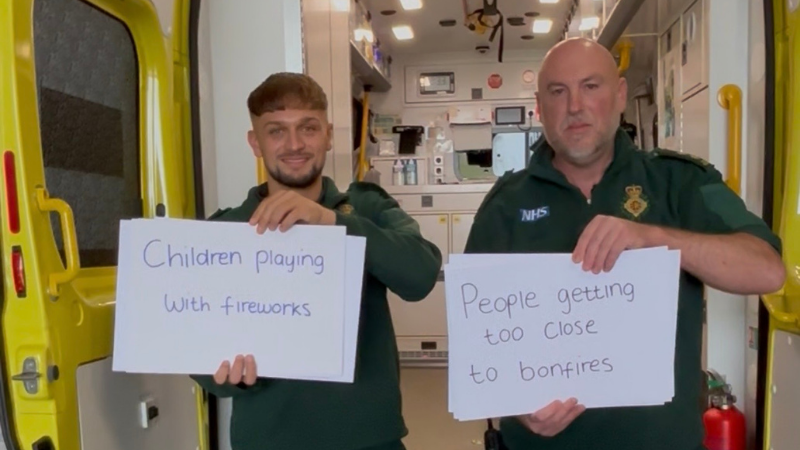
From burns caused by sparklers to injuries involving fireworks, our teams see first-hand what can happen when things go wrong.
This year, we asked Student Paramedic Caleb and Senior Paramedic Mike a simple question: what would you rather not see again this Bonfire Night? They said:
- Fireworks being held
- Fireworks being thrown
- People getting too close to bonfires
- Children playing with fireworks
- Alcohol and fireworks
- Someone going back to a firework
- Fireworks in crowded areas
Because a few seconds of silliness can turn into a 999 call.
Hopefully your Bonfire Night will pass without a trip to see us, but if someone does suffer a burn, knowing what to do can make a real difference:
- Stop the burning process as quickly as possible, but don’t put yourself at risk. This might mean moving the person away from the source, dousing flames with water or smothering them with a blanket.
- Remove clothing or jewellery near the burn, but don’t remove anything stuck to the skin, as this could cause further damage.
- Cool the burn under cool or lukewarm running water for 20 minutes. Never use ice, iced water, creams or greasy substances such as butter.
- Keep the person warm with a blanket or layers of clothing, making sure you avoid the injured area.
- Cover the burn with cling film, laying it over the burn rather than wrapping it around a limb. For a burn on the hand, you can use a clean, clear plastic bag.
- Raise the affected area if possible to help reduce swelling.
If the burn or scald is severe, call 999. Always use 111 online for urgent medical advice and call 111 for under-fives.