



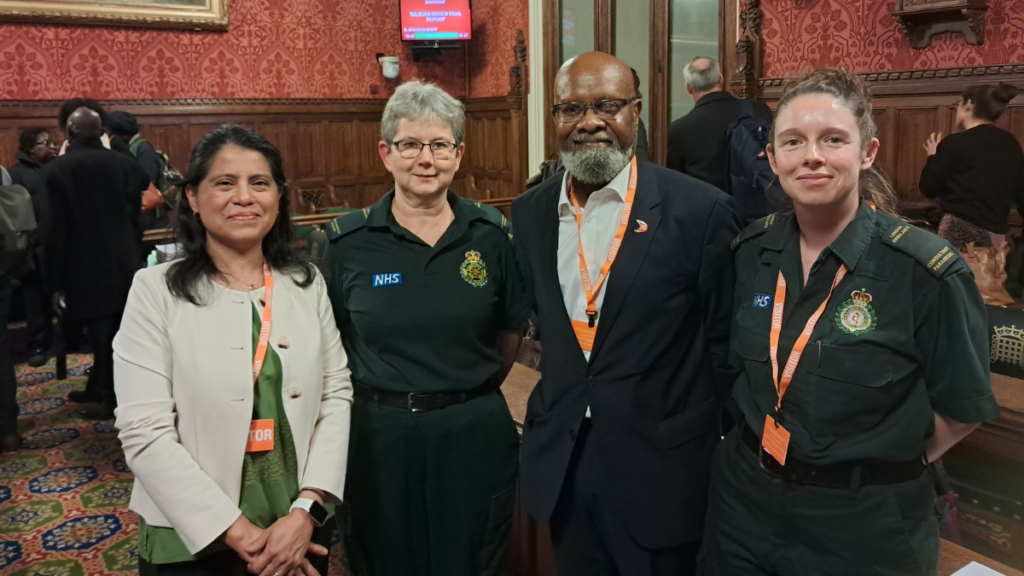
On 18 November, Public Health Manager Claudia Soiland-Reyes joined representatives from London Ambulance Service to discuss improvements in ambulance care and the challenges that remain.
Sickle cell disease and thalassaemia are inherited blood conditions that affect haemoglobin, the protein in red blood cells that carries oxygen around the body. Both can lead to serious health complications, including damage to vital organs, while sickle cell disease can also cause episodes of excruciating pain known as pain crises.
The inquiry was held by the All-Party Parliamentary Group on Sickle Cell and Thalassaemia to assess progress since its 2021 No One’s Listening report, which highlighted inequalities in healthcare, gaps in staff knowledge and serious failings in patient care.
NWAS has been working to improve the clinical care and experience of patients with these conditions through several initiatives, including:
- Improved access to specialist care: Working with the Sickle Cell Unit – Manchester Royal Infirmary to introduce a pathway in Greater Manchester that allows eligible patients to be taken directly to a specialist unit, alongside arrangements to notify specialist services when patients are taken to emergency departments elsewhere in the North West.
- Enhanced clinical training: Developing dedicated training to improve understanding of the conditions and support appropriate care.
- Awareness and education: Delivering awareness campaigns in collaboration with London Ambulance Service and the Sickle Cell Society, sharing best practice with patients, healthcare professionals and other ambulance services.
The inquiry provided an opportunity for ambulance services to share their progress and contribute to discussions about further improvements needed across the NHS.
The group’s chair thanked ambulance services for the compassion shown to patients and the improvements achieved, and recognised their efforts to raise awareness.