



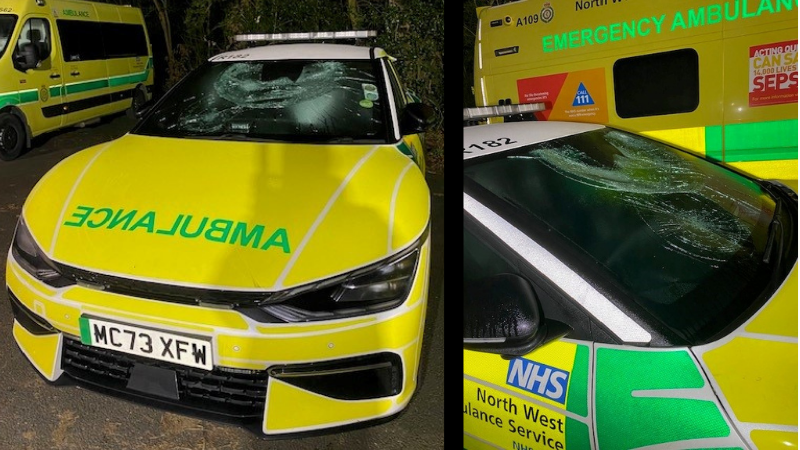
The incident involved a male running onto and over the top of the vehicle. He damaged the bonnet, smashed the windscreen, and damaged the rear tailgate before becoming aggressive towards nearby bystanders.
While incidents of this severity are uncommon, our crews and vehicles continue to experience antisocial behaviour, including objects being thrown at vehicles and deliberate acts of damage.
The damage meant the vehicle had to be taken off the road for repairs. With no immediate replacement available, this reduced our capacity to respond to emergency calls.
Group Manager Jason Eddings said the impact goes far beyond the physical damage, “This incident left the crew member shaken and unable to return to work for their next shift. It took a vehicle off the road at a time when we simply couldn’t afford to lose resources. It also created hours of additional work for teams across our fleet, workshops, and operations, as well as for those working closely with police to support their investigation. The financial cost is significant, but the wider impact on staff and service delivery is just as serious.”
Head of Violence Prevention Reduction and Security Natalie Samuels said incidents like this have a wider impact on both staff and patient care. “Our crews go out every day to help people at their most vulnerable, and it is incredibly difficult when they are met with this kind of behaviour. Beyond the damage to the vehicle, there is a real impact on staff wellbeing and on our ability to respond quickly to patients who need us most. Even a single vehicle taken off the road, without a replacement available, can affect our ability to respond.”
Jason Eddings added, “The financial cost of repairs is also significant. Modern ambulances contain advanced technology, meaning even a windscreen replacement requires recalibration of safety systems. When combined with bodywork repairs, administrative work, and staff cover, the total cost quickly rises well beyond the cost of the visible damage.
“Many people who damage emergency vehicles don’t realise the knock-on effect, particularly when it can directly affect our response to seriously ill patients.”
At a hearing on 25 March 2026 at Blackburn Magistrates’ Court, John Grindley pleaded guilty to the offence. He was sentenced to an eight-week prison sentence, suspended for 12 months, and ordered to pay us £3,000 in compensation.