



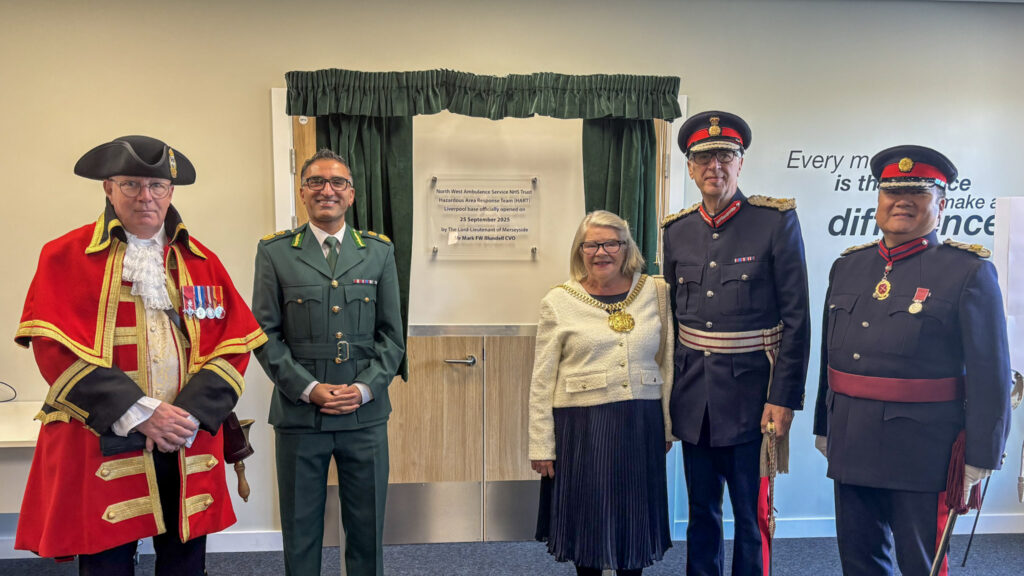
The Lord Lieutenant of Merseyside officially opened the building on Thursday, 25 September.
This is the first time Liverpool’s HART have had its own bespoke base. The team had previously shared premises with Merseyside Fire and Rescue Service at their Special Operations Centre in Croxteth. The new £14.5 million base is on the site of Elm House, the former HQ of Merseyside Regional Ambulance Service, before it merged with other North West services to become NWAS in 2006. Then, up until 2019, it acted as the Cheshire and Merseyside area office, also housing 999 and NHS 111 control rooms.

The new facilities include:
- A climbing tower and training tunnel
- Specialist training rooms
- A fully equipped gym
- Modern office space
- A large mess room and kitchen
- Indoor depot for specialist vehicles
HART is a specialist response unit trained to provide life-saving care in complex incidents, including rescues from height in water or where the patient is difficult to access. NWAS has two HART teams available to respond 24 hours a day, with the other team based in Manchester. The Liverpool HART team played a vital role in major incidents across the region, including the Manchester Arena bombing, Bosley Mill fire and recently the Liverpool FC parade incident.
Head of Special Operations Matt Calderbank says, “This new base is a significant and vital investment, giving our Liverpool HART the facilities they need to train, prepare and respond to incidents across the region. Today’s official opening marks the culmination of 18 months of planning and construction, and we’re proud to have involved the local community in its creation.
“I want to thank Merseyside Fire and Rescue Service for hosting the team for all these years, and we look forward to the difference this will make to our operational resilience.”
During the construction, NWAS invited local schoolchildren to get involved and make their mark on the new base. Pupils from Princes Primary and All Saints Primary created artwork for the walls and buried a time capsule underneath the site during the construction phase, which also contained more of their artwork showing what they thought the ambulance service of the future would look like and what the team do now. They also toured the building in July and were given an opportunity to explore the vehicles, try on the equipment, and learn some basic lifesaving skills from the paramedics based there.