



NWAS Annual Report and Accounts 25-26 (3MB pdf)
NWAS Auditor’s Annual Report_ 25-26 (729kB pdf)
Chair and CEO foreword
Across the North West, our staff and volunteers are there for people at some of the most difficult moments in their lives. Whether answering an emergency call, providing clinical advice, responding to a major incident or supporting patients after care has been delivered, their actions are characterised by skill, kindness and professionalism.
This year, staff and volunteers have managed rising demand and ongoing challenges across the wider health and care system. They have done so while continuing to treat patients with dignity and empathy, and while supporting one another through often exhausting and emotional work. We want to be clear: the achievements set out in this report belong first and foremost to them.
We have improved response times for the most life threatening emergencies, strengthened our clinical assessment and hear and treat services, and returned more ambulances to frontline care through better handover processes with hospital partners. Behind every performance improvement lies the dedication of call handlers, dispatchers, paramedics, emergency medical technicians, clinicians, support staff and volunteers working together under pressure.
This year included moments that tested us in the most profound ways. Our response to the major incident at the Liverpool parade in May demonstrated the highest standards of emergency preparedness, inter agency cooperation and clinical excellence. Staff and volunteers responded rapidly, calmly and with professionalism, caring for large numbers of patients in a dynamic and high-risk environment. Their actions exemplified the very best of the ambulance service and the NHS.
Similarly, our response to the Manchester synagogue attack showed the importance of preparedness, partnership working and cultural awareness. We worked closely with police, fire and community partners to ensure that care was delivered safely, sensitively and effectively, recognising the impact such events have not only on individuals but on entire communities.
Alongside these incidents, the Southport Inquiry has prompted reflection, learning and deep engagement. We recognise that inquiries of this nature are difficult, particularly for those directly involved, and we want to thank staff for their openness, professionalism and willingness to learn. We will ensure learning is translated into tangible improvements and that we continue to strengthen our culture of transparency, safety and continuous improvement.
We are acutely aware that delivering care in these circumstances comes at a personal cost. Exposure to trauma, high workload and sustained pressure affect people differently, and supporting staff wellbeing remains a moral and operational priority. Over the past year, we have expanded our wellbeing support, improved access to counselling services, strengthened peer and chaplaincy support and invested in leadership development that places compassion and inclusion at its heart.
Our annual staff survey and ongoing engagement tell us that there is more to do, particularly around workload, rest, and ensuring people feel heard and valued. We are committed to listening, learning and acting. A culture where staff feel safe to speak up, supported when things are difficult, and proud of the care they provide is essential to the future of the organisation.
Volunteers also play a vital role in our service, particularly our community first responders. They give their time freely, often responding to emergencies in their own neighbourhoods, and remain an integral part of how we deliver timely care, especially in rural and remote communities. We are grateful for their commitment and continue to invest in their training and support.
This year marked important changes in leadership. We welcomed two new executive directors: Mike Gibbs and Elaine Strachan-Hall. Their appointments strengthen the executive team and reflect our commitment to balanced, compassionate and values-led leadership.
For our new Chair, this year has involved developing familiarity with the trust and its work, including time spent with staff and volunteers and visits to sites. This has reinforced an understanding of the organisation’s culture and the pride people take in serving their communities. The Board’s role remains to support and oversee this work, provide appropriate challenge, and ensure effective leadership and governance.
As we look ahead, we do so with realism and optimism. Demand for emergency and urgent care will continue to grow, and health inequalities within our region remain significant. Ambulance services have a critical role in tackling these challenges, not only in responding to emergencies but in working with partners to support prevention, early intervention and more personalised care.
Our priorities for the coming year are clear. We will continue to improve response times for the sickest patients, reduce hospital handover delays through system leadership, embed our health inequalities work into everyday practice, and support staff through inclusive leadership and meaningful engagement. We will strengthen digital and data capabilities, continue to modernise our fleet and estates, and ensure that safety, quality and compassion remain central to everything we do.
Above all, we will continue to value our people. Our future depends on retaining skilled staff, attracting new talent, and creating an environment where everyone feels respected, supported and able to do their best work.
It is an honour to serve this trust. Together, we remain focused on delivering safe, inclusive and compassionate care, today and for the future.
Julia Mulligan Salman Desai KAM
Chair Chief Executive
Performance report
The Performance Report has been prepared under direction issued by the Department of Health and Social Care Group Accounting Manual 2025/26 in accordance with Chapter 4A of Part 15 of the Companies Act 2006, as amended by SI 2013 No 1970. The Companies Act 2006 (Strategic Report and Directors’ Report) Regulations 2013.
The Accountable Officer is responsible for preparing the Annual Report and Accounts and considers taken as a whole they are fair, balanced and understandable.
Salman Desai KAM
Chief Executive
Date: 24 June 2026
Performance overview
The purpose of the overview section is to provide:
- A statement from the chief executive officer providing an overview of the performance of the trust during 25/26.
- A statement of the purpose and activities, including a brief description of the business model and environment, organisational structure, objectives and strategies.
- A synopsis of the performance analysis and assessment of progress towards objectives
- Details of the key risks that could affect delivery of objectives.
- An explanation of the adoption of the going concern basis where this might be called into doubt.
Chief executive statement
The past year has been one of continued challenge and important learning for North West Ambulance Service. Demand for urgent and emergency care remained high, workforce and system pressures persisted, and expectations rightly continued to grow. Alongside this, we made progress in how we lead, listen and improve. This annual report sets out both where we have delivered well and where further focus is needed.
I am honoured, after my first full year as chief executive, to introduce our Annual Report 25/26 which tells the story of 12 months shaped by sustained demand, system pressure and significant change, but also one defined by commitment, innovation and progress. Above all, it reflects our ongoing promise to put patients first, support our people, and work with partners to build an ambulance service the people of the North West can trust and rely on.
Patients remain at the heart of every decision we make. Throughout 25/26 we have continued to evolve the way we respond to urgent and emergency care, not only to reach those who are critically ill faster, but to ensure that every patient receives the right care, in the right place, at the right time.
Our clinical teams have responded to increasing complexity and acuity with skill and professionalism. Response times for the most life-threatening category one emergencies have continued to improve for the fourth consecutive year, and category two response performance has reached its strongest position since the pandemic. These improvements matter because they translate directly into lives saved, better outcomes and improved patient experience.
At the same time, we have strengthened our ability to deliver safe, effective care without unnecessary hospital attendance. Expansion of hear and treat and see and treat models, supported by enhanced clinical triage in our integrated contact centres and closer external partnerships, has meant thousands of patients have been safely supported at home or directed to more appropriate community services. Initiatives such as ‘call before convey’ and the Right Care Programme are helping reduce pressure on emergency departments while providing patients with more personalised and timely care.
Listening to patients remains central to our improvement journey. Feedback from the Friends and Family Test, patient surveys, complaints, compliments and direct engagement continues to show very high levels of confidence in the professionalism, compassion and dignity shown by our staff. Where concerns are raised, particularly around delays and communication, we have worked hard to respond openly, learn from those experiences and make meaningful changes. Patient stories have played a vital role in shaping learning at every level of the organisation, from frontline teams to board discussions.
We have also made significant progress in reaching communities who have historically felt less confident accessing ambulance services. Through targeted engagement with underrepresented groups, expanded ambulance awareness days and strengthened patient inclusion work, we are building trust, breaking down barriers and addressing health inequalities in ways that are culturally sensitive and informed by lived experience.
None of this would be possible without our people. Nearly 8,000 staff and hundreds of volunteers bring skill, resilience and compassion to their roles every day, often under extraordinary pressure. Supporting them to feel safe, valued and empowered has been a central focus throughout the year.
In 25/26, we continued to invest heavily in workforce development, education and leadership. Apprenticeships have remained a cornerstone of our approach to growing and sustaining the workforce, with over 850 colleagues developing their careers through apprenticeship routes. National recognition as one of the UK’s Top 100 apprenticeship employers, alongside a ‘Good’ Ofsted rating, reflects the quality of our learning environment and our commitment to nurturing future talent.
Creating an inclusive culture where everyone belongs is essential to delivering high quality care. This year we took important steps towards becoming an anti-racist organisation, establishing an Anti-Racism Steering Group and publishing our Anti-Racism Statement. Alongside this, we strengthened our approach to sexual safety through the launch of updated policies, high levels of training compliance, and reinforcing clear expectations about behaviour and accountability.
Staff wellbeing has remained a priority. Through our Wellbeing Hub, wellbeing champions, roadshows and targeted support offers, we reached thousands of colleagues across the region. Feedback from the NHS Staff Survey shows encouraging improvements in areas such as flexible working and learning opportunities, alongside continued stability across overall staff experience despite a challenging year. While there is more to do, these results reflect meaningful progress driven by staff insight and engagement.
Importantly, we continue to listen when staff speak up. The Freedom to Speak Up function has matured further, with clearer signposting, faster resolution and stronger learning loops. Being a listening and proactive organisation to ensure staff and patient safety is not optional; it is fundamental to the physical and mental health of everyone who works for us and for those we serve.
Alongside day-to-day operational delivery, 25/26 has seen significant trust wide achievements that will shape our service for years to come.
The opening of the new £14.5 million hazardous area response team (HART) base at Elm Point stands as a powerful symbol of our commitment to resilience, capability and community engagement. This state-of-the-art facility supports our specialist Merseyside-based team to train, prepare and respond to high-risk incidents. We were very proud to work alongside local school children during its construction and thank them for their artwork which graces the walls, and the trees they planted in the grounds.
We have expanded our focus on patient safety and learning, with initiatives such as ‘Learning Loop’ – the monthly distribution of learning topics – receiving national recognition and driving measurable improvements in practice. Investment in fleet modernisation and environmental sustainability has continued, including the decommissioning of older diesel vehicles, expansion of electric vehicle infrastructure and upgrades that improve reliability and reduce environmental impact.
Partnership working remains a defining strength of NWAS. Across five integrated care systems, we have worked closely with NHS, local authority, voluntary sector and emergency service partners to improve patient flow, reduce handover delays and support system wide recovery. The implementation of Handover 45 principles has already delivered tangible improvements, freeing up ambulance capacity and reducing prolonged waits for patients.
This year also marked the development of our new Trust Strategy 2026–2031. Informed by engagement with staff, patients and partners, the strategy sets out a clear and ambitious direction focused on inclusive care, a supportive culture, strong partnerships and continuous improvement.
As we reflect on 25/26, I am immensely proud of what our organisation has achieved in a year of sustained pressure and change. The achievements within this report demonstrate not only the dedication of our workforce, but the trust our communities place in us every day.
Challenges remain. Demand continues to grow, system pressures persist, and expectations are rightly high. But with the strength of our people, the clarity of our strategy and the depth of our partnerships, I am confident in our ability to continue improving care for patients across the North West.
Thank you to every member of staff, volunteer, partner and community member who has contributed to our work this year. Together, we will continue to deliver care that is safe, compassionate and worthy of the trust placed in us.
Salman Desai KAM
Chief Executive Officer
History of the trust
North West Ambulance Service NHS Trust (NWAS) was established on 1 July 2006 and is one of the largest ambulance trusts in England. We provide urgent and emergency healthcare services to around seven million people across the North West of England. Serving one of the most diverse and geographically varied regions in the country, we deliver a range of services including 999 emergency response, NHS 111 and patient transport services. We also provide specialist support to partner organisations across the health and care system.
We employ 7,988 staff who operate from over 100 sites across the region and provide services for patients in rural and urban communities, coastal resorts, affluent areas and in some of the most deprived areas in the country. We also provide services to a significant transient population of tourists, students and commuters.
The North West region is one of the most culturally diverse areas in England, with over 50 different languages spoken by members of the community. Consequently, we place considerable emphasis on equality and diversity and public engagement activities to ensure that our services are accessible to all members of the community.
A strategic focus is to collaborate with our integrated care systems (ICS) and integrated care boards (ICB) to support the delivery of public and population health agendas and urgent and emergency care services. We are the only NHS organisation in the North West that operates across five ICSs:
- Lancashire and South Cumbria Health and Care Partnership
- Cheshire and Merseyside Health and Care Partnership
- Greater Manchester Health and Social Care Partnership
- North East and North Cumbria ICS
- Joined Up Care Derbyshire (which includes Glossop)
We work closely with ICSs, NHS providers, local authorities and voluntary sector partners to ensure patients receive the right care, in the right place, at the right time. This collaborative approach supports our ambition to improve outcomes, reduce health inequalities and ensure services are accessible and responsive to the needs of our communities.
During 25/26, we continued to strengthen our focus on quality, safety and inclusion while responding to increasing demand for urgent and emergency care. We have continued to invest in workforce development, service improvement and partnership working to ensure patients receive high-quality, compassionate care.
A key milestone during the year has been the development of the Trust Strategy 2026–2031. This work has involved engagement with colleagues, system partners and patient representatives to ensure the trust’s future direction reflects the needs of both staff and the communities served. The strategy provides a clear framework for how we will continue to deliver safe, effective and person-centred care while supporting a sustainable and resilient health and care system for the future.
Our shared purpose, vision and values
At NWAS, our shared purpose is to ‘help people when they need us most’ by providing high-quality care and support that improves the health and wellbeing of communities across the North West of England.
Our vision is to deliver the right care, at the right time, in the right place, every time. This vision reflects our commitment to ensuring that patients receive safe, effective and compassionate care whenever they need it. We work closely with partners across the health and care system to ensure services are responsive and accessible.
The vision is underpinned by three core values: working together, being at our best and making a difference. These values guide how all our people work with patients, support one another and collaborate with partners. They reflect our commitment to professionalism, respect and continuous improvement.
Delivering excellent care depends on creating a supportive and inclusive working environment where colleagues feel valued and empowered. Throughout 25/26 we continued to promote a culture that prioritises wellbeing, inclusion and learning, ensuring colleagues are supported to deliver the highest standards of care.
By working together with patients, communities and partner organisations, we continue to place compassion, collaboration and quality at the centre of everything it does.
Our strategy
The NWAS Trust Strategy 2026–2031 sets out how we will continue to deliver our vision and values over the next five years. The strategy reflects the evolving needs of patients, communities and the wider health and care system, and provides a clear direction for future development.
It is built around four strategic ambitions: providing outstanding, inclusive care; building a safe, supportive and inclusive culture; delivering a responsive care model through strong partnerships; and embedding continuous improvement and innovation for a sustainable future.
These ambitions are supported by four strategic plans: the Quality Plan, People and Culture Plan, Clinical Response Plan and Future Sustainability Plan, which together guide how we will improve services and outcomes.
Our services
Integrated Contact Centres (ICC)
ICC includes 999, NHS 111 and the Patient Transport Service (PTS) contact centre – these are the teams at the end of the phone who answer over a million calls each year.
999 staff provide emergency care and advice, and dispatch ambulances to the scene as appropriate. The clinical hub (CHUB), based within ICC, assesses patients via telephone, providing the most appropriate care based on that assessment. This may be an ambulance (either emergency or urgent care), GP referral, referral to other services or self-care.
The PTS contact centre takes bookings for patients and goes through the eligibility test with callers, to understand their needs and advises on transport for pre-booked appointments.
NHS 111 delivers urgent healthcare assessment and advice. The service is a major contributor to the delivery of integrated urgent care for the North West. It signposts patients to the most appropriate care following triage and can advise on community services such as pharmacies or mental health support.
Patient Transport Service (PTS)
PTS provides essential transport to non-emergency patients in Cumbria, Lancashire, Merseyside, and Greater Manchester, who are unable to make their own way to or from hospitals, outpatient clinics or other treatment centres.
Paramedic Emergency Service (PES)
Our paramedic emergency service (PES) consists of solo responders, double crewed ambulances and approved private providers who together deliver 999 emergency care for the population of the North West.
Resilience
Our hazardous area response team (HART) and resilience team are specially trained and equipped to provide a response to high-risk and complex emergency situations. They respond to major incidents to deliver our statutory responsibilities as a Category 1 responder under the Civil Contingencies Act 2004.
Volunteering
We have one of the largest and longest-established community first responder (CFR) schemes in England, with CFRs operating across all areas of the North West, providing an effective, complementary service in their local communities. We also offer several other volunteering roles, including Patient and Public Panel (PPP) members, the Volunteer Car Service (VCS), Welfare Support Volunteers and Vehicle Movement Volunteers.
Corporate services
Behind the scenes, our corporate and support staff play a vital role in enabling our frontline services to operate safely and effectively. These teams include, for example, finance, estates and facilities, communications, legal services, governance, health and safety, digital, vehicle maintenance, and human resources. Every role contributes to delivering high-quality care. Together, we ensure our people are supported, our systems are reliable, and our services continue to evolve to meet the needs of our communities.
Operational performance during 25/26
An overview of our operational performance during 25/26 can be seen in the table below:
| Our Services | |
| 999 calls answered | 1,442,253 |
| 111 calls answered | 2,116,885 |
| Emergency incidents requiring a response | 1,155,397 |
| Hear and Treat | 17% |
| See and Treat | 26% |
| Patient Transport Service | 1,445,604 |
| Ambulance response times | |
| C1 Mean (7 minutes) | 00:07:04 |
| C1 90th (15 minutes) | 00:12:02 |
| C2 Mean (18 minutes) | 00:26:59 |
| C2 90th (40 minutes) | 00:53:32 |
| C3 90th (120 minutes) | 01:40:06 |
| C4 90th (180 minutes) | 04:14:42 |
During 24/25, NHS 111 received 13% more calls than the previous year. In 25/26, continued increased demand impacted performance, with 70% of NHS 111 calls answered within 60 seconds. This represents a 13% reduction on the previous year.
Despite the system pressures, enhancements to clinical triage enabled more effective signposting to alternative care pathways.
Emergency call demand (999) increased marginally by 0.4% in 25/26, influenced by external factors including winter pressures. We responded to 1,155,397 emergency incidents, a 3.3% increase compared with 24/25. Call volumes reflected multiple calls to single incidents, calls seeking updates on arrival times, and improved telephone triage, which safely reduced unnecessary ambulance dispatches.
The Integrated Contact Centre Clinical Delivery Team further strengthened telephone-based clinical assessment. As a result, 17.4% of emergency incidents were managed through ‘hear and treat’ pathways in 25/26, an improvement of 3% year-on-year. Continued improvements in clinical triage meant ambulances were increasingly dispatched to patients with higher clinical need, contributing to a reduction in non-transport following face to face responses from 27.6% to 26.4%.
Ambulance Response Programme
Ambulance service emergency performance is measured through the Ambulance Response Programme (ARP), which aims to make sure patients are reached as quickly as possible depending on their need. Under ARP there are five categories, with category 1 being the most serious, life-threatening incidents. All categories have a performance standard based on the time it takes to respond to the incident.
Our response to the most critically ill patients continued to improve in 25/26. On average, ambulance crews reached category 1 incidents 40 seconds faster in 25/26 compared to 24/25. While performance remained four seconds above the national target of seven minutes, this represents the strongest performance since the pandemic and marks the fourth consecutive year of improvement.
Ambulance crews also achieved their fastest response to category 2 incidents since the pandemic during 25/26. Category 2 calls, which account for most face-to-face responses, had a mean response time of 26 minutes and 59 seconds. This represents an improvement of more than two and a half minutes compared with 24/25 and below the revised national revised target of 30 minutes.
Response times for category 3 and category 4 incidents also improved for the third consecutive year. As a result, patients with lower-acuity needs continue to receive a faster response than at any point since the pandemic.
Patient Transport Service
During 25/26, our Patient Transport Service (PTS) activity remained approximately 9% below baseline, with varied activity levels across the footprint.
The performance analysis provides a detailed account of the trust’s operational performance during 25/26.
CQC Rating
We welcomed the Care Quality Commission (CQC) in 2022 when they carried out a focused inspection of the Lancashire and South Cumbria Integrated Care System (ICS) and Cheshire and Merseyside ICS. The scope of the inspection included the following service lines: emergency and urgent care, emergency operations centre and NHS 111. Whilst this was not a well led inspection, we maintained our ‘Good’ rating.
| Safe | Effective | Caring | Responsive | Well-led | Overall | |
| Provider Wide | Good | Good | Good | Good | Good | Good |
| Emergency and Urgent Care | Good June 2020 | Good June 2020 | Good June 2020 | Outstanding June 2020 | Good June 2020 | Good June 2020 |
| Emergency Operations Centre | Good June 2020 | Good June 2020 | Good June 2020 | Good June 2020 | Good June 2020 | Good June 2020 |
| Patient Transport Service | Good Jan 2017 | Good Jan 2017 | Good Jan 2017 | Good Jan 2017 | Requires improvement Jan 2017 | Good Jan 2017 |
| Resilience | Good Nov 2018 | Good Nov 2018 | N/A | Good Nov 2018 | Good Nov 2018 | Good Nov 2018 |
| 111 | Good Jan 2017 | Good Jan 2017 | Good Jan 2017 | Good Jan 2017 | Good Jan 2017 | Good Jan 2017 |
Throughout 25/26, we have continued to hold regular and routine engagement meetings with the CQC, responding to information requests and maintaining open lines of communication.
In parallel, we have proactively adapted and strengthened our internal quality assurance and governance arrangements to align with the CQC’s evolving assessment framework and will continue to review this.
Statutory and Regulatory Financial Duties
We are required to achieve a number of statutory and regulatory financial duties. These are:
- Statutory duty to break even year-on-year and a regulatory duty to break even each and every year.
- Regulatory duty to contain capital expenditure, on an accruals basis, within approved Capital Resource Limits.
- Regulatory requirement to achieve the Capital Cost Absorption Duty.
- Regulatory duty to apply the Better Payment Practice Code.
In summary, for the 25/26 financial year, we achieved all the statutory and regulatory financial duties.
In 25/26, our total income was £598.687m where income from patient care activities was £583.258m, the breakdown across these activities can be found within the Financial Review 25/26 on page 44.
Key risks to delivering objectives
25/26 Strategic Risks
The Board Assurance Framework sets out the key strategic risks during 25/26 to achieve delivery of our strategy. These risks focussed on patient safety and experience, financial sustainability and value for money, environmental sustainability, operational performance, inclusivity and workforce wellbeing, regulatory compliance, engagement with system partners, cyber security, organisational leadership stability and strategic planning.
The key strategic risks during 25/26 were:
- There is a risk that if the trust does not provide the right care, at the right time, in the right place, this may lead to avoidable harm and/or poorer outcomes and experience for patients.
- There is a risk that if the trust does not achieve financial sustainability, its ability to deliver high quality (safe and effective) services will be affected.
- There is a risk that if the trust does not deliver against NHS net zero targets, it will impact on the trust’s ability to contribute towards environmental improvements and delivery of its Green Plan.
- There is a risk that if the trust does not deliver improved sustained national and local operational performance standards across all services, patients may experience delayed care and/or suffer harm.
- There is a risk that if the trust does not create an inclusive environment and look after its people’s wellbeing, safety and development, then it will be unable to attract, retain and maximise the potential of its workforce for the benefit of patients.
- There is a risk that a breach of legislative or regulatory standards could result in avoidable harm and/or regulatory action.
- There is a risk that due to the geographical size of the trust it will be unable to effectively engage with its numerous system partners which may impact on its ability to achieve the medium-long-term plan.
- There is a risk that if the trust suffers a cyber incident, it could result in an inability to deliver a service and associated harm.
- There is a risk that the recent planned changes around the Board over the next 12 months could destabilise the organisation and impact delivery of strategic plans.
- There is a risk that the volume of planned and unplanned changes within the Non-Executive Director Board membership during Q3 and Q4 could destabilise or divert the Board’s focus, potentially impacting the trust’s strong performance, national standing, and delivery of strategic objectives.
- There is a risk that due to the timing of contracting decisions for NWAS commissioned services (PTS and 111), this will impact the development of our strategic priorities and objectives.
- There is a risk that the current financial landscape of the NHS may impact achievement of the trust’s strategic priorities and performance by reducing the availability of resources both financial and physical.
Future 26/27 Strategic Risks
The key risks for the trust as it moves into the new financial year are focused on inclusivity and addressing health inequalities, workforce recruitment, retention and culture, financial sustainability, continuous improvement, cyber security, environmental sustainability, operational performance and system partner engagement.
The following list denotes the key strategic risks identified for 26/27:
- There is a risk that if we do not consistently provide inclusive care or effectively address health inequalities, it could result in avoidable harm and poorer outcomes or experiences for our patients.
- There is a risk that if we do not develop an inclusive culture this may limit our ability to attract, retain, and maintain a diverse, thriving workforce and increase negative staff experiences impacting on patient care.
- There is a risk that system-wide Urgent and Emergency Care (UEC) pressures across the region may limit our ability to improve national UEC performance standards, which could impact our financial and workforce plans and the quality of patient care.
- There is a risk that if we do not engage effectively with strategic regional partners, we will miss opportunities to influence UEC reconfiguration and improvement, which could affect the delivery of our medium and long term plans.
- There is a risk that we are unable to deliver long-term financial sustainability, this may lead to increased regulatory scrutiny, which will impact on our ability to deliver our long-term plans and strategy.
- There is a risk that if we do not embed a trust-wide continuous improvement culture, it will impact our ability to harness innovation, learning, and deliver effective sustainable service transformation.
- There is a risk that if we do not fully address environmental sustainability within our strategic priorities, we will reduce our positive impact on local communities and limit our contribution to NHS Net Zero targets.
- There is a risk of a cyber incident that could impair operational continuity, compromise sensitive information, and adversely affect our ability to deliver safe and effective services.
The Board Assurance Framework (BAF) provides an effective metric for oversight of the organisation’s strategic risks ie those which could prevent us from achieving our strategic objectives and links with the strategic aims, objectives, and vision.
Further information regarding the effectiveness of the BAF and how the Board of Directors maintains strategic leadership and oversight of risk management arrangements can be found within the Annual Governance Statement.
NHS Oversight Framework
NHS England implemented the NHS Oversight Framework for 25/26 which established a clear and consistent method for evaluating integrated care boards, NHS trusts, and foundation trusts. The framework was developed to promote transparency and public accountability for performance, while setting out how NHS England works with systems and providers to drive improvement.
It provides a framework for NHS England to oversee systems and providers against a range of metrics, with specific metrics for ambulance services that reflect the 25/26 NHS priorities and the Planning Guidance for 25/26.
As part of this oversight, each provider receives an individual organisational delivery score which is derived from performance against these metrics and segmented from one to four, benchmarked against the rest of the country. The highest performance score is one. Four indicates intervention may be applied or further action is required to address specific concerns. Segmentation data is published by NHS England on a quarterly basis.
During 25/26, we were assessed under the NHS Oversight Framework as segment one for the entirety of the reporting period, reflecting sustained delivery against national requirements and effective governance arrangements.
Ambulance oversight league table
We were ranked first nationally in the ambulance oversight league tables, providing further assurance on operational performance and system leadership. In addition, NHS England rated NWAS ‘green’ through its provider capability assessments, indicating there is strong leadership, effective governance and the organisational capability required to sustain delivery and manage risk.
Going concern
After making enquiries, the Board of Directors has a reasonable expectation that the services provided by North West Ambulance Service NHS Trust will continue to be provided by the public sector for the foreseeable future and can realise its assets and discharge its liabilities in the normal course of business. For this reason, the directors have adopted the going concern basis in preparing the accounts, following the definition of going concern in the public sector adopted by HM Treasury’s Financial Reporting Manual. Detailed guidance in respect of going concern is set out in International Accounting Standard (IAS1) and the interpretation for the public sector context is set out in the Financial Reporting Manual (FREM) and the Department of Health and Social Care Group Accounting Manual (GAM) 2025/26.
Working with ICSs and partners
We continue to work closely with integrated care board (ICB) colleagues, place partnerships, providers, local authorities and voluntary sector partners across the North West. This engagement is supported by the Partnerships and Integration Team, which enables and coordinates engagement across the five integrated care systems in which the trust operates:
- Lancashire and South Cumbria
- Cheshire and Merseyside
- Greater Manchester
- North East and North Cumbria (North Cumbria)
- Derbyshire (Glossop)
During 25/26, we continued to strengthen our role as a system partner by supporting urgent and emergency care recovery, improving patient care pathways and developing alternative responses to reduce avoidable conveyance to emergency departments. These partnerships have been underpinned by strong internal governance arrangements and our dedicated Partnerships and Integration function, which provides regional and local leadership and co-ordination, facilitating both internal communications and effective external engagement. One of the teams’ primary roles is to ensure that NWAS is appropriately connected to external governance and is represented enabling the delivery of both our organisational priorities and wider system strategic objectives. We have triangulated Joint Forward Plan priorities across the footprint to inform the current strategy and the development of the 2026–2031 strategy, ensuring alignment with system ambitions and future direction.
We work with partners to strengthen collaboration, improve ambulance handover processes, and reduce the risk to patients waiting in the community for an ambulance response. This work has brought together ambulance services, acute trusts, and ICB teams to improve system awareness, patient flow, and safety.
We also work with regional and ICB partners to improve escalation processes and co-ordination during periods of high demand supporting an aligned system response to operational pressures
We have worked with partners at regional, ICB and place levels to strengthen alternative pathways to emergency departments. This has included participation in strategic planning, pathway design and operational delivery of initiatives aimed at reducing avoidable conveyance safely, and appropriately utilising community capacity. We have also worked with systems to improve access to community, mental health and urgent care services for our patients.
Operating across multiple ICSs presents opportunities and complexity. We continued to embed partnership working, and the NWAS partnership principles, through dedicated engagement structure and leadership. Each area is supported by a Partnerships and Integration manager, working with local systems while also supporting our operational and clinical leadership teams. The team ensures consistent external messaging and engagement aligned with NWAS’ strategy, annual plan and wider system priorities, while maintaining oversight of external development and partner strategies across the region. We continue to support ICS population health priorities by contributing data, insight and clinical expertise to system partners. Through collaboration between public health teams, primary care and community services, we are supporting the development of more preventative approaches that reduce avoidable use of UEC services.
We have consulted with partners around the development of the 2026-2031 strategy and our partnership principles, through a series of engagement events facilitated by AQuA. These sessions brought together system partners from across the region to explore our future strategic role within ICSs and the principles that will strengthen partnership working. Learning from these events informed the refresh of the Trust Strategy and the continued development of our approach to partnership working through 26/27.
The capital resource of the trust is managed as part of the overall capital envelope of the Lancashire and South Cumbria ICB. We have managed agreed capital resource of £38.437m as part of the overall financial framework of the Lancashire and South Cumbria ICB. In 25/26, we maintained a structured approach to capital investment, ensuring financial sustainability while prioritising key service improvements.
Performance analysis
Integrated Contact Centre (ICC)
During 25/26, completion of the final stage of the ICC restructure was completed to align call handling, dispatch and planning and clinical delivery functions from 111, 999 and EOC to create a more resilient integrated team. This final phase is critical to completing the structural changes and embedding the integrated teams in 25/26.
Priority is now given to embed the new senior leadership team into the ICC to ensure successful integration. Ongoing implementation of joint governance procedures helps maintain consistency across all three services, supporting integration in a systematic, compliant and efficient way. This in turn strengthens decision making, improves coordination across pathways and helps ensure patients receive timely, safe and more seamless care regardless of how they access the service.
Activity and demand: NHS 111
111 calls
During 24/25, NHS 111 calls offered to NWAS for the North West increased by 13% when compared to the previous year. This rise was driven in part by the withdrawal of external support previously provided to the trust.
In 25/26, 70% of calls were answered within 60 seconds, representing 13-percentage-point reduction compared to 24/25. This decline aligns with the increased call volumes following the cessation of external support. Timely call answering remains a critical factor in patient experience and in ensuring that urgent cases are identified and managed without delay.
| % Calls answered in 60s (95%) | Q1 | Q2 | Q3 | Q4 | Total |
| 24/25 | 82.61% | 82.61% | 82.61% | 82.61% | 82.61% |
| 25/26 | 70.47% | 70.47% | 70.47% | 70.47% | 70.47% |
Call abandonment rate has remained within the national target of 5%.
| Calls Abandoned (<5%) | Q1 | Q2 | Q3 | Q4 | Total |
| 24/25 | 2.70% | 2.70% | 2.70% | 2.70% | 2.70% |
| 25/26 | 4.62% | 4.62% | 4.62% | 4.62% | 4.62% |
Activity and demand: paramedic emergency service (PES)
999 call demand
During 25/26, overall demand for 999 calls increased by 0.4% compared with the previous period. Demand fluctuated throughout the year, which reflected the impact of external factors such as winter pressures.
Alongside this increase, enhancements to clinical triage have enabled call handlers to more effectively direct patients to appropriate alternative care pathways. This has reduced the number of repeat calls from patients who historically may have remained waiting for an ambulance response, supporting more efficient use of emergency resources while ensuring patients receive timely and appropriate care.
| Fiscal year | 999 Call demand | % difference to previous year |
| 22/23 | 1,531,958 | -6.2% |
| 23/24 | 1,446,700 | -5.6% |
| 24/25 | 1,436,327 | -0.7% |
| 25/26 | 1,442,253 | 0.4% |
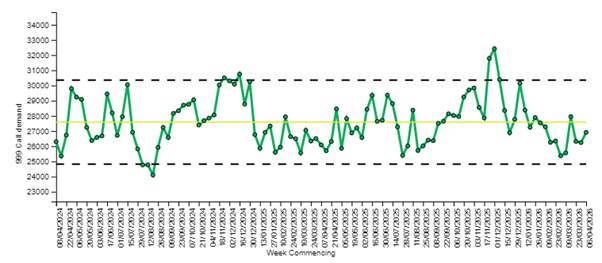
Figure 1 presents a statistical process control chart which illustrates a marked increase in demand during the winter period, following by a return to more stable activity levels throughout quarter 4. Despite December experiencing short-term spikes exceeding statistical variation, overall demand during the remainder of quarter 4 was consistent with typical patterns.
Incidents requiring a response
During 25/26, the number of emergency response incidents increased by 3.3% meaning more pressure on ambulance resources and a further challenge to meeting response targets. The total number of incidents attended remained lower than the volume of 999 calls received due to a number of contributing factors. These included multiple calls relating to the same incident, calls made to request updates on ambulance arrival times, and continued improvements in telephone triage, which enabled a greater proportion of patients to be safely directed to appropriate alternative services without the need for an ambulance response.
| Fiscal year | Emergency Incidents | % Difference to Previous Year |
| 22/23 | 1,074,933 | -4.8% |
| 23/24 | 1,121,403 | 4.3% |
| 24/25 | 1,118,427 | -0.3% |
| 25/26 | 1,155,397 | 3.3% |
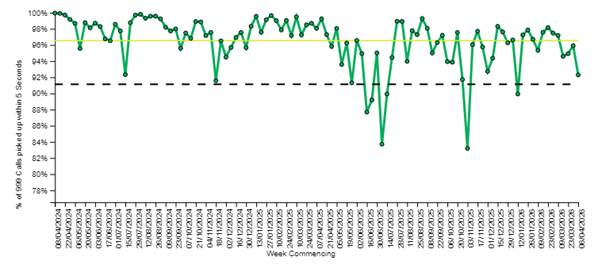
Weekly performance data for 999 call answering during 25/26 shows increased consistency, with performance maintained at or above 95% for the majority of the year. However, there was a 3% overall deterioration in 999 call pick up performance compared with the previous year. Analysis of the data identifies specific periods where performance fell below established control limits, notably in August 2025 and November 2025. These variations coincided with periods when we provided support to another trust, and call volumes exceeded planned activity levels.
Call pick up, is a vital safety metric for patients with the most life-threatening conditions (category 1) as cardiopulmonary resuscitation advice over the telephone is a critical success factor in survival.
| Fiscal year | % of Calls answered in 5 seconds | % Difference to previous year |
| 22/23 | 72.8% | -3.1% |
| 23/24 | 96.8% | 24.0% |
| 24/25 | 97.8% | 1.0% |
| 25/26 | 95.2% | -2.6% |
Patients we help on the telephone (hear and treat).
The Integrated Contact Centre (ICC) clinical delivery team has continued to strengthen the delivery of telephone-based clinical assessment and care, supporting the reduction of avoidable ambulance dispatches. During 25/26, 17.4% of emergency incidents were safely managed through clinical triage and treated over the telephone, representing an improvement of 3% compared with the previous year.
Ongoing expansion of the hear and treat programme has increased the number of patients receiving timely clinical advice via telephone, ensuring that ambulance resources are more effectively prioritised for those with the most urgent needs. As a result, approximately 18-20% of all emergency incidents, equivalent to nearly one in five, are now safely managed through telephone assessment by ICC clinicians.
In addition, advanced practitioners in urgent and emergency care (APUEC) responded to 7,989 incidents during 25/26, with 85% of these cases resolved without the need for ambulance attendance, further supporting the efficient use of emergency response capacity while maintaining patient safety.
Ambulance response programme
Ambulance service emergency performance is measured through the Ambulance Response Programme (ARP), which aims to make sure patients are reached as quickly as possible depending on their need. Under ARP there are five categories, with category one being the most serious, life-threatening incidents. All categories have a performance standard based on the time it takes to respond to the incident.
These performance standards can be seen below:
- Category 1 is for calls about people with life-threatening injuries and illnesses. The aim is to respond to these in an average time of seven minutes and at least nine out of ten times within 15 minutes.
- Category 2 is for emergency calls. The aim is to respond to these in an average time of 18 minutes and at least nine out of ten times within 40 minutes.
- Category 3 is for urgent calls. In some instances, patients may be treated by ambulance staff in their own home. The aim is to respond to these within 120 minutes at least nine out of ten times.
- Category 4 is for less urgent calls. In some instances, advice may be given over the telephone or patients may be referred to another service such as a GP or pharmacist. The aim is to respond to these at least nine out of ten times within 180 minutes.
- Category 5 – Signposting advice only, no response time applies.
Our response to the most critically ill patients continued to improve in 25/26. On average, ambulance crews reached category 1 incidents 40 seconds faster in 25/26 compared to 24/25. While performance remained four seconds above the national target of seven minutes, this represents the strongest performance since the pandemic and marks the fourth consecutive year of year on year improvement.
Given category 1 calls relate to the most serious and life threatening conditions, these patients remain the highest priority to maximise opportunities for life saving intervention. Importantly, this improvement was achieved despite a 6.8% increase in the proportion of calls classified as category 1 compared with 24/25.
Ambulance crews also achieved their fastest response to category 2 incidents since the pandemic during 25/26. Category 2 calls, which account for the majority of face to face responses, had a mean response time of 26 minutes and 59 seconds. This represents an improvement of more than two and a half minutes compared with 24/25 and below the revised national revised target of 30 minutes. Further improvement is planned in 26/27, supported by additional NHS England funding to increase frontline resource capacity and expand ICC capacity to strengthen call triage.
Response times for category 3 and category 4 incidents also improved for the third consecutive year. As a result, patients with lower acuity needs continue to receive a faster response than at any point since the pandemic. We saw a 50 minute improvement in our 90th percentile response to category 3 patients, bringing the time down to 3 hours and 31 minutes. We saw a 17 minute improvement in our 90th percentile response to category 4 patients, bringing the time down to 4 hours and 14 minutes. Despite these improvements we are still below the targets and work continues to improve further in 26/27.
During 25/26, the service responded to a higher number of incidents than in the previous year, representing a 3.3% increase compared with 24/25. A greater proportion of incidents than ever before were managed without conveying patients to hospital, with patients supported through telephone clinical assessment, referral to alternative services such as community pharmacy, community response teams or their own GP, or through face to face care delivered at home by ambulance service clinicians. This was enabled by expanding the clinical workforce supporting 999 call triage, working collaboratively with system partners to improve access to alternative services through care coordination hubs, and continuing to utilise non emergency department pathways, including urgent treatment centres, same day emergency care units and medical assessment centres.
Hospital handover
Hospital handover refers to the period an ambulance arrives at hospital, to the patient being transferred from the ambulance trolley and into the care of the hospital staff, including the clinical handover detailing the patient’s presenting condition and treatment provided. The national target set by NHS England for ambulance handover is 15 minutes.
While ambulance handover continues to be challenged and remains above the 15 minute target, significant improvements were achieved during 25/26. Throughout the North West, the average hospital handover time was just over 28 minutes, representing an improvement of five minutes compared with 24/25. The most substantial improvement was in Cheshire and Mersey, where average handover times reduced by over ten minutes. Improvements were also delivered in Greater Manchester (just under three minutes), Cumbria and Lancashire (just under three minutes), and North Cumbria (two and a half minutes). Average handover times now stand at just under 23 minutes in Greater Manchester, just under 28 minutes in Lancashire and South Cumbria, and just over 35 minutes in Cheshire and Mersey.
These improvements have been driven by the implementation of the Handover 45 principles in August 2025. This approach establishes an expectation that no ambulance crew should wait longer than 45 minutes to handover a patient. Where this threshold is breached, responsibility for the patient is transferred to the hospital and the ambulance crew is released to be available for further emergency incidents. While implementation has been challenging in some areas, the adoption of Handover 45 has significantly reduced the number of prolonged waits at many hospital sites across the North West. In 24/25, ambulance crews experienced over 91,000 handovers exceeding 45 minutes; this reduced to 67,500 in 25/26, with further reductions anticipated in 26/27 as the initiative operates for a full year.
Despite overall progress, arrival to handover times remain higher in Cheshire and Mersey than in other integrated care board (ICB) areas. Extensive engagement has taken place across the Cheshire and Mersey system throughout the year to address this, including the development of initiatives to reduce emergency department attendances through enhanced 999 call triage, the use of care coordination to identify alternative pathways for providing care closer to home, and the implementation of the Handover 45 principles.
There are a small number of hospital sites across the North West where handover has deteriorated in 25/26. Work continues with senior leadership teams at these sites to address this. Plans are in place to sustain and strengthen this improvement activity into 26/27, supported by ICBs and the NHS England regional team, with a continued focus on reducing average handover times and minimising long waits.
Timely release of ambulances following arrival at hospital is critical to maximising ambulance availability and improving system capacity to respond to emergencies. For this reason, reducing hospital handover delays has remained a key priority for leadership teams across NWAS, as well as for integrated care boards and acute hospital trust partners.
See and treat/see and convey
As performance in ‘hear and treat’ continues to improve, ambulances are increasingly dispatched only to patients whose needs cannot be safely managed through telephone assessment. As a result, patients receiving a face-to-face ambulance response are more often clinically complex or acutely unwell. In some cases, following on scene clinical assessment, patients can still be identified as suitable for management through primary care or urgent care services, rather than requiring conveyance to an emergency department. This approach is referred to as ‘see and treat’.
During 25/26, the three main integrated care boards (ICBs) across the North West footprint progressed the introduction of care coordination hubs. These hubs are staffed by senior clinicians who support ambulance crews to access appropriate community based resources, enabling patients to be managed safely without the need for attendance at an emergency department. Through these hubs, clinicians can refer patients to virtual wards, arrange an urgent community response within two hours, or access specialist community pathways, including for frail patients and those with conditions such as respiratory illness. These represent examples of the range of alternative pathways available to support care delivery outside of a hospital setting.
There has been a reduction in the percentage of patients receiving a face-to-face response who are subsequently managed without being transported to hospital from 27.6% in 24/25 to 26.4% in 25/26, primarily attributable to improvements in “hear and treat” performance where almost 3% more patients were managed over the phone when a clinician calls them back compared to the previous year. As a greater number of patients are managed safely without the need to dispatch an emergency ambulance, there are fewer opportunities to deliver face-to-face care in patients’ homes or other community settings through ‘see and treat’. This shift reflects more effective demand management rather than a reduction in clinical capability.
The improvement in ‘hear and treat’ performance, alongside the associated reduction in ‘see and treat’, has increased ambulance availability for patients with higher acuity needs. It has also enabled more patients to be directed to the most appropriate care pathway at the earliest opportunity, without waiting for ambulance attendance.
The proportion of patients conveyed to hospital has also continued to reduce. Between 24/25 and 25/26, the percentage of patients transported by ambulance to an emergency department fell by 1.3%, while conveyances to non-emergency department destinations reduced by 0.3%. As with reductions in ‘see and treat’, this change is largely attributable to more patients being appropriately managed through ‘hear and treat’ pathways.
Urgent and emergency care growth
In 25/26, we received £17 million of additional funding to support the growth in urgent and emergency care activity. This investment enabled the delivery of an additional 1,300 double crewed ambulance (DCA) hours per week, expanded rapid response car (RRV) capacity, and the introduction of new clinical roles within the integrated contact centres to strengthen hear and treat activity and provide senior clinical decision making support to ambulance crews. This support has been essential in maintaining safe and effective see and treat decision making, particularly for more junior staff. Funding also supported additional 999 call handler recruitment to ensure calls for emergency assistance are answered more quickly.
Investment was also directed towards improving productivity and operational efficiency. Dedicated logistics roles were introduced to manage medical devices, vehicle checks, fleet availability and stock control, reducing vehicle downtime and enabling clinical leaders to focus on staff supervision and quality oversight. Additional ICC roles were established to manage real time operational resourcing, supporting improved crew booking on and off duty, reducing post incident wrap up times and minimising prolonged vehicle unavailability.
Further posts were created to enhance collaboration with system partners, expand access to alternative care pathways through care coordination hubs, and reduce unnecessary conveyance to emergency departments.
Additional leadership capacity was also funded to manage the increase in staff across the organisation. This increase in supervisory support to frontline staff helps provide clinical supervision and make sure paramedics and emergency medical technicians are supported to provide the best care possible.
Collectively, these measures have contributed to supporting our Urgent and Emergency Care improvement plan which focused on making the improvements in category two response times in 25/26. The work also contributed to the improvements we have seen Category 1 calls due to the increase in RRVs to respond to higher acuity calls, and Category 3, and Category 4 performance due to the additional DCA hours.
Activity and demand: Patient transport service
The patient transport service (PTS) contracts covering Merseyside, Greater Manchester, Lancashire and Cumbria were originally due to expire in 2024 but have been extended until 31 March 2027 to allow sufficient time for completion of a formal procurement process. The tender process commenced in January 2026 and was expected to conclude in May 2026, with mobilisation of the new contract arrangements taking place up to March 2027. However, completion of the tender process has been delayed and we await notification of the revised timeline.
During 25/26, we maintained a strong focus on delivering the PTS improvement programme commissioned by the Trust Management Committee in November 2024. The programme was deliberately ambitious, with the aim of improving outcomes and experience for patients and staff, while ensuring contractual compliance and achieving financial efficiencies. Delivery of the programme has taken place within a complex operating environment, with limited scope for long term planning due to the extended contractual position.
In response, we prioritised a smaller number of key improvement actions during 25/26, focusing on those with the greatest potential to deliver tangible benefits for patients and our PTS staff.
The priority areas for delivery in 25/26 included:
- Improvement in digital solutions and innovations.
- Targeted leadership development.
- Improving operational procedures.
- Improving communication and culture.
- Financial efficiency.
Leadership Development Programme
During 25/26, a targeted leadership development programme was designed and delivered for PTS, concluding in March 2026. A total of 65 PTS leaders, including team leaders, operations managers and sector managers, participated in a programme of workshops and webinars focused on leadership capability, coaching skills, reflective practice and the promotion of a positive wellbeing culture. The programme concluded with a celebration event held on 25 March 2026, providing an opportunity for participants to reflect on learning and share experiences. The next phase of this work will involve collaboration with NWAS Learning and Organisational Development to develop clearly defined PTS leadership pathways, including progression from ambulance care assistant to team leader and from team leader to operations manager.
Operational procedures
During 25/26, we focused on reviewing and strengthening a range of operational procedures, including Standard Operating Procedures, recruitment and retention planning, staff engagement approaches, and internal and external escalation processes. This work included particular emphasis on the safe use of wheelchairs, stretchers and other assistive equipment. Monthly staff forums were re-established, alongside piloting a ‘roadshow’ approach to strengthen staff voice and increase visibility of managers and senior leaders. In addition, a dedicated clinical escalation process was introduced to ensure the safe and timely management of medical emergencies occurring on PTS vehicles.
Financial efficiency
During 25/26, PTS successfully reduced reliance on third-party providers, decreasing average daily vehicle usage from 55 to 46 vehicles from 1 April 2025, equating to an average reduction of nine vehicles per working day. This enabled a greater proportion of contracted activity to be delivered using our own resources, supporting improved efficiency and more effective use of capacity across the service.
PTS performance activity
During 25/26, overall PTS activity remained approximately 9% below baseline, compared with 8% below baseline in 24/25. Activity levels varied across the footprint, with Merseyside and Greater Manchester recording activity levels 11% and 1% above expected respectively. In contrast, Lancashire and Cumbria experienced reductions of 28% and 20% against expected activity, reflecting a continuation of patterns seen in the previous year.
| Contract | 25/26 Baseline | 25/26 Activity | Activity Variance | Activity Variance % |
| Cumbria | 168,291 | 133,805 | -34,486 | -20% |
| Greater Manchester | 526,588 | 582,264 | 55,676 | 11% |
| Lancashire | 589,180 | 425,546 | -163,634 | -28% |
| Merseyside | 300,123 | 303,989 | 3,866 | 1% |
| NWAS | 1,584,182 | 1,445,604 | -138,578 | -9% |
Utilisation
We continued to analyse system configuration to optimise use of available PTS resources. This work focuses on establishing area specific average utilisation targets and clear improvement trajectories to support more effective deployment of vehicles and staff.
Patient safety
Patient safety remained a core priority throughout 25/26. PTS completed a trial of the Ferno Compact Power Traxx chair, designed to support safer patient movement on stairways while maintaining safe manual handling practices for staff. Following positive outcomes, additional chairs have been added to the PTS fleet.
The deputy head of PTS role, with responsibility for clinical quality and governance continued to strengthen compliance with regulatory standards and driving service improvement. A new PTS Learning and Innovation Forum was also established, creating a collaborative space for staff and leaders to share learning from incidents and propose innovations to improve practice.
PTS handheld digital devices
Approval was secured in 2025 to procure upgraded handheld digital devices across the PTS fleet. During 2026, each PTS vehicle will be equipped with a mobile phone to support communication, navigation and access to journey information, alongside the introduction of a tablet device. This will enhance access to digital information, improve communication and strengthen safety systems for PTS staff.
Performance: Patient transport service (PTS)
There are four quality performance indicators within the patient transport service contract known as quality standards
- Call answering
- Travel time on a vehicle
- On time arrival
- Collection after treatment
These performance indicators are measured based on whether the journey was planned or unplanned, or if the journey was for someone receiving enhanced priority service (EPS) which includes patients traveling for renal dialysis, or oncology.
We have seen a deteriorating position across the range of operational PTS quality indicators from 24/25 to 25/26 most significantly in our call handling service with minimal deterioration across operational delivery including (EPS, planned and unplanned specification), whilst performance is reported at a trust level there have been pockets of improvements in the Cumbria area (EPS collection and planned arrival).
The PTS service continues to be delivered in a complex operating environment with additional challenges related to the extended contract which is not fit for purpose to support the delivery of a modern day PTS service. The contract position significantly limits the opportunity for long term planning and transformation and also impacts staff morale. To mitigate these challenges the trust has a dedicated PTS improvement programme however, there is a need to develop long term strategies to improvement to deliver the sustainable impact on performance, including interventions such as whole service rota review.
Performance is also impacted by a range of complex issues including:
- Complexity and acuity of patients that impact on occupancy rates and therefore productivity (eg increasing patients with high mobility needs).
- An ever evolving operating environment with changes to physical locations of provision of healthcare and the hours of operating.
- The behaviours of our acute trust partners in effective booking strategies with high rates of aborted journeys which significantly impacts the ability of the service to operate optimally.
- A relatively small call handling workforce means that any sickness or increased attrition has a disproportionate impact on our ability to improve call pick-up performance.
We continue to work within the scope of the contract to consider areas for improvement and invested in digital developments and a significant leadership development programme as well as increasing the capacity in the leadership team. However, there is a need for longer term stability that facilities medium to long term transformation and investment plans.
| PTS Contractual Quality Indicators 25/26 | 25/26 performance |
| 75% of calls answered within 20 seconds | 15% |
| Average length of time taken to answer inbound calls (Average is 60 seconds) | 11:29 (seconds) |
| Planned Care: 85% passenger time on vehicles is less than 60 minutes | 95% |
| Planned Care: 90% of patients arriving within 60 minutes of scheduled appointment time | 78% |
| Planned Care: 80% of patients collected within 60 minutes of scheduled collection time or patient readiness notification | 62% |
| Planned Care: 90% of patients collected within 90 minutes of scheduled collection time or patient readiness notification | 80% |
| Unplanned Care: 80% passenger time on vehicles is less than 60 minutes | 93% |
| Unplanned Care: 80% of journeys where the patient is picked up no later than 60 minutes after booked collection time | 52% |
| Unplanned Care: 90% of journeys where the patient is picked up no later than 90 minutes after booked collection time | 64% |
| Enhanced Priority Service: 85% passenger time on vehicles is less than 60 minutes | 96% |
| Enhanced Priority Service: 90% of patients arriving 45 minutes prior to scheduled appointment time | 77% |
| Enhanced Priority Service: 85% of patients collected within 60 minutes of scheduled collection time or patient readiness notification | 81% |
| Enhanced Priority Service: 90% of patients collected within 90 minutes of scheduled collection time or patient readiness notification | 93% |
Volunteers
We have many volunteers who support a wide range of activity. From first responders delivering care to patients in need, voluntary car drivers driving patients to out-patient appointments, to patient public panel volunteers who shape the organisation through work on major projects and initiatives to give a patients’ perspective and view on the decisions we make. Their input is invaluable and confirms our commitment to putting the patient at the heart of all that we do. We are immensely grateful for the support of our many volunteers who give up their free time to support us and the communities they live in.
Community first responders (CFRS) are volunteers who are trained and activated to attend certain emergency calls where time can make the difference between life and death, such as a cardiac arrest, heart attacks, and breathing difficulties. They provide basic care until the ambulance arrives and can also support ambulance crews once they are on scene. Throughout 25/26 CFRs were activated to 20,464 incidents arriving on scene on 14,191 occasions, an increase on activations and attendances on the previous year.
There are two different types of CFRs volunteering in communities:
- Community first responders (CFR) are equipped with an AED, oxygen, tympanic/infrared thermometer, mechanical blood pressure, and wound dressings. They provide live saving care, such as undertaking CPR, or administering oxygen to patients who have low oxygen levels and are primarily dispatched to patients with acute medical conditions.
- Enhanced community first responders (ECFR) have additional equipment and are trained and assessed by NWAS clinical staff to check blood glucose levels and if required administer dextrose gel. They are also equipped with tourniquets to control major haemorrhage. For cardiac related chest pain, they can administer 300mg aspirin. They can also administer pain relieving gas if needed to control pain levels. Enhanced CFRs can be dispatched to a wider range of calls than the CFRs, including patients who have injuries as well as illness.
There are a total of 636 active CFRs split across the regional footprint as follows:
• 78 Greater Manchester
• 109 Cheshire and Merseyside
• 449 Cumbria and Lancashire
As CFR schemes are vital to support the more remote communities, there are significantly more responders in towns and villages across Cumbria.
The Community Resuscitation and Engagement team work to make sure all active CFRs remain compliant within their clinical training, driving requirements, and volunteering checks. Where a CFR is not compliant with these elements they will be stood down from responding until they are complete.
Throughout 25/26 a standardised approach to training has been delivered utilising the FutureQuals level 3 ‘First Responder on Scene’ framework. During the year, 114 new CFRs have been trained and deployed.
To ensure that the training delivered adequately prepares CFRs for their role, work has been undertaken to make learning more scenario-based, and the emphasis of the classroom time is now focused on practical skills. The next step, now this training is embedded, is to review the CFR scope of practice to ensure it meets the needs of both the patient and the trust.
In 26/27, the plan is to change the way CFRs are recruited, with a focus on identifying areas where new CFRs would add the most benefit to communities. Recruitment will focus on response times to patients, areas with health inequalities (especially around outcome from cardiac arrest), and current schemes with low volunteer numbers, to help identify where there is need for more CFRs across the NWAS footprint.
Over the last three years the volunteering team has been working in collaboration with the NWAS Charity, and through successful grant applications to NHS Charities Together, secured funding to help support communities by improving out of hospital cardiac arrest outcomes. This grant has provided funding for three community resuscitation engagement officers (CREOs), and additional hours for the bank of community CPR trainers. Based on health inequality data, and current community public access defibrillator (CPAD) placement, they have worked to increase the defibrillator provision in areas of identified need. They have also provided CPR training in these communities, often working with groups that would not traditionally have accessed training in this lifesaving skill. In addition, the funding from this project provided financial support to enable CPADs that were off-line (usually due to the need for batteries or pads to be replaced) to be put back into service. The CREOs have placed 125 fully funded defibrillators into cardiac arrest hot spot areas, in addition to supporting more than 100 existing sites to reinstate their devices. Through building stakeholder relationships, they have also been able to put in place CPR train the trainer packages to build community resilience and to increase the sustainability of the schemes.
The charity has also been successful in securing an additional grant which allows the community resuscitation and engagement team to focus work on improving the deployment of the 8000+ CPADs we have in the North West when a cardiac arrest does happen.
Alongside the ongoing work with CFRs, the team has been actively focused on widening access to volunteering opportunities across the trust. Recently, volunteer chaplains have been introduced to provide additional support to NWAS’s Chaplaincy service, further strengthening pastoral care for staff and volunteers.
The team has also worked closely with the NWAS Charity to develop a new volunteer role, volunteer charity champions. These volunteers play a key role in supporting the Charity’s fundraising activity, which in turn helps to fund initiatives that directly benefit local communities. This includes supporting community resuscitation teams by providing lifesaving equipment that can be strategically placed in areas of greatest need.
In November 2025, we hosted an Education, Reward and Recognition Day to celebrate and thank volunteers for their outstanding contribution. The event marked 25 years of volunteering across the North West, recognising the dedication, commitment, and significant impact of volunteers who have supported communities and helped save lives throughout this period. The day also provided an opportunity to invest in volunteer development through shared learning and engagement, reinforcing our commitment to valuing and supporting its volunteer workforce.
PTS receive invaluable support from the volunteer car service (VCS), which assists in transporting patients to and from essential hospital appointments across our region and beyond. During the 25/26 period, PTS undertook over 1.4 million patient journeys, of which more than 58,000 were delivered by VCS. VCS currently comprises 140 active volunteer car drivers, including 23 new volunteers recruited through a targeted recruitment drive during 25/26.
Looking ahead to 26/27, the focus will be on further strengthening volunteer recruitment processes and exploring additional volunteering opportunities that enable people to positively contribute within their own communities, ensuring volunteering continues to be accessible, inclusive, and aligned with local need.
Civil contingency planning
Our contingency planning arrangements and capabilities assist in providing evidence of compliance with our duties under the Civil Contingencies Act (CCA), 2004, the Health and Social Care Act 2008, Regulations 2010 and the NHS England Emergency Preparedness, Resilience and Response (EPRR) Framework together with other legislation such as the Corporate Manslaughter and Corporate Homicide Act 2007 and the Human Rights Act 1998.
To assist health organisations, meet the requirements of the legislation and guidance, the NHS England Core Standards set out a series of standards covering risk assessments, planning, training and exercises, collaboration with stakeholders, business continuity, and specialist response. In 2025, the commissioning ICB assessed NWAS as being compliant in both the core and interoperability standards. We continue to strengthen work on the delivery to surpass the basic requirements.
Compliance and progress follow an internal governance route, reported into the EPRR Group chaired by the NWAS accountable emergency officer, and into board, and externally through the Local Health Resilience Partnership.
| EPRR Core Standards 25/26 North West Ambulance Service Overall Compliance | ||||
| Overall Ratings for 23/24, 24/25 and 25/26 | ||||
| 23/24 | 24/25 | 25/26 | ||
| Overall compliance | N | S | S | |
| Percentage compliance: | 41% | 90% | 93% | |
| Standards ‘Fully compliant’: | 24 | 52 | 54 | |
| Standards ‘Partially compliant’ | 34 | 6 | 4 | |
| Standards ‘Non-compliant’ | 0 | 0 | 0 | |
| Overall compliance ratings: | ||||
| F: FULL | 100% | |||
| S: SUBSTANTIAL | 89-99% | |||
| P: PARTIAL | 77-88% | |||
| N: NON-COMPLIANT | 76% or less | |||
The CCA, and thus the core standards, requires us to ensure staff are ready to respond to incidents and plans are achievable. The Contingency Planning team delivers JESIP training to NWAS staff and multiagency partners which support commander compliance with the training needs analysis and their ability to gain knowledge and experience to respond to incidents effectively. They also design, deliver, and debrief multiagency exercises based on the National Risk Register.
In 25/26, we co-designed and participated in 51 tabletop exercises and 50 live exercises, all of which took many hours in the planning phase. All the exercises included NWAS commanders, and almost 40% of the live exercises included non-specialist responders.
Through collaboration with stakeholders in local health resilience partnerships and local resilience forums, the teams deliver a coordinated local response while maintaining a consistent approach across the North West.
Special operations
Special operations comprises three core disciplines which provide specialist capability at high-risk, complex, or major incidents. These teams work alongside our frontline colleagues to ensure patients receive the care they need in the shortest possible timeframe, from the point of injury.
Hazardous area response teams (HART) – During 25/26, we continued to significantly strengthen the capacity, resilience, and capability of HART across the North West. Establishment increased to 106 whole time equivalent (WTE) operational staff, with teams of seven staff operating from two fully functional bases in Manchester and Merseyside. This increase in establishment has enhanced operational resilience and improved our ability to deliver sustained responses to complex and hazardous incidents.
Considerable effort during 25/26, resulted in increased diversity across HART teams, and the service now has a gender diverse team operating on response. We welcomed our first female HART team leader, who was appointed into a development role and is a key milestone for the trust. This reflects ongoing commitment to developing leadership diversity and providing clear progression pathways within special operations.
A major achievement during the year was the successful opening of the new HART Merseyside base at Elm Point, which became operational in June 2025. This purpose-built facility supports the Merseyside HART operational response and provides enhanced infrastructure including a SORT training location, multimedia meeting rooms, resilience team hot desking and a dedicated space for PES operations event teams. The development represents a significant investment, not only for special operations but for the trust as it provides a flexible, modern environment to support response, training, education, and partnership working.
The opening of Elm Point was formally marked by the Lord Lieutenant of Merseyside, underlining its regional significance. Importantly, the site also embedded community engagement, with a time capsule buried beneath the building by local school children, alongside artwork displayed within the facility following a local competition. This reflects our commitment not only to operational excellence, but also to community connection and long-term civic legacy.
Overall, the developments delivered during 25/26 demonstrate our continued commitment to safe systems of work, operational resilience, workforce development, and inclusive leadership within hazardous environments. The expansion and modernisation of HART capability ensure we remain well positioned to respond to high risk, complex incidents while supporting staff safety and professional progression.
Additional fleet capability has continued to evolve, with Generation 3 HART vehicles now fully embedded into operational response. These vehicles provide enhanced safety, capability, and resilience for working in hazardous and austere environments. To further strengthen off road and remote access capability, the HART fleet expanded to include 4×4 Toyota Hilux vehicles, to operate more effectively in challenging terrain and locations not readily accessible by standard ambulance assets.
Rapid response vehicle (RRV) capability has been developed to support both HART and mainstream operational demand. This flexible deployment model allows HART to provide timely specialist support, enhance scene safety, and contribute clinical capacity when appropriate, demonstrating increasing integration between special operations and core service delivery.
HART develops and enhances its clinical skill set through working closely with the Clinical Directorate, Service Delivery, and the ICC to establish a robust, safe, and governed deployment model.
During 25/26, HART has been pivotal in the response to several large scale and complex incidents, including the Liverpool Parade, Manchester Synagogue incident, and the Blackpool care home fire. In each case, HART provided specialist capability, additional clinical capacity and support to incident command, underpinning effective casualty management and scene safety.
Alongside these high-profile incidents, there has been an increasing number of deployments where the rapid arrival of a cohesive team of six paramedics has delivered immediate operational and clinical benefit to frontline crews. This capability to quickly surge skilled resource to complex or high-risk incidents continues to be a key strength of the HART model and reinforces its value in supporting both extraordinary and routine operational pressures.
Collectively, these developments highlight HART’s continued evolution as a flexible, highly capable asset within the trust, supporting hazardous area response, major incident resilience, and wider ambulance service operations, while maintaining the highest standards of safety, training, and clinical governance.
Special operations response teams (SORT) provide a specialist operational capability through highly trained and resilient frontline clinicians who are capable of rapidly transitioning from responding to routine 999 calls to operating within complex, high-risk incident environments and mass casualty incidents. Staff are trained and equipped to operate in environments requiring enhanced safety measures and specialist personal protective equipment (PPE).
These frontline paramedics and emergency medical technicians are trained to work in powered respirator protective suits, enabling them to safely assess, treat, and decontaminate patients potentially exposed to hazardous substances following a chemical, biological, radiological, or nuclear (CBRN) incident. Their role is critical in maintaining patient flow, preventing secondary contamination, and supporting wider health system resilience during such events.
SORT clinicians are also extensively trained, drilled, and rehearsed in their response to marauding terrorist attacks (MTA). In these scenarios, they provide a ballistic PPE capability, allowing them to operate with appropriate protection while conducting casualty assessment, triage, and life-saving interventions in high threat or dynamically evolving environments. This capability ensures that NWAS maintains a robust and timely medical response while prioritising the safety of responding staff.
During 25/26, we continued to strengthen and mature our SORT capability, with the number of SORT trained staff, which exceeds 300 across the regional footprint, with a minimum of 35 SORT staff trained and on duty at any one time. This enhanced resilience ensures we can provide an enhanced and flexible response to major and critical incidents, including those involving CBRN hazards and MTAs.
We remain at the forefront of national discussions and development activity relating to specialist operations. SORT leads have contributed to national workstreams including the development and rollout of the latest CBRN Joint Operating Principles (JOPs), the upgrade and evolution of CBRN equipment, reviews, and changes to mass casualty management, and influencing the ongoing national conversation around MTA response models.
Throughout the year, our SORT staff and managers have been actively involved in multi-agency training and exercising, working alongside military units, specialist police firearms teams, fire and rescue services, and other UK ambulance services. This sustained engagement has strengthened interoperability, command integration, and system preparedness across a range of credible threat scenarios.
Collectively, these developments demonstrate our continued commitment to maintaining a highly trained, well led, and nationally influential SORT capability. Through workforce expansion, enhanced governance, and active national engagement, NWAS SORT remains well positioned to protect staff, support system partners, and deliver safe and effective patient care during the most challenging and high-risk incidents.
MERIT (Medical Emergency Response Incident Team) – During 25/26, MERIT continued to play a critical role within our Quality Strategy, directly supporting the principles of safety first, highly effective care, and person-centred partnerships. MERIT remains a cornerstone of our ability to deliver clinically robust decision making during major, mass casualty, and complex incidents.
MERIT is a team of 40 highly experienced doctors who provide 24 hour, 365 day a year on-call support to commanders across the trust. Operating at strategic, tactical, and operational levels, MERIT doctors provide expert medical and medicolegal advice to ambulance service health and incident command structures. Their role is not focused on direct hands-on intervention, but on delivering authoritative casualty management oversight, enabling timely, safe, and well-informed decision-making that protects patients, responders, and the wider system.
MERIT doctors are trained specialists in mass casualty and complex incident management and provide a vital clinical bridge between ambulance paramedics, advanced and enhanced pre-hospital clinicians, and colleagues within acute hospital trusts. This ensures continuity of care from point of injury to definitive treatment, aligning pre-hospital actions with hospital capacity, specialty pathways, and system pressures. This integrated approach significantly enhances patient safety and supports effective casualty distribution during high impact incidents.
MERIT also continued to strengthen person centred partnerships through active participation in major live and no notice exercises, working closely with multiagency partners to test communication, coordination, and interoperability. These collaborative activities underpin our patient centred approach to emergency and urgent care and ensure that we remain fully integrated within regional and national response arrangements.
Overall, MERIT continues to provide high assurance clinical leadership at the most challenging incidents, reinforcing patient safety, supporting commanders, and enhancing system-wide resilience. The team remains an integral component of our commitment to delivering safe, effective, and compassionate care in the most complex operational contexts.
Command and resilience education
The Command and Resilience Education (CARE) team is responsible for the delivery of command and control training across executives, strategic, tactical, operational, strategic medical advisors, MERIT, national inter-agency liaison officers (NILOs), loggists, and those with command roles within the emergency operations centre within the ICC. The team also design the resilience mandatory training sessions and eLearning for all staff.
It is critical that trust commanders maintain their competence, experience, and evidence of CPD, which is done in line with the training need analysis for EPRR and command training, including the National Occupational Standards (NOS). The team lead commanders to maintain their compliance and ensure they can deliver against defined competencies.
Annual commander training programme
During 25/26, annual commander training was delivered through a structured, scenario based programme aligned to a detailed scheme of work. This ensured consistency across cohorts, alignment with National Occupational Standards (NOS), and adherence to JESIP doctrine and trust policy. The programme focused on strengthening organisational resilience and command judgement within complex, high-risk environments.
In addition, an update refresher programme on marauding terrorist attack (MTA) training was delivered to reflect evolving national risk. This enhanced command preparedness for hostile or insecure environments and focused on the JESIP Joint Operating Principles, rapid situational assessment, inter-agency coordination, and decision making under sustained threat, informed by learning from recent national incidents and inquiries.
Mandatory training: The CARE team contributed to the trust’s mandatory training programme, ensuring EPRR and JESIP principles are embedded across the wider workforce. This included JESIP learning relating to persons in crisis, delivery of ten second triage (TST) and the major incident triage tool (MITT), and reinforcement of core JESIP principles such as M/ETHANE, shared situational awareness and the Joint Decision Model. This approach supported consistent practice and interoperability during incidents.
Bespoke and specialist training: Dedicated safety officer training was expanded, alongside targeted education to address specific assurance gaps and emerging risks. This training was aligned to national guidance and trust expectations, supporting commanders in deploying safety officers with clearly defined roles, responsibilities, and escalation pathways, and reinforcing the separation of operational command and independent safety oversight.
Bespoke ICC command decision making training was also delivered to strengthen early command judgement, escalation, and information synthesis within the control environment, reinforcing the critical role of ICC functions in shaping effective multi agency response from first contact.
In parallel, CARE worked collaboratively with the Quality Directorate to progress a National Occupational Standards (NOS) improvement project. This work focused on improving the quality, consistency and robustness of NOS evidence used to assure commander competence.
Recognition and excellence: The Command and Resilience Education team was recognised through the NWAS STAR Awards – Team of the Year, reflecting sustained commitment to high-quality education, partnership working and workforce development, and the positive impact of this work on patient safety and organisational resilience.
Looking ahead into 26/27: CARE will continue to align training with national guidance and inquiry findings, learning from incidents and debriefs, strengthening assurance of competence alongside compliance. A main area of development relates to embedding command training across the ICC, expanding bespoke training for ICC and other specialist roles and to support EPRR exercising and organisational learning.
An area of work the CARE team has enhanced within command training relates to the use of virtual reality within safety officer training. Throughout 26/27, the team will continue to develop the use of VR to compliment the current method of delivery to support its command education and training.
The head of CARE, in partnership with the senior leadership team within Resilience, continues to work nationally with the sector and the NHS Emergency Capabilities Unit to continually improve across EPRR.
Ambulance quality indicators (AQIs)
A key measure of service effectiveness is our monthly submission to the National Ambulance Quality Indicators (AQIs) to NHS England, produced by the Clinical Audit team. Data is used by clinical leadership teams to work collaboratively with system partners to review outcomes, share learning and inform local quality improvement workstreams.
Quarterly performance against the AQIs is provided to the Clinical and Quality Group and Quality and Performance Committee. In addition, more detailed, condition specific reports, including ST-segment elevation myocardial infarction (STEMI) and older adult falls, are produced for clinical leads, to support targeted learning and service improvement.
| National Ambulance Quality Indicators | April-November performance 24/25 | April-November performance 25/26 | April-November national average 25/26 |
| Cardiac arrest (all-ROSC at hospital) | 29.7% (771/2,597) | 30.4% (797/2,622) | 28.9% (5,840/20,522) |
| Cardiac arrest (Utstein-ROSC at hospital) | 51.9% (246/474) | 50.6% (226/447) | 51.3% (1,560/3,042) |
| Post ROSC care bundle | 87.8% (310/353) | 90.6% (362/328) | 81.2% (2,276/2,802) |
| Cardiac arrest (all-survival to 30 days) | 10.5% (270/2,577) | 11.2% (293/2,606) | 10.1% (2,067/20,387) |
| Cardiac arrest (Utstein-survival to 30 days) | 28.3% (131/463) | 31.0% (137/442) | 30.5% (922/3,025) |
| STEMI care bundle | 90.7% (568/626) | 91% (514/565) | 82.6% (4,248/5,141) |
| STEMI PPCI patients (call to angiography) | 02:35:00 (1,082) | 02:29:00 (807) | 02:26:00 (6,909) |
| Confirmed stroke patients (call to door) | 01:21:00 (4,925)* | 01:21:00 (5,199) | 1:31:00 (36,957) |
| Older adult falls care bundle | 19% (114/300) | 54.3% (326/600) | 52.5% (3,222/6,135) |
Table 11: AQI submissions April-November 2025 (NHS England, 2026)
*Stroke (SSNAP) data differs from the figures in last year’s report due to the resolution of issues that were experienced during 24/25.
The clinical outcomes AQI data publication by NHS England (NHSE) occurs five months in arrears. This provides ambulance trusts with a window for clinical audit teams to process, audit and validate the information for submission to NHSE, who processes the data ahead of publication. The timeline for publication of clinical outcome data can be found on the NHS England website https://www.england.nhs.uk/statistics/wp-content/uploads/sites/2/2025/07/2025-26-AQI-Publication-Timetable.pdf.
Our Quality Account 25/26 provides further information in relation to AQIs.
Financial review 25/26
This section outlines the financial performance of the trust for the financial year ended 31 March 2026 and the results outlined in this section relate to the full 12 months period of 1 April 2025 to 31March 2026.
A copy of the full statutory audited accounts is included in this report, together with a glossary of terms to assist the reader in interpreting the accounts.
Financial duties review
NHS trusts have several financial duties.
Break Even – taking one financial year with another
NHS trusts have a statutory duty to break even taking one financial year with another and we have continued to meet this duty in 25/26. NHS trusts that merge part way through a financial year, are not measured against year-on-year break even duty, as the performance summary relates to the financial performance of predecessor bodies. For North West Ambulance Service NHS Trust, measurement against the break-even duty commenced from 1 April 2007. The cumulative performance against this target for 25/26 is a surplus of £63.495m.
It should be noted that included within operating expenses in 25/26 and 24/25 are fixed asset impairments of £14.011m and £0.854m respectively. These impairments have mainly arisen because of a downturn in land and building asset values and have been confirmed by an independent valuation. The Department of Health and Social Care considers financial performance against the break-even duty to be assessed net of impairments.
Break even – each and every year
NHS trusts have a regulatory duty to break even in each financial year. In 25/26, we delivered a surplus of £10.591m, thereby meeting this requirement and supporting the Lancashire and South Cumbria ICB in achieving its overall financial target.
Capital Resourcing Limit
NHS trusts have a regulatory duty to contain capital expenditure on an accruals basis, within an approved Capital Resource Limit (CRL). The CRL is part of the resource accounting and budgeting arrangements in the NHS and its purpose is to ensure that the resources allocated by the government for capital spending are used for capital rather than to support revenue budgets. The CRL is accruals based. The CRL controls the amount of capital expenditure that an NHS body may incur in the financial year.
We had a CRL of £38.437m for 25/26 and had a charge against the CRL of £38.437m – spend was in line with the resource and therefore achievement of the duty. Trusts are allowed to underspend against CRL but not overspend.
Capital cost absorption (CCA) duty
NHS trusts have a duty to absorb the cost of capital at a rate of 3.5%. The financial regime of NHS trusts recognises that there is a cost associated with the maintenance of the capital value of the organisation. The trust is required to absorb the cost of capital at a rate of 3.5% of average relevant net assets. This was achieved for 25/26 and is the dividend paid on public dividend capital.
Apply the Better Payment Practice Code
This regulatory duty requires NHS trusts to pay all supplier invoices within 30 days. We achieved this duty in all categories in 25/26 and performance is summarised below:
| 1 April 2025 – 31 March 2026 | Performance |
| Non-NHS Creditors % paid within target – Numbers | 95.8% |
| Non-NHS Creditors % paid within target – Value | 97.1% |
| NHS Creditors % paid within target- Numbers | 97.3% |
| NHS Creditors % paid within target – Value | 98.2% |
Overall performance by the trust against the Better Payment Practice Code has been consistently met since we were established.
In summary, for the 25/26 financial year, we achieved all of the statutory and regulatory financial duties.
In 25/26, our total income was £598.687m where income from patient care activities was £583.258m and was generated from the following activities:
| Income from patient care activities | 25/26 £000 |
| PES Income | 448,604 |
| PTS Income | 56,801 |
| 111 Income | 37,736 |
| Other Income | 40.117 |
| Total income from patient care activities | 583,258 |
Late Payment of Commercial Debts (Interest) Act 1998
Under this legislation, we can claim interest on the late payment of debts by contracting partners and are required to disclose amounts of interest and compensation paid during the year. During the year, we did not receive any such payments.
Financial environment – ICS
The breakeven financial plan for NWAS in 25/26 was agreed as part of the wider Lancashire and South Cumbria ICB system deficit plan.
All parties in the system agreed a range of measures aligned to the system plan. To build a financially sustainable system for the future, with a renewed focus on cost improvement and service transformation during 25/26.
NWAS has achieved its financial duties in 25/26, although this has been challenging, particularly in the context of the current financial environment and operational pressure, whilst maintaining service quality. Our financial focus continues to be about resilience and sustainability, under ICB block contract arrangements.
Our cash balance remains strong and was £69.491m as of 31 March 2026. The trust holds its cash within the Government Banking Service (GBS).
The 25/26 capital programme for NWAS continued to invest significant capital resources to procure ambulance vehicles and equipment; enhance our digital infrastructure; investment in digital developments and to maintain and improve the quality of our estate.
Anti-corruption and anti-bribery matters
One of the basic principles of public sector organisations is the proper use of public funds. Most people who work in and use the NHS, conduct themselves in an honest and professional manner and they believe that fraud, bribery, and corruption, committed by a minority, is unacceptable as it ultimately leads to a reduction in the resources available for patient care.
We are committed to reducing the level of fraud, bribery, and corruption, within the NHS to an absolute minimum and keeping it at that level, freeing up public resources for better patient care. We do not tolerate fraud, bribery or corruption and aim to eliminate all such activity as far as possible.
At our most senior level we encourage anyone having a reasonable suspicion of fraud, bribery, or corruption to report them and no employee will suffer in any way because of reporting these suspicions.
We will take all necessary steps to counter fraud, bribery and corruption in accordance with the NHS Counter Fraud standards and relevant UK legislation.
We have our own dedicated anti-fraud specialist (AFS), who is accredited by the NHSCFA and accountable to them professionally for the completion of a range of preventative anti-fraud, bribery, and corruption work, as well as for undertaking any necessary investigations. Locally, the AFS is accountable on a day –to day basis to the trust’s director of finance and reports periodically to our Audit Committee.
Our people
Our improvement goals in relation to our people are set out in the People Strategy. This has a particular focus on improving culture and experience of staff through the following core aims:
- Our People are Safe, Happy and Healthy
- Our People are Diverse, Valued and Respected
- Our Leadership is compassionate
- Our People reach their full potential
The safety and wellbeing of our people has been supported through a range of initiatives.
People Promise work has been focused on improving the core staff survey themes ‘We work flexibly’, ‘We are recognised and rewarded’ and ‘We each have a voice that counts. Two strategic delivery groups were formed to focus on flexible working and reward and recognition. The outputs have included the review and refresh of the Flexible Working Procedure, along with supporting material including an e-learning module and a digital request form.
Reward and recognition work included the development of a staff benefits booklet, the formation of a recognition framework and improvement to the process for staff receiving compliments form the public. Impact has been seen through a significant improvement in staff survey scores related to the We Work Flexibly theme.
The wellbeing of our staff has remained a fundamental area of focus. The core offer via the Wellbeing Hub has seen increasing contacts offering timely advice, signposting and, where appropriate, escalation to specialist support. This has been supported through the strengthening of Wellbeing Champions improving the visibility of support and embedding wellbeing more consistently within teams. This also supported an expanded programme of wellbeing festivals combining centrally based events with an enhanced roadshow model. This enhanced accessibility reaching 44 sites and directly engaged with around 1200 staff. Events offered a wide range of wellbeing opportunities, including health checks, therapeutic interventions and creative activities, delivered in partnership with external organisations. Wellbeing boxes were also distributed to nightshift teams within Integrated Contact Centres, ensuring colleagues working unsocial hours were not excluded from the offer.
In response to staff feedback and emerging need, the wellbeing offer was further broadened and developed to include more targeted peer support initiatives, such as the Men’s Advocate Nexus, which provides a safe and supportive forum for discussion around men’s health and wellbeing, and the establishment of a cancer support group for colleagues affected directly or indirectly by cancer. Alongside this, work progressed to evolve and strengthen the role of wellbeing champions, who supported local engagement across services and sites.
Work continued with partners and external wellbeing specialists, including the Manchester Stress Institute (MSI), to support staff wellbeing and resilience. An adapted version of the popular Beat the Burnout programme was delivered for operational staff during periods of winter pressure, focusing on practical skills related to stress management, sleep and healthy nutrition. In addition, MSI delivered onsite group sessions and one-to-one personal resilience coaching for colleagues. This activity formed part of a broader preventative approach to resilience and stress management that will continue into the next financial year.
Chaplaincy also forms a core part of the wellbeing approach, with more than 4,000 staff interactions and 300 structured one to one support sessions. These sessions supported a range of needs, including staff awaiting counselling, those seeking additional support alongside formal mental health interventions, and those benefiting from general pastoral care to help manage the challenges of everyday life. Increasingly, the role has also involved supporting staff experiencing moral injury arising from the pressures and complexities of their work.
A small team of volunteer chaplains has recently completed induction and are starting to offer a pastoral presence at ambulance stations and emergency departments within their local areas. A second phase of recruitment is planned for early summer to enhance the pastoral support available to staff and volunteers across the trust.
This year also marked an important period of reflection and refocusing for our overall wellbeing approach. A new and enhanced model for wellbeing delivery is in the process of being implemented. This approach places greater emphasis on integrated staff engagement, the role of line managers in supporting team wellbeing, improved use of insight and data, and a strengthened focus on prevention and early intervention.
We managed our annual flu vaccination programme for 25/26 with a similar model as previous years, through a combination of static clinics and peripatetic peer led vaccinations. We officially concluded our campaign at the end of March 2026 and the final uptake of the flu vaccine was 43.46%, with a frontline staff uptake of 45.37%. This position compares well with other regional providers, and we achieved the NHSE target of a 5% increase in uptake amongst frontline healthcare workers.
There has remained a concerted focus on building a safe culture, particularly improving sexual safety. 25/26 saw the launch of both the Sexual Safety and the Professional Boundaries Policies, demonstrating clear commitment, expectations and visibility of routes to speak up. This has been supported through the roll out of national training which has achieved 95% compliance, leadership development and ability to demonstrate full compliance with the NHS Sexual Safety Charter assurance framework. Staff survey results are showing an improving picture in relation to staff experience.
Equality, diversity and inclusion
Over the past year, equality, diversity and inclusion (EDI) has remained central to our approach, shaping both workforce experience and patient care in line with our strategy commitment to ensure our people are diverse, valued and respected. Delivery continues to be guided by three EDI priorities agreed in 2024: embedding fair and inclusive recruitment and progression processes to improve workforce diversity at all levels; educating and empowering staff and leaders to foster a psychologically safe culture and reduce experiences of bullying, harassment and discrimination; and reducing inequalities in health outcomes for patients. These priorities are designed to support our commitments under the Public Sector Equality Duty.
Progress against these priorities is overseen by the Diversity and Inclusion Group, chaired by the deputy chief executive, with further assurance provided through reporting to the Trust Management Committee and Board.
Inclusive recruitment has remained a key pillar of EDI delivery in 25/26, to help achieve a workforce representative of the local communities. More than 70 events were supported during the year by the Positive Action and Widening Access Teams, including external careers and bespoke positive action community events in areas with larger black and minority ethnic (BME) populations. Around 60 applicants from BME backgrounds received personalised one-to-one application and interview mentoring from the Positive Action Team, alongside similar support offered to applicants from other backgrounds through the Widening Access team. Overall, BME workforce representation increased by 0.5% to 7.16% of the workforce, meeting the annual target agreed by the board.
We piloted a two-day ambulance experience programme with two colleges in high BME areas. In July 2025 we partnered with Manchester College and in August 2025 we partnered with Burnley College, with staff and managers from Burnley station actively supporting the event. 31 young people, primarily female BME, attended across both events with positive feedback. The programme introduced the young people to a range of roles across the trust and provided hands-on experience of patient care. A range of NWAS staff provided insight into their career journeys.
We also strengthened support for disabled colleagues. Around 40 training sessions on facilitating and managing reasonable adjustments were delivered to more than 300 managers during the year. Feedback was highly positive, with an average rating of 3.6 out of 4, demonstrating increased confidence, awareness and capability among managers to support colleagues with compassion and fairness.
Following board approval of the NWAS Anti-racism Statement, an Anti-racism Steering Group was established in summer 2025 to provide strategic leadership and oversight of delivery and incorporating the Race Equality Network. This aims to ensure work is informed by lived experience and addresses both interpersonal and structural racism. Initial priorities included the launch of the Anti-racism Statement during Black History Month 2025, supported by CEO messaging, followed by the development of a clear workplan focused on improving the experience of BME staff, strengthening Workforce Race Equality Standard outcomes, supporting inclusive leadership and addressing population health inequalities.
Our five staff networks continue to play a vital role in supporting colleagues and improving patient experience. The Armed Forces Network marked its fifth anniversary with a special event attended by the Lord Lieutenant of Greater Manchester, Mrs Diane Hawkins, featuring powerful lived experience contributions and partnership engagement focused on supporting the armed forces community. During Hate Crime Awareness Week, the Disability Network hosted its first joint event with Greater Manchester Police, promoting discussion on the impact of hate crime and the value of collaborative prevention and support.
The Race Equality Network supported delivery of Moments that Matter: Patient and Staff Experiences of Ambulance Care, a learning event focused on improving understanding of sickle cell disorder and enhancing care through lived experience. To mark LGBT History Month, the LGBT+ Network launched a new CPD resource and e-learning module to promote inclusive practice, supporting understanding of LGBT+ identities and strengthening person-centred care. The Women’s Network marked International Women’s Day with an event celebrating women’s contributions across the trust, focusing on empowerment, allyship and female leadership, alongside increased awareness of maternity support.
We also hosted our third annual Iftar event during Ramadan, bringing together more than 200 colleagues to promote cultural understanding, connection and inclusion.
Workforce development
Leadership development
Our commitment to compassionate leadership is fundamental to cultural improvement. Our focus has been on strengthening the core foundations of leadership development; recruiting for values and nurturing our future leadership talent.
75% of our managers and leaders have completed our Making A Difference internal leadership programme: Leadership of Self, Leadership of Others and Leading for Diversity and Inclusion. In 25/26 we also delivered multiple large-scale leadership inductions to operational leaders, and the leadership induction is now in place for all new or promoted leaders.
Targeted leadership support for the senior emergency services team has been delivered with a 12-month leadership programme focused on strengthening leadership capability, improvement and business skills. 60 PTS leaders have also benefitted from a specific leadership development programme incorporating group coaching, practical leadership workshops, action learning, online resources, and reflective practice. The aim was to provide equal access to consistent leadership development, reinforce trust and shared values, and build strong relationships and networks that would continue beyond the programme, supported through mixed cohorts,
Three further culture events were run in 25/26 bringing the total number of leaders attending to 600. These events focus on sexual safety, allyship, and generational differences. The sessions were designed to start meaningful conversations, raise awareness, and challenge behaviours that impact psychological safety and inclusion. By creating safe spaces for reflection and dialogue, the events encourage shared understanding and personal responsibility, supporting a shift towards a more positive, respectful, and inclusive culture; “It genuinely feels like most people do actually want to do the right thing and move the culture forward positively.”
Cohort 2 of the Reverse Mentoring Programme took place with18 matched pairs across a variety of operational and corporate roles. Everyone involved was either part of or affiliated with one of the five staff networks within NWAS.
We have worked with the NHS Leadership Academy to provide coaching to four executives/senior leaders and we have started our training to become a local host and delivery partner of Mary Seacole Local leadership development programme. In addition, 58 members of staff have accessed masterclasses and additional development via the Leadership Academy.
The pilot NWAS Developing Leaders Programme, aimed at nurturing our future leadership talent, saw 40 staff from across NWAS complete a nine month development programme; “I would never have had to confidence to push myself and apply for this leadership role if it wasn’t for the Developing Leaders Programme, it has made me realise I have a voice and I can build a positive culture!”
Workforce development
Our People Strategy commits us to supporting our staff to develop their potential. Our focus during 25/26 has been on delivery of high quality, evidenced based induction and mandatory training; effective continuing professional and personal development and enhancing learner safety and experience.
Inductions
We have enhanced our onboarding offer through a structured suite of pre- and post-start onboarding emails, helping colleagues feel prepared by signposting them to key support, resources and early career and development conversations, while also capturing feedback on their onboarding experience. Executive leaders have delivered 102 welcome sessions last year, attending the second day of all training programmes to personally welcome new staff, set expectations and answer questions, with this engagement delivered virtually for colleagues joining corporate and support teams. Our new Induction and Onboarding SharePoint site provides a single, accessible source of information to help staff understand the trust, settle into their roles and perform at their best. Over the last year, the site has received more than 250,000 views.
All staff new to patient contact roles (including those through internal promotions) complete a face-to-face induction programme delivering the required knowledge, skills and behaviours required for the roles. 69 induction programmes were delivered for over 880 frontline and contact centre staff.
Apprenticeships
Apprenticeships underpin our approach to workforce growth and development with
- New emergency medical technicians (EMT) undertaking a Level 4 apprenticeship
- Career development route for existing EMTs able to progress to paramedic through an apprenticeship, whilst remaining in employment
- Advanced clinicians supported through higher level apprenticeship study the L7 Advanced Clinical Practitioner Apprenticeship
- A wide range of corporate and support functions using apprenticeships to support existing and new staff, in areas such as finance, fleet, communications, public health
In 25/26, we continued to deliver and grow apprenticeships across the workforce and through 25/26 the trust had 853 employees registered on apprenticeships in various roles:
- 583 EMT1 apprentices
- 237 paramedic apprentices
- 33 apprentices on other programmes such as data, finance, fleet, communications, public health
For 25/26
- 36% of new starters were as apprentices
- 11% of the total workforce were on apprenticeship programmes
In 2025, we were ranked 27 in the Sunday Time’s Top 100 Apprentice Employers. As an employer provider of apprenticeships, NWAS was inspected by Ofsted in July 2025 and received an overall rating of Good.
Statutory and mandatory training
Statutory and mandatory training delivery is a mix of face to face and e-learning for our paramedic emergency services (PES) and patient transport service (PTS) staff, with other staff groups using e-learning only. For 25/26, we increased its compliance target to 90% by year end and the trusts’ year-end position was 93.25%.
The core of the annual delivery is through the NHS Core Skills Training Framework (CSTF) which sets out the approach to statutory and mandatory topics for NHS trusts in England. CSTF subjects are delivered across a mix of face-to-face classroom days and e-learning modules depending upon the staff group.
In addition to the CSTF requirements we mandate additional subject areas determined through collaboration across multi-disciplinary Subject Matters Experts and were informed by incident and risk. Some of the additional subject areas for 25/26 including sexual safety, major incident, maternity and newborn care and Mental Capacity Act.
NHS England is leading work to optimise, rationalise and redesign statutory and mandatory learning. The Mandatory Learning Oversight Group (MLOG) provided oversight of mandatory delivery and compliance, with the trust meeting all the 25/26 deliverables set by NHS England.
Continuing professional development
We offer a range of over 50 different workshops and learning opportunities to leaders and staff, supporting personal, team and organisational development, underpinned by strategic objectives. This year 3,194 members of staff have accessed learning and development workshops.
We internally produce technology-enabled learning (TEL) to support staff in their development. In total, 727 hours of video have been watched with over 15,000 views. We create digital learning materials that have had 12,500 views in the last year.
The CPD and Learning Hub provides staff with easier access to CPD opportunities. In 25/26, 4,039 users accessed the online hub, with 427 pages of resources and information and 789 live events listed in the last 12 months.
We support access to higher education study for clinical staff as part of the continuing professional development (CPD) offer with 540 modules supported. Working with a local university provider we have delivered 12 skills based CPD sessions delivered across the NWAS footprint, with 158 attendees.
We also support the continued professional development of staff across a spectrum of disciplines, responsive to learning needs identified through the appraisal process and personal development plans. 815 external course attendances were supported including 616 at level 5 and above, ranging from attendance at single day workshops to supporting master’s degrees.
Widening access
During 25/26, the Widening Access Team delivered a targeted and high impact programme with activity focused on reducing barriers to employment, widening participation and strengthening both internal and external workforce pipelines in priority roles.
This included targeted one to one employability support to 92 individuals, improving applicant readiness, confidence and progression outcomes. 56 staff members were referred to study maths and English to help with next steps in their career journey. This was supplemented by a coordinated programme of online recruitment support sessions, delivered alongside live campaigns, engaging 1,619 attendees across high volume and hard to recruit roles including EMT, ICC Call Handler, UECC and PTS. These interventions supported improved applicant quality and contributed to widening access across underrepresented communities.
The team delivered extensive community engagement and early careers activity, attending 112 careers and engagement events, prioritising young people and groups underrepresented in the workforce. Strategic partnerships enabled delivery of large scale creative careers events in Liverpool, Chester and Manchester, virtual work experience programmes, and the Elevate Children’s University project, reaching over 2,000 pupils.
Pre-employment, youth engagement, cadet and internal progression programmes continued to demonstrate strong outcomes. Tailored pre-employment pathways supported individuals facing disadvantage into sustainable employment and the Healthcare Cadet Programme outcomes show 26% progressing directly into NWAS employment and 74% progressing into healthcare related university routes, strengthening future recruitment pipelines.
The work delivers measurable social value, strengthens equality of opportunity, and reinforces NWAS’ position as an employer of choice across the region.
Learner experience
The Safe Learning Environment Charter (SLEC) sets out our commitment to ensuring that all learners and educators experience a learning environment that is safe, inclusive, and supportive, where individuals feel able to speak up, raise concerns, and contribute to continuous improvement. During 25/26, SLEC implementation focused on understanding learner and staff experience, embedding awareness across learning cohorts, and strengthening routes for learner voice and feedback. An initial self-assessment against the SLEC principles was completed by 56 educators and 385 learners.
During 25/26, we introduced the learning experience manager role to strengthen learner support, improve engagement and provide a consistent oversight for learner experience across programmes and partner institutions. Throughout the year, they have attended 32 learner cohorts, alongside engagement with higher education institution learners. Through introductory meetings, HEI engagement and observation shifts, they have spoken directly with a significant proportion of the learner population, engaging with over 650 learners overall.
The Practice Education Facilitator (PEF) Team, in collaboration with the wider operational and clinical teams delivered paramedic student induction sessions across three dates in November 2025, welcoming approximately 250 students from five partner higher education institutions into the trust. These sessions were designed to establish clear expectations and ensure a consistent, high-quality induction experience for all direct entry students. Key elements included an overview of our strategy and values, managing expectations for learners and reinforcing the standards expected throughout clinical placements.
In collaboration with our networks, Sexual Safety, and Freedom to Speak Up (FTSU) colleagues, the programme provided students with a comprehensive introduction to the trust as a placement provider. This included guidance on acceptable behaviours, student support mechanisms, and the processes for raising concerns.
Staff survey
The NHS Staff Survey remains an important and nationally recognised measure of staff experience, engagement and organisational culture. In 2025, NWAS achieved its highest ever level of participation, with more than 4,000 responses representing a 53% response rate. This significant increase in engagement provides strong confidence in the robustness of the findings.
Overall results indicate a stable and largely positive staff experience, with the trust continuing to perform broadly in line with ambulance sector averages. Several measures met or exceeded sector benchmarks, although areas for further improvement remain.
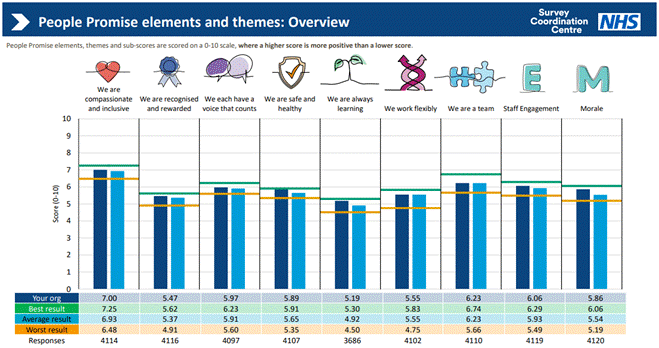
Statistically significant improvement was seen in two NHS People Promise themes – Always Learning and Flexible Working. These improvements align with actions taken during the year, including expanded access to learning opportunities, the introduction of new digital processes for flexible working and the further development of our CPD Hub.
Encouraging progress was evident across operational services. PES and PTS both reported steady improvements across multiple aspects of staff experience, helping to narrow the gap between frontline services and trust-wide averages. Resilience continues to perform particularly strongly and is now one of the highest scoring staff groups across the organisation. Corporate directorates also maintained a positive profile, with several – including People, Strategy and Planning, Quality, Finance and Clinical – recording results that exceeded trust averages across a number of measures.
Experiences relating to violence, bullying, harassment and discrimination remained broadly stable or showed improvement. Reports of unwanted sexual behaviour reduced overall, and a greater proportion of staff reported not experiencing harassment, bullying or abuse from managers or colleagues, and not experiencing discrimination. Opportunities for career development were viewed more positively, although perceptions of fairness in progression remained mixed. Appraisal coverage remains high, but fewer staff felt appraisals contributed meaningfully to improvement in their work.
While confidence in speaking up declined slightly, highlighting the continued need to strengthen psychological safety, improvements were seen in many local areas, particularly around flexible working and advocacy for NWAS as an employer. Reorganisation of wellbeing services coinciding with the survey field work resulted in a notable decline related to perceptions of organisational action on wellbeing, there are plans to rebuild this confidence in 26/27 through the launch of new resources to support access to wellbeing and support improvements in mental health.
Overall, the 2025 NHS Staff Survey provides a valuable insight into staff experience across NWAS. It demonstrates resilience and stability during a year of change, highlights the impact of targeted improvement activity, and reinforces the importance of continued focus on leadership, wellbeing and psychological safety at both trust and local levels.
Performance
In addition to the staff survey, we use a range of workforce indicators to measure performance in relation to our people. These are reviewed regularly at committee and board meetings with appropriate further analysis and triangulation of data as appropriate.
Performance in relation to core indicators was as follows:
- Appraisal target of 85% exceeded with a trust-wide compliance rate of 87.5%
- Mandatory training target of 90% exceeded with compliance of 93.3%
- Turnover – continued to further reduce by just under 1% to 7.35% overall
- Vacancy gaps – remained within tolerance with UEC recruitment and training plans met
- Sickness – this remained broadly stable at an average of 7.51% but the planned target reduction was not met.
Overall in Q3, our workforce related metric scores under the single oversight framework remain within the top three of ambulance trusts with the exception of sickness where we rated four out of 10 and we have has maintained our position across the year. The Q4 workforce related metric scores have not been published by NHS England.
Communications
Communications continues to play a critical role in strengthening the connection between NWAS, its workforce and the diverse communities it serves. 25/26 saw heightened operational pressures with major incidents, industrial action, and a challenging winter period. In this context, effective communication which is clear, timely, inclusive and accessible, has been more important than ever.
People are placed at the heart of our work: the public who rely on us at moments of greatest need, and staff who keep our service running 24 hours a day. Through a combination of targeted campaigns, enhanced digital engagement, strong media relationships, and robust internal communication channels, the team delivered wide reaching outputs focused on strengthening trust, improving understanding, and amplifying the voices and experiences of our communities and workforce.
Across all activities, a single theme is clear: effective engagement is central to safety, performance, staff experience, and high quality patient care.
Demand for the trust’s services remains high, and the public’s expectations of urgent and emergency care continue to evolve. A prominent focus of our work this year was helping the public understand; how and when to access the ambulance service, when NHS 111 online or other services may be more appropriate, what happens during a 999 call and how patients can support safe and effective care during periods of high demand.
Our winter communications plan was strengthened through the insights gathered from frontline staff, who told us that the public still need clearer explanations of how the system works. In response, we delivered a mix of accessible, narrative driven content, broadcast interviews, community engagement, and short-form video that collectively reached millions of people.
A key piece of content, our ‘Journey of a 999 Call’ video, featured real staff from multiple departments explaining their roles and guiding the public through the decision-making processes behind each emergency call. Shared across platforms, supported by press activity, and reinforced through five winter-themed social media reels, this content alone generated more than 290,000 views on Facebook, helping dispel misconceptions and reduce unrealistic expectations during peak winter pressures.
Public confidence grows when people can see and understand the real individuals behind the uniform. Throughout the year, our campaigns highlighted; the expertise of call handlers, compassion of crews, the dedication of mechanics, fleet teams, support services and the extraordinary situations colleagues respond to every day.
Our proactive storytelling gained positive media attention, securing high profile national coverage. This included BBC Morning Live, where NWAS colleagues promoted CPR training, Breakfast News focus on violence and aggression, and interviews with the Health Service Journal and BBC North West discussing performance recovery and improved hospital handovers.
We were also very excited to be approached by the long running BBC children’s programme ‘Blue Peter’ and have worked with the production team to produce a feature showcasing the work of our staff aimed at its young audience. The programme is due to air in early 26/27 and we hope it will inspire the workforce of tomorrow!
The public look to NWAS as a trusted source in times of crisis. This year, we supported communications responses to events including; the Liverpool FC parade major incident, a bus RTC in Salford, the Manchester synagogue attack and Cumbrian train derailment.
During these incidents, social media became a vital channel for timely updates and reassurance. A major incident post became one of our most engaged pieces of content, with 80,835 interactions. Through clear, sensitive updates and close coordination with partner agencies such as police and fire services, we helped ensure that accurate information reached the public quickly and consistently.
The North West is one of the most diverse regions in England, and reaching all communities, especially those traditionally underrepresented in public health messaging remains a fundamental priority. To strengthen inclusion and representation, we ensured that social media content reflected the real diversity of our people and communities. The Easter reel, celebrating the experiences of Christian staff, became one of our most successful pieces of the quarter, with 188,900 views and overwhelmingly positive engagement.
We also supported content for, Disability Pride Month, Sickle Cell Awareness Month, World Overdose Awareness Day and Falls Awareness Week. Each of these campaigns helped elevate voices from underrepresented communities, both internally and externally.
In partnership with the Anti Racism Steering Group, we developed a comprehensive communications plan to launch and embed the trust’s Anti Racism Statement. Messaging was delivered across internal channels, onto recruitment materials, and through visual assets displayed across NWAS sites. This work underscores our commitment to identifying and challenging the systems, behaviours and beliefs that allow inequity to persist.
Social media remains one of the most powerful tools for reaching diverse audiences with real-time information, guidance and reassurance. Throughout the year, our channels collectively grew to a following of over 215,000, reflecting a 12.5% increase.
We published 1,529 posts across platforms and significantly outperformed other ambulance trusts in engagement rate and engagement per post, despite posting less frequently, demonstrating a successful ‘quality over quantity’ strategy.
Positive relationships with elected representatives, councils, and system partners are essential to advocating for our staff and communities. This year we delivered more than 50 letters to MPs, local authorities and partner organisations, briefings for major incidents, industrial action and the Southport Inquiry, MP site visits in Salford, Liverpool, Blackpool, Cumbria, Manchester and Middlebrook, attendance at council OSC committees and support for concerns raised through Parliamentary Questions
Many enquiries related to issues central to community experience including access concerns, ambulance station closures, 999 triage, PTS eligibility, and siren noise. These interactions deepened trust and enabled dialogue between NWAS, local communities, and national stakeholders.
One of our largest stakeholder projects of the year was the launch event for our new Merseyside HART base Elm Point. Throughout its construction, the Communications team worked with local schools to involve the children with events such as wall picture design, burying time capsules and planting trees. We also co-ordinated a VIP stakeholder and staff event for the official opening attended by the Lord Lieutenant of Merseyside, Mayor of Liverpool and the High Sheriff of Liverpool. The sun came out for a day of exploring the site, experiencing the work of the HART team with demonstrations and talks about how the team operates.
Transparency is central to public confidence. NWAS received 514 FOI requests during 25/26 compared to 500 in 24/25. Despite the increase, the FOI team achieved exceptional performance with 96.89% completion within 20 working days, exceeding the national target of 90%. By maintaining timely, thorough responses, we upheld our commitment to openness and accountability.
Staff engagement is a critical driver of patient safety, performance and retention. This year, communications played a significant role in strengthening colleague connection and supporting the People Promise.
Key achievements include:
- Continued development of Better Health, Better You, with wellbeing newsletters focused on topics such as financial wellbeing, Stoptober, and mental health
- Support for the rollout of the Sexual Safety Policy, including filmed messages from leadership and union representatives
- Launch of the Co-pilot safe AI campaign, encouraging responsible use of new technology
- Star Awards nomination campaign, resulting in more than 400 nominations
- The Handover – a new monthly patient safety learning feature
- Schiller defibrillator content, supporting safe rollout across sectors
- Memorial services and internal recognition, expressing compassion and solidarity with colleagues
- The launch of ‘Connected’ – the quarterly briefing aimed at managers to provide them with the knowledge they need to inform their own teams.
Express mail and e-cards remained popular tools for appreciation, with 381 to 858 cards per quarter and even higher use once multi-recipient features were introduced.
Film continues to be one of our most powerful engagement tools. This year, the team produced more than 30 films, with topics including:
- Patient stories on accountability and improved outcomes
- Staff stories showcasing diverse roles across the organisation
- Educational content (for example; stroke recognition, CPR, measles awareness)
- Induction and recruitment films
- Winter pressure guidance
- Safety, research, and organisational improvement
Many films quickly became the most-watched internal content of the year, particularly patient stories shown at trust board before being shared more widely. This shift towards authentic, people centred storytelling has helped staff and the public better understand complex processes and the human experience of ambulance care.
The NWAS website continues to be a high-traffic, high-value public resource. This year saw up to 300,000 visits per quarter and more than 430,000 page views. The careers pages consistently receive more than 200,000 views and the PTS pages generate approximately 55,000 visits, supported by a new PTS feedback form.
In 25/26, we worked to build and introduce a new version of the Green Room based on feedback via site audits, user testing, focus groups with colleagues, search analytics and content analysis. The goal was a more intuitive, role-based intranet which launched in April 2026. Through enhanced public education, inclusive community engagement, strong staff-focused campaigns, and improvements to digital platforms, our work has strengthened the trust’s relationships with the public, partners and colleagues. From major incident responses to winter pressures, from anti-racism work to patient safety learning, from strategic stakeholder engagement to uplifting staff stories – our work this year has demonstrated the powerful impact of communication rooted in clarity, inclusivity, humanity and trust.
As we move into 26/27, our focus will remain on elevating the voices of our diverse communities and workforce, improving access to information, building understanding across the region, and ensuring that communication supports our staff to provide exceptional patient care.
NWAS Charity
The North West Ambulance Charitable Trust (NWAS Charity) was established in 2007. Over the last five years the charitable trust has grown substantially to become the sustainable and impactful charity that exists today.
The aim of the NWAS Charity is to fund projects, medical or training equipment and initiatives, above and beyond those already funded by the NHS, to improve the overall wellbeing of our staff and volunteers, support community engagement and education to improve health outcomes of patients in the communities we serve.
Charitable activity
Restricted fundsis income that must be used for a specific purpose, as defined by the donor or funding/grant provider. The charity has spent a total of £227k of restricted funds for charitable benefit.
- Enhancements to indoor and outdoor areas at NWAS sites to support relaxation and wellbeing.
- A Grant from NHSCT has continued to fund three community resuscitation engagement officers.
- Contributions towards community-led projects to install CPADs in areas previously without coverage, plus funding for various ancillaries to bring orphaned units back online.
- Items of equipment (not funded via the trust) to support the network of CFRs to deliver better patient outcomes.
- Health and wellbeing support for colleagues and volunteers, including the provision of wellbeing festivals and roadshows.
A total of £193k of unrestricted funds were spent on charitable activities in 25/26.
- During 25/26 the NWAS Charity has focused on reducing the number of defibrillators that are out of service due to expired warranties or out of date pads and batteries – working with community groups to provide the equipment needed to make sure more of these units are rescue ready.
- The charity has helped with the purchase of over 200 new automated external defibrillators (AED) and supported the training of more than 8,000 people in CPR and defibrillator awareness.
- The NWAS Charity continues to fund staff wellbeing initiatives over and above what NHS budgets can provide. Including the annual Star Awards, staff networks, Iftar Event, Armed Forces event, Women’s Network event, period pants and sanitary products free of charge for NWAS sites as well as many other projects that ensure NWAS staff and volunteers are at their best to provide quality patient care.
Communications
During 25/26 following additional resource, the charities communications and marketing function grew significantly, resulting in tangible impact from storytelling, income generation and engagement activity.
The charity’s social media channels increased in engagement and followers by more than 50% compared to the previous year. Two monthly newsletters were produced towards the end of 2025, including the first one specifically for NWAS staff. Approximately eight stories have been used by media. Most notably, the Jill Banks patient and staff reunion and the supporter spotlight on Bill Morely’s community work. The charity shares these meaningful stories to raise awareness and help to save more lives.
Fundraising
The charity actively engaged with over 4,000 stakeholders in 25/26, assisting with fundraising activities, acknowledging donations, supporting community events and offering guidance. This has led to best year in the charity’s history for unrestricted income. Achieving a total of £520k compared to £220k the previous year. These funds are generated from generous donations from individuals, businesses, fundraising events and campaigns, legacies and donations in memory. Thanks to all our incredible supporters, we can continue to make a difference to staff, volunteers, patients and communities.
Patient engagement and experience
Each year, our Patient Engagement Team delivers a comprehensive programme aligned to our Patient, Public and Community Engagement Implementation Plan. This plan outlines how we engage with patients across all service areas.
Each month, a minimum of 1% of PTS and PES patients who received face to face care are invited to complete the Friends and Family Test (FFT) via SMS. In addition, 300 NHS 111 patients per week receive the national postal patient experience survey and real-time feedback opportunities are available on both emergency and PTS ambulances.
We deliver a blended approach to engagement, combining virtual and face to face activity with specialist community groups. We also connect with diverse communities through ambulance awareness days, university freshers’ fairs and other large-scale public events.
Patient and Public Panel – Strengthening the patient voice
Established in 2019, our Patient and Public Panel (PPP) brings together local community members, interest groups, voluntary sector representatives and partner organisations to provide meaningful opportunities for shaping service improvement. Members offer valuable lived experience via three distinct levels:
- Consult – virtual input through digital platforms and surveys.
- Co-produce – collaborative, time-limited project work supporting specific service developments.
- Influence – active and ongoing participation in strategic and high-level meetings.
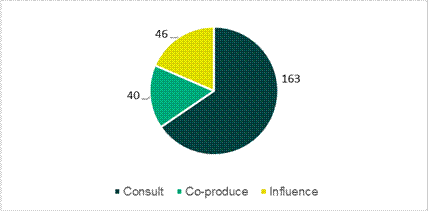
As of March 2026, PPP membership stands at 249 following an annual data cleanse. Representation continues to include a broad range of communities and lived experiences, including ethnically diverse communities (37%), young people aged under 35 (35%) and disabled people (26%). These figures reflect the diversity of active membership at a single point in time rather than year on year growth.
Feedback and lived experience from PPP members continue to play an essential role in shaping service development, helping us better understand barriers to access, inequalities in experience and opportunities for service improvement.
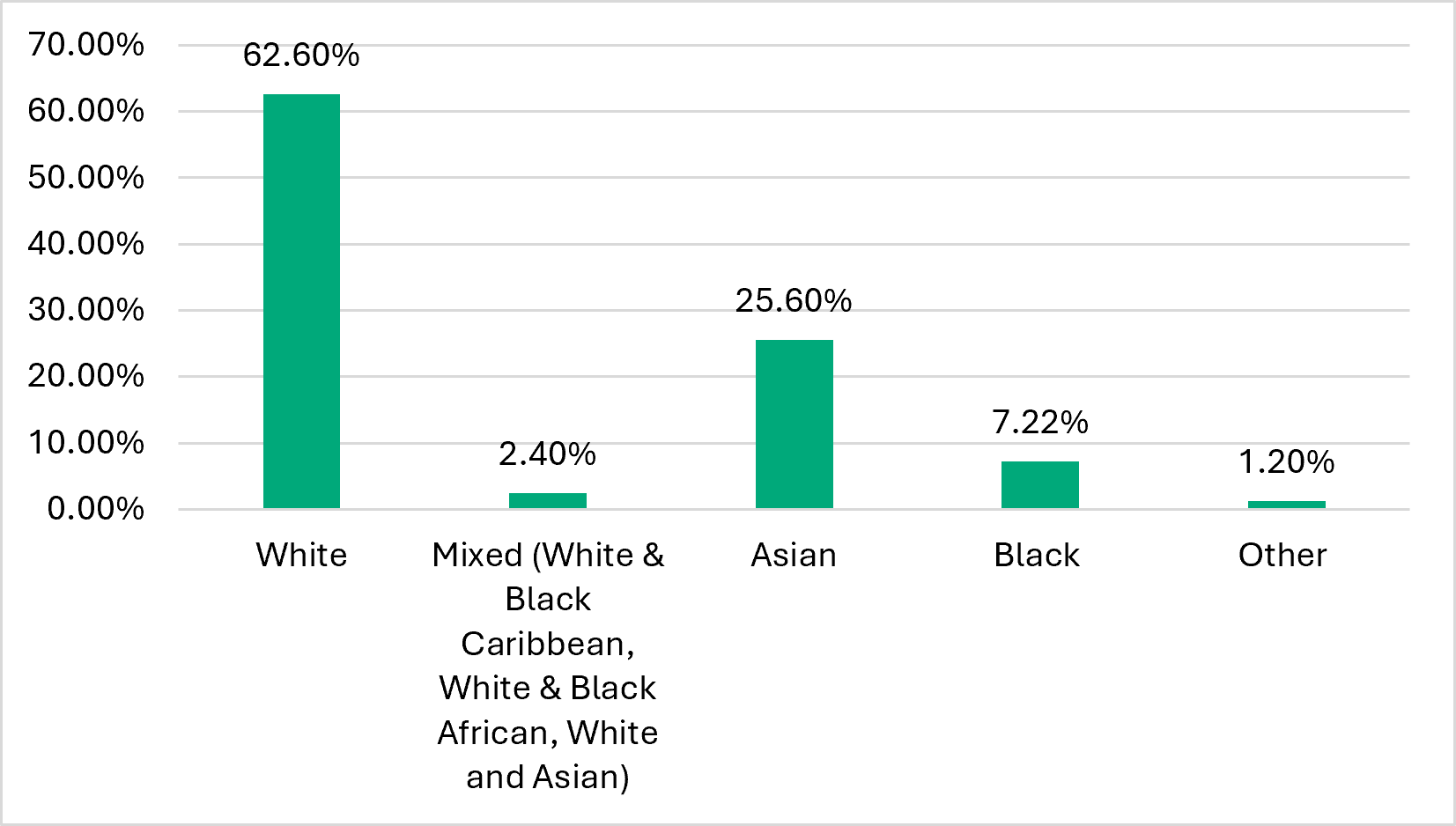
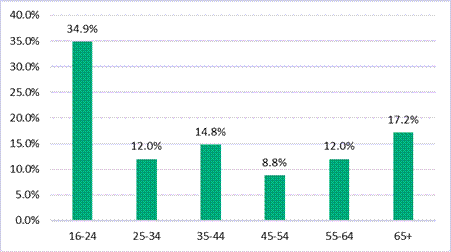
Panel membership continues to be strong, with 249 fully inducted members actively engaged via face-to-face and virtual platforms. The figure below shows membership by locality; representation from Cheshire and Cumbria is currently below recommended levels.
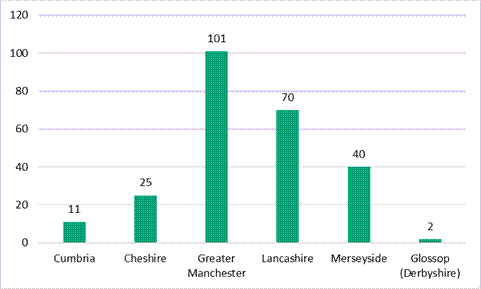
Between April 2025 and March 2026, PPP members participated in 64 engagement activities, including 28 requests originating from staff and external partners such as NHS England. Their involvement spanned a range of strategic forums – including area learning forums and the Right Care Steering Group – as well as key projects focused on health inequalities, AI-assisted call triage and recruitment assessment processes.
Throughout 25/26, 51 editions of the weekly PPP newsletter were issued, providing updates on engagement opportunities, project outcomes and notable member contributions. Highlights included participation in a research project on organ donation with the North West Air Ambulance and representation at a Lunar New Year celebration held at 10 Downing Street.
A PPP development session supported the continued growth of the panel’s skills and confidence. This was followed by a volunteer celebration event, with additional development sessions planned for 26/27 to further strengthen member involvement and impact.
Patient Experience Surveys, Friends and Family Test and Compliments
Patient surveys alongside Friends and Family Test (FFT) are critical for monitoring patient experience. Patient experience feedback across all our services continued to demonstrate consistently positive experiences of care during 25/26.
Overall:
- 92.9% of respondents felt they were treated with dignity, compassion and respect.
- 93.0% of PES patients rated their overall experience as good or very good.
- 90.6% of PTS patients rated their overall experience as good or very good.
- 88.9% of NHS 111 respondents rated their overall experience positively.
Patient comments frequently referenced staff professionalism, kindness, reassurance and emotional support.
Examples of patient feedback included:
- “Care I received by ambulance staff was 100%. They were attentive, caring and treated me with care and respect. Can’t sing their praises enough. Even the lady I spoke to whom booked my ambulance was so helpful well done to all of you and thank you.” (PTS)
93.0% of PES patients, 88.9% of NHS 111 patients and 90.6% of PTS patients also found their overall experience of the respective services either good or very good.
- “They went above and beyond the call of duty. Not only did they ensure that I would be in a safe environment, but they also made sure I was emotionally stable too. They made me feel safe, and that even though I needed hospital, everything would be okay.” (PES)
- “Having used the 111 service by phone and online recently and for the first time, I can honestly say every bit of advice and help is 100%. I am happy with every aspect of this service. Thank you all very much.” (NHS 111)
These outcomes were informed through a combination of SMS surveys, online surveys, postal surveys, FFT responses and real-time feedback opportunities. By 17 March 2026, 26,856 responses had been received across all feedback routes, with the highest response volumes coming from PTS FFT and PES FFT SMS surveys.
The cumulative survey return rate across all services was 7.57%, with the highest return rate seen within PTS digital surveys at 11.52%.
| Patient Experience Survey | Channel | Completed Returns | % of Total |
| Patient transport service Patient Experience Survey | Via SMS delivery – on-line completion | 1,603 | 5.97% |
| Patient transport service – FFT | SMS text completion | 10,164 | 37.85% |
| Patient transport service – FFT | Postcards | 155 | 0.58% |
| Paramedic emergency service Patient Experience Survey | Via SMS delivery – on-line completion | 1,074 | 4.00% |
| Paramedic emergency service – FFT (See and Treat) | SMS text completion | 6,741 | 25.10% |
| Paramedic Emergency Service – FFT (see and treat) | Postcards | 55 | 0.20% |
| Paramedic emergency service – FFT (comment card – conveyed) | Postcards | 237 | 0.88% |
| Urgent care service Patient Experience Survey | Via SMS delivery – on-line completion | 614 | 2.29% |
| National NHS 111 service Patient Experience Survey | Postal | 1,235 | 4.60% |
| Localised NWAS NHS 111 service Patient Experience Survey | Via SMS delivery – on-line completion | 506 | 1.88% |
| NWAS NHS 111 service Care Message Survey | Via SMS text Completion | 4,472 | 16.65% |
| TOTAL | 26,856 |
| 25/26 Patient Experience Surveys SMS text delivery/postal/on-line | |||||
| Cared for appropriately with dignity, compassion and respect (strongly agree/agree) | |||||
| Q1 | Q2 | Q3 | Q4 | YTD | |
| PTS | 93.46% | 92.78% | 92.39% | 92.15% | 92.70% |
| PES | 94.38% | 93.97% | 91.60% | 90.78% | 93.39% |
| UCS | 94.44% | 91.72% | 96.17% | 93.66% | 94.14% |
| 111 | 95.48% | 95.00% | 91.27% | 84.62% | 92.09% |
| 25/26 Patient Experience Surveys SMS Text Delivery/Postal/On-line | |||||
| Overall Satisfaction Received (Very Satisfied/Fairly Satisfied – Yes) | |||||
| Q1 | Q2 | Q3 | Q4 | YTD | |
| PTS | n/a | n/a | n/a | n/a | n/a |
| PES | n/a | n/a | n/a | n/a | n/a |
| UCS | n/a | n/a | n/a | n/a | n/a |
| 111 | 86.13% | 86.39% | 86.80% | 82.19% | 85.78% |
Fields above showing ‘not applicable’ indicate that the question was not included in that survey.
| 25/26 Patient Experience Surveys SMS text delivery/postal/on-line | |||||
| Overall experience of service / recommend ambulance service to friends and family (very good/good – extremely likely/likely) | |||||
| Q1 | Q2 | Q3 | Q4 | YTD | |
| PTS | 90.56% | 89.58% | 92.13% | 90.30% | 90.64% |
| PES | 94.38% | 93.21% | 93.88% | 90.78% | 93.02% |
| UCS | 87.50% | 82.07% | 91.80% | 85.21% | 84.53% |
| 111 | 85.86% | 87.07% | 91.63% | 89.95% | 88.90% |
Friends and Family Test (FFT)
PTS and PES see and treat patients receive FFT surveys monthly via SMS, with 24,818 responses received in 25/26, an 11% increase on the previous year. The table below identifies SMS text remains the primary channel (86.14%), followed by online responses (9.7%) and postcards (4.16%).
| 25/26 Summary of FFT responses and channels | |
| FFT received in 25/26 | 24,818 |
| Increase compared to 24/25 | 10.82% |
| Additional supporting comments provided with FFT responses | 17,202 |
| SMS text survey responses | 86.14% |
| Postal postcard surveys | 4.16% |
| On-line responses | 9.70% |
Thematic analysis shows high regard for staff professionalism, care, and compassion, with learning opportunities relating to delays, waiting times, and support for vulnerable PTS patients.
Demographic analysis of patient experience surveys and SMS text FFT
The table below shows the percentage breakdown of survey respondents by demographics for PTS, PES, UCS and NHS 111 surveys, and where we have received FFT feedback via SMS on our PES and PTS service lines.
An analysis of our survey respondent demographics shows:
- 95.4% of PTS survey respondents were over 45 years of age
- 58.6% of NHS 111 respondents identified as female
- 81.3% of PTS respondents declared a disability
- An average 5.9% were from ethnic minority communities
- On average, 1.8% preferred not to disclose ethnicity
*Local 111 refers to an additional shorter, NWAS designed 111 patient survey as opposed to the nationally mandated lengthier 111 patient survey.
Compliments
A total of 1,528 compliments were received, with some attributed to more than one service line or theme, resulting in small variations between the totals presented within the following tables:
| Service line | Cheshire and Merseyside | Cumbria and Lancashire | Greater Manchester | Total |
| PES | 562 | 413 | 457 | 1,432 |
| NHS 111 | 0 | 0 | 43 | 43 |
| PTS operations | 9 | 8 | 10 | 27 |
| Integrated contact centres (ICC) call handling | 1 | 2 | 18 | 21 |
| Integrated contact centres (ICC) clinical delivery | 0 | 0 | 3 | 3 |
| Emergency operations centres (EOC) | 0 | 1 | 0 | 1 |
| Total | 572 | 424 | 531 | 1,527 |
The above table shows compliments attributed by service line and geographical area. Due to some compliments referencing more than one service or team, the thematic analysis table below records a total of 1,528 compliments. PES accounted for the majority of compliments received at (93.8%) of the total received. Cheshire and Merseyside top the tables at 572 (37.5%) of compliments received.
| Themes | Cheshire and Merseyside | Cumbria and Lancashire | Greater Manchester | Total |
| Clinical treatment – face to face | 555 | 404 | 424 | 1,383 |
| Attitude and behaviour | 4 | 15 | 41 | 60 |
| PES response | 0 | 1 | 33 | 34 |
| Communication – face to face | 11 | 2 | 4 | 17 |
| Other | 0 | 1 | 13 | 14 |
| PTS journeys | 1 | 0 | 5 | 6 |
| Competence | 1 | 1 | 3 | 5 |
| Communication – virtual | 1 | 0 | 3 | 4 |
| Clinical treatment – virtual | 0 | 0 | 3 | 3 |
| End of life | 0 | 0 | 1 | 1 |
| Patient privacy/ dignity | 0 | 0 | 1 | 1 |
| Total | 573 | 424 | 531 | 1,528 |
The above table shows that the top three compliment themes were:
- Clinical treatment – face to face 90.5%,
- Attitude and behavior 3.9%
- PES response 2.2%.
These themes featured consistently across all geographical areas.
In 25/26, we strengthened patient, public and community engagement by combining survey insight with extensive qualitative feedback gathered directly from diverse groups. We participated in 17 virtual events and 10 face to face sessions, acting as speakers, facilitators and advisors. Key engagement partners included the Manchester Migrant Support Group, Sahara Preston and the Chinese Health Information Centre (CHIC).
Community feedback shaped our activities, supporting continued delivery of basic life support and CPR awareness training to help improve community confidence and emergency preparedness. Work with the British Islamic Medical Association (BIMA) and Lancashire faith communities further addressed gaps in understanding NHS urgent care pathways, alongside supporting wider defibrillator access initiatives. CPR training was also delivered to Sahara Community Centre and other partner organisations.
We maintained a strong presence at 19 high footfall events, including Healthwatch Oldham Women’s Health Forum, health mela events in Preston and Burnley, the SACHA Community and Cohesion Fair, and the Sparkle Weekend hosted by The National Transgender Charity. These engagements broadened our reach and promoted essential health messages and awareness of emergency and urgent care services.
Targeted work with young people and international learners enhanced understanding of NHS services, careers, volunteering and lifesaving skills. We will continue our focus on health melas, PRIDE events and engagement with underrepresented BAME communities in 2026/27.
We remain committed to inclusive engagement and reducing health inequalities by ensuring that patients, and communities from a broad range of backgrounds are involved in shaping our services. This approach reflects our wider commitment to equality, accessibility and inclusive participation, rather than solely focusing on statutory duties. The figure below sets out our engagement activity with diverse patient, and community groups through both patient focused initiatives and high-footfall community events during 25/26.
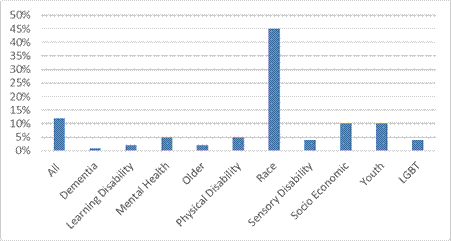
During 25/26, we strengthened our commitment to patient inclusion, reducing health inequalities and improving engagement with under-represented communities across the North West. Extensive focus groups were held with Chinese, Jewish, East European, asylum seeker and refugee communities. The sessions explored barriers to accessing ambulance services and identified opportunities to build trust and confidence. Participants described multiple challenges, including cultural beliefs, previous experiences of discrimination, and concerns regarding the recording of ethnicity data. These factors influenced their willingness to share personal information and engage with NHS services. In response, we translated CPR and emergency care information into multiple languages, with plans to distribute these resources widely to support confidence and preparedness.
To improve internal coordination, an internal patient inclusion task and finish group was established. This group brings together service leads to embed the voices of under-represented communities into planning, reduce barriers to survey participation, and drive improvements in the accessibility of ambulance services.
National Ambulance Service Patient Experience Group (NASPEG) hospital handover project
We took part in a NASPEG project involving 32 patients who had experienced delays of more than one hour during handover at three North West hospitals. Most delays ranged from 30 to 120 minutes, disproportionately affecting older and frail patients. Feedback highlighted the need for clearer communication from staff, improved comfort during waits, and greater access to distraction aids such as blankets, reading materials and sensory tools. These findings were shared nationally with the Quality Improvement, Governance and Risk Directors (QIGARD) as well as internally with operational leads and fed directly into the national handover in 45 minutes improvement programme.
Ambulance awareness days
Three major ambulance awareness days were delivered in Lancashire, Cheshire and Merseyside, attracting high attendance by young people. These events aimed to raise awareness of our services, promote career and volunteering pathways, increase Patient and Public Panel (PPP) participation and strengthen relationships with under-represented communities. Newly introduced stands on mental health and knife-crime prevention were well received. Plans are in place to extend this work, with two further events scheduled for Cumbria and Greater Manchester.
Patient stories
Patient stories continue to play an important role in organisational learning and are presented bimonthly to the board and shared throughout the trust, examples include:
- May 2025: A member of the Chinese community experienced communication barriers when seeking emergency help. Translated CPR materials improved confidence and supported better engagement with emergency services.
- January 2026: A patient who regularly experiences seizures was affected by missing medication during care transitions, prompting improvements in continuity of treatment.
These stories continue to shape quality improvements and highlight real-world impacts on patient experience.
Reporting and feedback themes
Monthly FFT dashboards are submitted to the board through the Integrated Performance Report. Broader engagement updates, including key themes, are shared quarterly via a quarterly communications and engagement report to board, the Diversity and Inclusion Sub Group and EDI updates.
Survey feedback showed 92.9% of respondents felt they were treated with dignity, compassion and respect, reflecting consistently high levels of staff professionalism and focus on patient safety.
However, wider engagement identified several recurring concerns:
- Limited awareness of ambulance services among migrants and ethnic minority groups.
- Misunderstandings around patient transport service eligibility.
- Language barriers and inconsistent access to interpretation, including BSL.
- Communication difficulties during delays.
- Ongoing need for personalised care, comfort and reassurance.
- Strong demand for CPR and lifesaving skills training.
- Desire for broader health prevention information.
- Continued need for inclusive engagement in underserved communities.
Examples of improvements and learning
Feedback and identified learning directly shaped a range of service improvements across the trust. Some of these are listed below:
- Deaf communities: Early identification of BSL users’ needs was strengthened through improved use of GP Connect and clearer reasonable adjustment flags within clinical systems.
- Chinese, migrant and ethnic minority (BAME) communities: Translated materials into Cantonese and Traditional Chinese were produced on request to improve understanding of when and how to seek help. Targeted engagement improved confidence in accessing ambulance services.
- Communication support awareness: Low awareness of interpretation support led to co-produced training materials for staff and patients from BAME under-represented communities, improving use of Language Line and BSL services.
- Defibrillator access: groups such as Sahara Community Centre, BAME Women’s Community Centre raised concerns about cost barriers to defibrillator ownership. We provided a loan device and are supporting fundraising for long-term solutions.
- CPR and life-saving training: Repeated requests for CPR training resulted in numerous sessions delivered across Latin American, European, Arab and South Asian migrant, Chinese, youth and faith communities, improving local emergency preparedness.
- PTS awareness: Misunderstandings about Patient Transport Service criteria led to the development of translated materials to improve equitable access.
- Public health priorities: Community interest in cardiovascular health, diabetes and falls prevention was shared with the Public Health Team to inform future preventive initiatives.
- Access to GP records: We increased awareness that crews can access real-time patient summaries via GP Connect, improving safe and informed care decisions.
- CHIC (Chinese Health Information Centre): Through tailored sessions, translated PTS eligibility materials and visits to NWAS sites, confidence and understanding among members of the Chinese community improved significantly. The Chinese community was one of our targeted engagement groups for 25/26.
- Migrant support and faith groups: Targeted CPR and awareness sessions in mosques (including pre-Ramadan events) improved emergency readiness and trust in services.
- Accessing personal information: A patient request about confirming ambulance attendance led to clearer guidance on accessing records through subject access request routes.
In 25/26, we delivered significant progress in patient inclusion, community engagement and equality. Through direct conversations with under represented groups, partnership events, targeted training and improved insight mechanisms, we have strengthened trust, addressed barriers and delivered meaningful improvements to patient experience. These actions supported by transparent reporting, patient stories and ongoing community partnerships will continue to inform priorities and ensure more accessible, inclusive care across the North West in 26/27 and beyond.
Management of complaints 25/26
Complaints are managed by the Patient Advice and Liaison Service (PALS) and Resolution Team in line with relevant NHS Complaint Standards and the Parliamentary and Health Service Ombudsman (PHSO) Model Complaint Handling Procedure. We remain committed to addressing concerns in an open, honest and timely way, with the primary aim of achieving meaningful resolution for patients, families and carers.
Throughout 25/26, we placed sustained emphasis on strengthening and stabilising complaint-handling processes, ensuring consistency, clarity and compassion in how complaints and concerns are managed. Patient and family experience remains the central consideration, particularly in relation to the tone, timeliness and accessibility of all written and verbal communication.
During 25/26, the primary focus has been on the efficient and timely management of complaints in line with service level agreements, while maintaining the quality and integrity of investigations. The PALS and Resolution team has worked to ensure that complaints are handled promptly without compromising the depth or transparency of the investigation process. Alongside this, the PALS and Resolution Team has continued to ensure that people raising concerns feel listened to, supported and respected.
Governance and reporting
Complaints oversight continues to be supported through established governance and assurance arrangements, providing clear lines of accountability and organisational learning:
- Quarterly assurance reports: The Quality and Performance Committee review these reports to ensure accountability and oversight in line with complaint standards and legislation, volume of complaints received, team performance and tracking any themes of learning.
- Reportable events paper: Complaints raised to the Parliamentary Health Service Ombudsman are reported in this paper and include information about decision rationale, outcome and actions recommended by the independent reviews.
- Clinical and Quality Group: This group is chaired by the Medical Director and clinical complaints are reported to provide assurance relating to the safety and quality of all clinical activities within the trust across all services lines.
- Area learning forums: These forums discuss actions resulting from complaints and oversee implementation through structured action plans.
These forums ensure patient feedback is consistently reviewed, understood and translated into learning opportunities, supporting continuous improvement across the trust.
Complaint figures
2,073 complaints were raised with NWAS in 25/26 of which 89% were recorded as ‘low complexity’ complaints and managed by the PALS team. The PALS team guide appropriate and empathetic apologies within an everyday conversation, as guided by the PHSO’s guidance.
The three most common themes of complaints received, across the range of low, medium and high levels of complaints, related to:
- Delays (699 complaints)
- Professional standards and behaviours (542 complaints)
- Care and treatment (472 complaints)
These themes reflect ongoing operational pressures alongside heightened public expectations, particularly around response times and communication.
Delays
Complaints relating to delays continued to feature as the predominant theme, reflecting challenges associated with system pressures, resource availability and increased demand across both emergency and patient transport services. The impact of long hospital handovers has been identified as a significant contributing factor to our delayed attendances.
Whilst a delayed attendance may not be avoidable, complaint investigations and responses placed emphasis on:
- Acknowledging the impact experienced by patients and families
- Providing a clear explanation of contributing factors, for example long handover delays at hospital.
- Identifying opportunities for operational learning and service improvement
| High complexity | Medium complexity | Low complexity | Total |
| 12 | 26 | 661 | 699 |
The table below shows the top three ‘type’ of delayed response complaints received and relate to services provided by the paramedic emergency service , patient transport service and NHS 111.
| Complaint type | Number of complaints |
| Response time | 325 |
| Cancelled appointments | 191 |
| Late arrival to appointment | 91 |
Professional Standards
Complaints relating to professional standards include allegations about staff, driving standards, and general conduct and behaviour.
As shown in the table below, many of these are low-level concerns that can be effectively addressed through open, everyday conversations, helping to clarify misunderstandings or offering a listening, empathetic response during what may have been a difficult experience for our service users.
| High complexity | Medium complexity | Low complexity | Total |
| 9 | 21 | 512 | 542 |
Serious allegations against staff are reviewed and responded to as high complexity complaints and often are referred to local HR and management teams for an internal review and assurance.
Care and treatment
Care and treatment remained one of the top themes of complaints received during 25/26, spanning low, medium and high-complexity cases. These complaints often relate to decision-making, clinical assessments and treatment outcomes and often interlinked with the ‘professional standards’ category, as to how these decisions were communicated to patients and families.
| High complexity | Medium complexity | Low complexity | Total |
| 24 | 119 | 329 | 472 |
| NWAS service line | Number of complaints |
| Paramedic emergency service operations | 335 |
| Integrated contact centres | 111 |
| Patient transport service operations | 25 |
Complaint outcomes
2,076 complaints were closed in 25/26 of which 90% were closed in accordance with our SLA time limits. This is an improvement on the 86% closure within SLA rate reported at the end of 24/25.
| Complaint outcome | Complaint level | Total | |
| Upheld | High | 23 | 481 |
| Medium | 56 | ||
| Low | 402 | ||
| Not upheld | High | 13 | 834 |
| Medium | 80 | ||
| Low | 741 | ||
| Partly upheld | High | 14 | 751 |
| Medium | 56 | ||
| Low | 681 | ||
PHSO
In 25/26, we received nine notifications from the Parliamentary and Health Service Ombudsman (PHSO) regarding complaints submitted for independent review. Of these, six cases remain open as we move into 26/27 and are currently under detailed investigation.
The PHSO concluded and closed six cases during the reporting period of which:
- Four cases were closed following an initial assessment, with no failings found on the part of NWAS.
- Two cases were not upheld, with the PHSO identifying no failings by NWAS.
Freedom to Speak Up
We are committed to providing safe, high-quality care and continually improving the services we deliver. During 25/26, we have monitored our performance against national standards set out in the NHS Oversight Framework, alongside our own local priorities for quality improvement. This includes a balanced set of measures covering patient safety, clinical outcomes, workforce experience and service delivery.
A key part of how we improve is by listening to our staff. Staff are encouraged to raise concerns and share feedback through a range of routes, including Freedom to Speak Up (FTSU), incident reporting systems, HR processes and staff surveys. While the number of FTSU cases has reduced over recent years, this reflects staff increasingly using alternative routes to raise concerns rather than a reduction in willingness to speak up. This is supported by triangulation of data sources, including staff survey feedback, which continues to show stable levels of confidence in speaking up, alongside sustained or increased reporting through incident reporting systems and HR processes. Together, these indicators suggest that staff voice remains active but is being expressed through a broader range of channels.
The issues raised by staff remain consistent with those seen across the NHS, including concerns about behaviours, workplace culture, and day-to-day working practices. By looking more closely at the detail behind these concerns, we are able to identify specific areas for improvement, such as professional standards, team working and operational pressures. This helps us to act early and make targeted changes where they are most needed.
We measure our performance using a range of key indicators, which are regularly reviewed by senior leaders and board committees. We combine data with feedback from staff and patients to build a full picture of how we are performing. This approach helps us to identify risks early and ensure that improvement actions are focused on the areas that matter most.
There is strong emphasis on the quality and reliability of our data. Information used to monitor performance is regularly checked and validated, and our governance arrangements ensure that there is clear accountability for data quality and reporting. We continue to focus on improving staff experience, strengthening safety and supporting resilient services for our communities.
While many staff feel confident to speak up, fewer feel confident that their concerns will always be acted upon. We recognise this as an important area for improvement. Work is ongoing to strengthen how concerns are followed up, improve communication and feedback, and ensure that learning from concerns leads to visible and meaningful change.
Overall, we are confident that staff voice is an important and active part of how we learn and improve. We will continue to build on this by creating an open and supportive culture, where concerns are listened to, acted upon and used to improve care for patients.
Speaking up is a critical component of delivering safe, effective and person-centred care, and our work this year has aligned closely with the Quality Strategy aims. We continue to strengthen our approach to Freedom to Speak Up (FTSU), embedding a culture in which staff feel safe, supported and able to raise concerns that lead to learning and improvement.
- “I am more than happy to share my identity with F2SU guardians; however, I am sceptical about sharing with management due to potential repercussions. “
- “I would certainly feel comfortable speaking up again if needed. Following my initial report, the action taken made me happy knowing that these things are taken seriously. I have had no detriment following reporting this incident, highlighting that confidentiality is taken seriously. I think many staff members worry about reporting such things because of the risk of things coming back to them.”
- “I felt my Datix wasn’t dealt with properly, as I received no response or reassurance from management that any action had been taken. I would speak up again, but I currently have little trust in the process. The Datix system is hard to navigate, and managers aren’t required to update you, which leaves staff unsure whether their concerns have been addressed.”
The FTSU Team received 96 concerns in 25/26, down from 120 in 24/25 (a 20% reduction). While this coincides with a strengthened triage and signposting approach, it is recognised that quantitative changes at this level can be influenced by a range of factors, including workforce changes, awareness of routes and local reporting behaviours. Internal monitoring indicates an increase in concerns being directed to and managed through alternative routes such as HR, patient safety and local management processes at an earlier stage. This supports a shift towards earlier resolution within operational teams; however, the data is interpreted alongside wider indicators, including staff survey feedback and incident reporting trends, to provide a more balanced view of staff voice and organisational responsiveness
| Number of concerns received during 25/26 by service line | |
| PES | 64 |
| PTS | 11 |
| ICC | 19 |
| Corporate | 2 |
Increased capacity, with the appointment of an additional full time Guardian, strengthened visibility through staff forums, induction programmes, cultural workstreams/events, has supported a more proactive and supportive model of speaking up. Guardians increased attendance at assurance meetings and learning forums, ensuring themes from concerns informed cultural development, leadership behaviours, communication, and related improvements.
Collaboration with HR, Patient Safety, Health and Safety, local management teams, and staff networks has been integral to the progress made in 25/26 and has supported earlier interventions, clearer expectations for staff, and learning for the organisation. The revised Speaking Up Policy further clarifies routes, responsibilities, and our commitment to learning.
Patient safety concerns stabilised and remained the second most prevalent category of concern reported, reflecting the continued contribution of FTSU to risk identification, safer practice and improved clinical governance, aligning with our safety-first focus. Concerns have remained proportionate to the workforce. Concerns were recorded in line with the National Guardians Office (NGO) requirements.
| Concerns received by category | |
| Worker safety | 6 |
| Patient safety | 21 |
| Fraud | 5 |
| Inappropriate attitudes and behaviours | 52 |
| Bullying and harassment | 12 |
Improvements in the timeframe for resolution have been seen across all service lines, supported by strengthened processes, consistent executive oversight and more frequent engagement with operational leadership. In line with our quality improvement priorities and expectations, FTSU guardian have continued to contribute to safer practice, learning responses, and stronger integration into management structures. Insights from FTSU have supported discussions across service lines, contributing to stronger alignment between FTSU intelligence, risk, workforce culture and safety programmes, strengthening assurance. A recent independent review confirmed the FTSU function is operating from a strong baseline, with visible guardian leadership and sustained organisational commitment.
Overall, 25/26 represents a year of maturity for FTSU, which remains integral to promoting safety, inclusion, and high quality care for colleagues and patients alike. Achievements have been recognised through positive internal audit findings, increased engagement at local and regional learning/assurance meetings and strong feedback from staff about accessible, psychologically safe routes to speak up. Looking ahead, preparations for the transition of national FTSU functions when the NGO closes in June, improvements to data triangulation and continued cultural strengthening will form the core of the 26/27 programme. Our commitment remains centred on enabling every colleague to feel heard, safe and supported, ensuring speaking up directly contributes to high quality care.
Exercise of functions in relation to health inequalities
We are required to report against our duties in ensuring our functions are consistent with NHS England’s statement on information on health inequalities (duty under section 13SA of the National Health Service Act 2006). This statement, first published in November 2023 and revised in 2025, aims to provide a lever for organisations to drive more complete and better-quality health inequality data collection and to increase transparency on progress tackling health inequalities.
Accordingly, information is provided in four sections:
- An overview of the work undertaken to produce the NWAS Health Inequalities Framework; organisational priorities to support the reduction of health inequalities in our most vulnerable populations.
- NWAS progress against operational priorities.
- NWAS progress against the CORE20PLUS5 clinical areas.
- Health inequality data quality based upon a set of flexible core measures and supporting measures to support understanding and monitoring of health inequalities.
Each section describes how information on health inequalities is being used within the trust in relation to the five expected functions of information on health inequalities:
- Understanding general healthcare needs.
- Understanding healthcare access, experience and outcomes.
- Improving data quality, collection and analysis.
- Informing service improvements and reductions in healthcare inequalities.
- Publication within or alongside annual reports.
Information is reported at trust (regional) level. We operate across five integrated care boards (ICBs); work continues with ICB partners in the region to develop reporting at ICB level.
Health Inequalities Framework
Defining our role as an urgent and emergency care provider in reducing health inequalities for our patients and population, directly relate to our core functions and with regard to our commissioned responsibilities, has been a key objective over 25/26. Engagement and collaboration across service lines, directorates, and the PPP, utilising evidence-based facilitation and prioritisation methods, guided the approach and included:
- A consensus workshop to identify activities that are within our scope to deliver with perceived potential to support the most vulnerable population groups.
- A prioritisation process based on the Delphi approach, was used to rate the consensus workshop output against defined criteria to estimate impact on patient safety, patient experience, clinical care, alignment with national policy, and alignment with system partners.
- A final refinement with senior leaders as part of NWAS Strategy development conversations.
A comprehensive evidence pack: Defining NWAS role in tackling health inequalities. Workshop 1. “The art of the possible” (https://amber.openrepository.com/entities/publication/9f6298d6-55d1-4e3c-8530-411327232387) was collated by the public health manager to support the process. Information on national priorities and guidance was presented, including:
- The CORE20PLUS5 framework and NHS England’s new 10 Year Plan.
- Intelligence on health inequalities in the North West Region.
- Health inequalities priorities from our ICB partners.
- Examples of work carried out at ambulance trusts in the United Kingdom as well as examples from abroad.
Additionally, this year we developed our first Population Health Dashboard, utilising Power BI reporting to enable analysis of 999 and PES data broken down by age, sex, location and index of deprivation. Using insights from this dashboard, the evidence pack included an initial analysis of the healthcare needs from the population calling us from areas in the 20% of highest deprivation.
The NWAS Health Inequalities Framework below is the output of this evidence-based consensus process and articulates the areas where we can make the most impact as a regional urgent and emergency care provider, in partnership with our system partners, to address health inequalities.
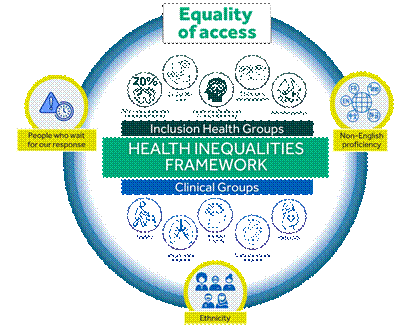
The Framework has been integrated into the NWAS Strategy 2026-2031 and guides for the organisation in targeting and coordinating action for priority vulnerable groups, organised across three areas:
- Equality of access: as the access point for urgent, emergency and planned care we must ensure that our populations benefit from equitable access to our service. We will strive to reduce variation on response times, across patients with different ethnicities or non-English proficiency levels.
- Clinical groups: The clinical areas are identified as those where NWAS can have the most impact on health inequality: frailty, respiratory diseases, mental health, cardiovascular disease and maternity.
- Inclusion health groups: Target groups to address unwarranted variation in collaboration with our system partners: patients calling from areas in the 20% of highest deprivation, end-of-life care needs, learning disabilities and neurodiversity, children and young people, and patients facing homelessness.
A key enabler for driving this work is the development of culturally aware care and patient experience across our staff and volunteers. Utilising patient feedback to triangulate the data and learning from patients lived experiences will ensure our workforce is confident and competent to deal sensitively with the individual needs of patients.
The strategy identifies health inequalities as a cross-cutting theme alongside equality, diversity and inclusion, and continuous improvement. These themes guide decision making, and shape how services are designed and resources utilised across our four strategic plans: Quality, People and Culture, Clinical Response, and our Future Sustainability Strategic Plans. Revised governance and assurance processes will provide mechanisms to monitor progress and support better use of information on health inequalities to derive actionable insights.
Measurement framework, domain 1: Operational priorities
The table below summarises the core and supporting measures used to help understand and monitor health inequalities related to our activity.
| Measurement framework, domain 1: Operational priorities | |
| Urgent and emergency care | |
| Core measures | Related to NWAS |
| Inequalities in the proportion of ambulance patients in cardiac arrest that receive a post-ROSC care bundle Inequalities in the proportion of ambulance patients with a ST-elevation myocardial infarction (STEMI) that receive the appropriate care bundle Inequalities in children and young people (CYP) emergency department attendances | Yes Yes No – attendances, but conveyances |
| Supporting measures | |
| Inequalities in rates of ambulance calls across different patient groups Inequalities in percentages of attendances broken down by acuity reported at triage Inequalities in percentages of CYP admitted vs. redirected | Yes No – attendances, but calls or incidents by acuity category No – admittances, but between conveyed vs non-conveyed |
At this time there are no formal processes in place to analyse measures above, broken down by demographic variables age, sex, ethnicity, and deprivation; however, work is in progress to enable monitoring and reporting in the new financial year. Currently other reports are in place that demonstrate NWAS’ exercise of functions in collecting, analysing, utilising and publishing data on health inequalities.
Clinical audit
Across our clinical audit activity, including the national Ambulance Quality Indicators, the aspiration to collect, analyse and report data across age, sex and ethnicity is clear, and reporting is underway. Development to allow for the collection and analysis across deprivation is in progress, and current interdependencies are being explored with our Digital team to enable this.
Current analysis of clinical audit data to identify and monitor health inequalities is limited. Recognising this, procurement of our new audit tool will both streamline the clinical audit process but will also enable the integration of demographic and deprivation data in all future reports.
Patient safety
The Patient Safety Incident Response Framework (PSIRF) offers a flexible, system-based approach, to support the development of an underlying just culture, making it easier to address concerns specific to health inequalities. PSIRF provides the opportunity to learn from patient safety incidents and prompts consideration of inequalities during the investigation process.
Patient safety incidents data is captured through the Datix Cloud IQ (DCIQ) system, which captures protected characteristics data, assisting with assessment of equality impacts of patient incidents. We continue to provide and improve upon an equitable service to all individuals who provide feedback to the organisation or are involved in any of its investigations. Patient safety reports broken down by sex and ethnicity are received twice a year by the board through the formal governance structure at the executive led Clinical and Quality Group and the non-executive led Quality and Performance Committee. The table below provides the breakdown of patient safety events reported this year, broken down by ethnicity and gender. Currently, ethnicity is not stated or blank in 33.5% of events, and sex is not stated in 8% of the events.
| Sex | |||||
| Ethnicity | Total | Male | Female | Non-binary | Not stated/not known |
| Asian | 405 | 170 | 230 | 0 | 5 |
| Black | 114 | 54 | 59 | 0 | 1 |
| Chinese | 12 | 6 | 6 | 0 | 0 |
| Mixed | 71 | 26 | 43 | 1 | 1 |
| Not stated | 2,313 | 1,136 | 1,099 | 0 | 63 |
| Other specified | 5 | 1 | 4 | 0 | 0 |
| Unspecified | 277 | 116 | 122 | 0 | 39 |
| White | 5,053 | 2,016 | 2,621 | 2 | 47 |
| {Blank} | 696 | 29 | 31 | 0 | 636 |
| TOTAL | 8,985 | 3,921 | 4,238 | 3 | 792 |
| Note – not all patient safety events reported in period include confirmation of the patients self-identified ethnicity or gender; as such the totals reported do not match the number of patient safety events reported overall. | |||||
Complaints
The PALS and Resolution team has strengthened its approach to identifying and addressing health inequalities through improved data collection, analysis and partnership working. From April 2025, systematic capture of protected characteristics data across complaints, including sex, ethnicity and disability as mandatory within the DCIQ system has commenced. A shared patient experience dashboard has been developed, triangulating complaints, compliments and feedback to identify trends by protected characteristics and to support targeted improvement. Community engagement activity, including work with underrepresented groups is ongoing to address disparities in service use and voice.
In 25/26 females accounted for 51% of complaints compared to 45% male (4% other). Disability data shows that 48% of complainants did not disclose their status, limiting detailed insight. Ethnicity data also demonstrates significant gaps, with 51% not stated, and overall, very low representation from minority ethnic groups.
Low complaint volumes from some communities are not assumed to indicate equitable experience. Triangulated insight from complaints, the FFT data, and patient engagement activity indicates that some communities across the North West are less likely to access the services we provide. Therefore, they have no experience to raise a concern from or about. This work has informed ongoing targeted engagement work to build trust, improve awareness, and reduce barriers to access our service, as well as feedback.
It is important to consider the population served by our service lines. For example, PTS predominantly supports patients with mobility needs, long-term conditions and other vulnerabilities; therefore, a higher proportion of service users, and consequently complainants, are people with disabilities.
In 26/27, to reduce ethnicity and sex characteristics data, priorities include improving completeness of protected characteristics data (particularly ethnicity and disability), incorporating deprivation and age metrics, enhancing system linkage, and expanding analysis to support more granular regional insight and targeted action to reduce inequalities.
Measurement framework, domain 2: CORE20PLUS5 for adults and for children and young people (CYP)
An initial synthesis of the flexible core and supporting measures in this domain related to NWAS activity is provided below. These measures relate to the clinical areas of maternity, mental health, learning disability and autism (LDandA), and vaccines.
| Measurement framework, domain 2: CORE20PLUS5 | |
| Core measures | Related to NWAS |
| Maternity: completeness of ethnicity data in the Maternity Service Date Set (MSDS) | No – MSDS not applicable. Captured within maternity related call data. |
| Mental Health: inequalities in rates of restrictive interventions in inpatient services | No – relates to inpatients. Captured within mental health related call data |
| Mental Health: inequalities in use of the mental health act including use of community treatment orders (CTOs) | Yes |
| LDandA: number of people in a mental health inpatient setting who have a learning disability or are autistic | No – relates to inpatients Captured within LDandA related call data |
| Vaccines: inequalities in uptake of COVID and flu vaccines | Yes, for staff only |
| Supporting measures | |
| Maternity: inequalities in women who have a post-partum haemorrhage | Yes |
| Mental Health: inequalities in rates of premature mortality for people with severe mental illness | Yes |
| Mental Health: inequalities surfaced in patient reported outcome and experience measures recorded in local and national tools | Yes |
| LDandA: number of adults with a learning disability or who are autistic in a mental health setting. | Yes |
| LDandA: inequalities identified in learning from lives and death reviews (LeDeR) faced by people with a learning disability and autistic people | Yes |
Our Quality Strategic Plan 2026-2031 includes an objective to identify areas of improvement in activity for patients who experience sub-optimal care because of recognised health inequalities. High-level deliverables within the annual plan 26/ 27 align to this objective aim to review inequalities and outcomes for maternity, mental health, LDandA, and frail patients, and to identify key opportunities for making every contact count and process measures of impact. Resultantly, data breakdown is anticipated to be available for next year’s reporting cycle.
Work carried out this year by clinical leads and teams in relation to maternity, mental health, LDandA, and staff vaccination is described narratively.
Maternity
Our consultant midwife and maternity team work closely with maternity providers across the region. In collaboration, we received NIHR research funding to conduct the ‘disparities in access to the NWAS during pregnancy, birth and postpartum period and its association with neonatal and maternal outcomes study (DIAAS)’. This study will include health inequalities data and analysis published in peer-reviewed journals and is currently being collated. This will form the basis of future reporting in accordance our new strategic priorities for health inequalities.
Mental health
The Mental Health team routinely monitors mental health incident response times in comparison with physical health incidents. Over the past 12 months, there has been a significant reduction in mental health response times, which demonstrates the positive impact of targeted work undertaken by the team to address inequalities faced by patients experiencing mental health crises.
Following the implementation of a range of enhanced models of care to improve access to specialist mental health advice, mental health practitioners were integrated within contact centres. As a result, we have seen a notable increase in ‘hear and treat’ outcomes over the last 12 months when compared to the previous reporting period, reflecting provision of mental health advice at the earliest stage of patient contact and more appropriate care pathways. In addition, thanks to developments to strengthen partnership working, there has been a notable reduction in patient safety incidents associated with mental health presentations.
Performance and outcome data are reported to the Quality and Performance Committee through the Mental Health Annual Report. Data is gathered from a variety of sources, including DCIQ and the Mental Health Dashboard. We also capture data relating to referrals made following non-fatal opiate overdoses, as well as sharing intelligence with system partners regarding calls associated with suicide and self-harm. This information contributes to informing the wider public health response and supports the development and delivery of mental health strategies across the system.
Work is ongoing to review and refine strategic priorities in relation to health inequalities. As this work progresses, further data and analysis will be shared to support continued improvement and accountability.
Learning disabilities and autism (LDandA)
Data extraction from PES electronic patient records indicates we attended face to face incidents with at least 9,500 patients with either a learning disability, autism or both in the first half of 2025.
As part of the LDandA 2023-2026 Plan, we implemented the mandatory Oliver McGowan training Tier 1, with plans to roll out Tier 2 in 26/27. The increase seen in LeDeR (Learning from Lives and Deaths – People with a Learning Disability and Autistic People) notifications of death, from five notifications in 2018 to over 100 notifications in 2025, suggests increased awareness fuelled by increased professional curiosity surrounding neurodivergent conditions. These notifications facilitate more focused reviews to assist our system partners to support the reduction of avoidable deaths. Following partner’s feedback, our support centre referral form and our electronic patient record have been improved to enhance data accuracy. Work is currently progressing to mandate an area in the ‘Diagnosis of Death’ section for staff to consider and complete whether a patient had a learning disability or was autistic.
Our LDandA practitioner proactively works with specialist external teams to identify the most complex LDandA patients earlier, including exploration of opportunities for increased respiratory sepsis risk recognition and safeguarding opportunities concerning autism and suicide, and creation of flags for frontline staff, providing them with access to hospital passport documentation via the clinical hub.
Vaccinations
NWAS does not capture COVID vaccination information and does not provide an offering to staff.
The flu vaccination status is recorded on a national system, RAVS and from NHSE regional and national teams are able to review the staff uptake of the flu vaccinations. Staff uptake of the flu vaccination in 25/26, indicating uptake across recorded staff sex, ethnicity, and disability status is provided below.
| Service line | Staff vaccinated /total staff | Male staff vaccinated / total male staff | Female staff vaccinated/ total female staff | Ethnic minority staff vaccinated/ total ethnic minority staff | Staff with a disability declared vaccinated/ total staff with a disability declared |
| Patient emergency services | 45.54% | 45.45% | 45.63% | 34.57% | 50.27% |
| Integrated contact centres | 38.23% | 37.59% | 38.47% | 17.91% | 45.42% |
| Resilience | 56.93% | 54.81% | 63.64% | 33.33% | 60.00% |
| Patient transport services | 40.18% | 43.14% | 36.99% | 19.57% | 41.67% |
| Corporate | 45.75% | 41.00% | 50.75% | 36.59% | 54.46% |
| NWAS Total | 43.46% | 43.77% | 43.21% | 25.30% | 48.57% |
As part of the preparation for the next flu campaign for 26/27, the Infection Prevention and Control team will review the staff data and identify strategies based on inequalities and variation highlighted by this year’s data.
Measurement framework, domain 3: Data quality (ethnicity recording)
The full set of flexible core measures and supporting measures in this domain is provided below.
| Measurement framework, domain 3: Data quality | |
| Ethnicity recording | |
| Core measures | Related to NWAS |
| Percentage of patient records with a valid, non-residual ethnicity code in data sets Percentage of records with blank or null codes for ethnicity Percentage of records with residual ethnic codes, including :not stated / not known | Yes Yes Yes |
The breakdown of ethnicity recording is provided across NWAS service lines:
| NWAS service line | |||
| Percentage of patient records with: | NHS 111 calls | Patient emergency service incidents | Patient transport service journeys |
| A valid, non-residual ethnicity code | 95.70% | 55.19 % | 0.72 % |
| Blank or null codes for ethnicity | 2.45% | 19.00 % | 99.24 % |
| Residual code (not stated, not known) | 1.85% | 25.81 % | 0.40 % |
Within our NHS 111 service line well-embedded training processes, standard operating procedures, and the nature of the service provided ensures high levels of ethnicity recording. In contrast, within our patient emergency services recording is challenging owing to the inherent nature of the service provided. Alternative means to populate this data through sharing centrally recorded patient ethnicity data is being explored nationally as part of the NHSE Ethnicity Recording Improvement Plan.
Within PTS, work has been undertaken to understand the barriers to ethnicity recording particularly at the booking stage for both telephone and online bookings. Further scoping work is planned to enable a better understanding of where effective data collection opportunities can be developed and embedded into existing standard operating practices. In parallel, a staff awareness campaign is being developed to reinforce the importance of ethnicity recording and promote more consistent practice.
Aligned to the new strategy and our Health Inequalities Framework, the Quality Strategic Plan 2026-2031 includes a high-level deliverable to improve ethnicity capture as per requirements of NHSE Ethnicity Recording Improvement Plan. Scoping work will initiate in 26/27, where an appropriate percentage improvement will be defined.
Public health
During 25/26, work continued to ensure our responsibilities against the NHS Oversight Framework and the NHS provider licence regarding population health and health inequalities were fulfilled. The population health and social value objectives in the NWAS Sustainability Strategy 2023-2026 and this year’s health inequalities deliverables and projects in our Annual Plan guided this work during 25/26.
Activities aligned with the organisational strategic aims to provide highly effective care and person-centred partnerships. These have been undertaken to strengthen our capability across the four enabling areas identified within the Association for Ambulance Chief Executives’ (AACE) ‘maturity matrix’ against key objectives in reducing health inequalities. These are; strategic leadership and accountability, data, insight, evidence, and evaluation, building public health capacity and capability and system partnerships.
Strategic leadership and accountability
The role of the board is crucial in shaping culture, guiding organisational behaviour and providing operational direction. This year following advocacy from our lead executive for health inequalities and the medical director, the board undertook development facilitated by the Public Health team, culminating with clear direction to define our role as an urgent and emergency provider in reducing health inequalities for our patients and population.
During 25/26, we used evidence-informed deliberative approaches to engage with the organisation to identify and agree our role in supporting the reduction of health inequalities in the most vulnerable groups services across 999, NHS 111, and PTS. This work was included as a key deliverable in NWAS Annual Plan 25/26.
This resulted in the production of our first ‘Health Inequalities Framework’ which identifies clinical areas and vulnerable groups, where we can provide targeted support and work with our system partners to address health inequalities. The framework aims to serve as a guide for the organisation when planning and developing improvement work, and it has been embedded into the new trust strategy and associated strategic plans. The framework and further information on the development is provided in the ‘Exercise of Functions in relation to Inequalities’ section.
Data, insight, evidence, and evaluation
Our ‘Population Health Dashboard’ analyses 999 data, broken down by patient characteristics (age, sex, ethnicity), location and index of deprivation and was introduced in 2025. This dashboard is helping to develop our understanding of the healthcare needs of the population calling the ambulance service via 999 and enables identification of population groups at risk of poor access to healthcare, poor experiences of healthcare services, or poor outcomes.
The dashboard was used as an important tool in supporting the development of NWAS Health Inequalities Framework, in providing information on the healthcare needs of our population from areas identified in the 20% of highest deprivation, as defined by the Index of Multiple Deprivation.
We also delivered training sessions across directorates and produced resources on the use of the dashboard enabling greater insight for those leading or participating in improvement projects to tackling health inequalities. Examples of how the dashboard supported identification of areas of high demand to enable targeted action included: analysis on calls related to drug overdoses to support referrals to cessation services, and analysis of cardiac arrest and characteristics of the population in high demand areas to support applications to fund installation of new defibrillators and basic life-support training.
This year, support and approval was gained for the expansion of the dashboard to include NHS 111 data, enabling understanding of 1.9 million calls to identify areas of priority for the trust and our system partners, to support demand management and service provision. Work is underway to develop and launch this ‘phase 2’ of the dashboard in the coming year.
Building public health capacity and capability
Collaborative work across the Public Health, Strategy and Workforce and Organisational Development teams in 24/25 produced two introductory learning modules, to increase awareness and understanding of health inequalities and of ‘making every contact count’ across the workforce.
These two public health introductory modules were approved for inclusion in our mandatory training programme for 25/26 for staff across all service lines and roles, including frontline and corporate. This approval reflected the strong commitment and support from the senior leadership team in shaping a compassionate and inclusive culture, by supporting understanding of the impact of inequalities on population health outcomes across the workforce. Completion figures for the two modules at the end of this financial year were above 95% of circa 8,000 employees. Additionally, a copy of the modules was uploaded to our Continuous Professional Development (CPD) platform so it could also be accessed by the nearly 1,000 NWAS volunteers across community first responder roles, volunteer patient transport drivers, and members of the Patient and Public Panel.
The modules have been shared with other ambulance trusts via our participation in the AACE Reducing Health Inequalities Network and are seen as best practice resources within the ambulance sector.
This year, to develop our specialised capacity and capability, we created the role of public health practitioner apprentice, the first of its kind within the organisation. The role supports projects within the Public Health team and is supported by a grant obtained from NHS England North West Workforce, Training and Education team via a competitive application process. The grant supports release and attendance for the associated Level 6 training programme.
To date, we have three members of staff undergoing the Apprentice programme; two individuals who enrolled in the apprenticeship programme last year, did so as part of their own professional development from roles within the paramedic emergency service (PES) and in the patient transport service (PTS), and our public health practitioner apprentice. During their first year of study, the public health apprentices develop their knowledge of public health practice which they used to support projects within the trust, including supporting the consensus work to develop the Health Inequalities Framework. Additional projects to address health inequalities within their own areas of work, included supporting the winter flu vaccination campaign, and project work to improve collection of ethnicity data within their service lines.
We continue to explore partnership opportunities to welcome public health registrars to working via placements within the trust and with academic partners to support Master of Public Health programmes.
This year the public health manager successfully completed her portfolio to become a registered public health practitioner on the UK Public Health Register.
System partnerships
Owing to the internal work undertaken this year to define our internal priorities on tackling health inequalities, limited activity in relation to exercising functions in accordance with plans published under the joint forward plans for ICBs and its partners was carried out. Concurrent to defining our organisational strategic priorities, and in preparation to initiate collaborative partnership working in key areas of focus, the Public Health and the Partnerships and Integration teams undertook a stakeholder mapping process to identify relevant networks and groups during 25/26, providing, for the first time, a resource to facilitate project initiation and external partnership development.
Sickle Cell Disease is a genetic condition which affects the red cells in the blood and can cause extreme pain and organ damage; the condition is associated with considerable health inequalities and/or ethnic groups. Working with colleagues from London Ambulance Service (LAS), the Sickle Cell Society UK, and the Clinical Audit team, the Public Health Team and our Race Equality Network delivered an awareness webinar during Sickle Cell Awareness month. This work resulted in the identification of opportunities to improve clinical care and patient experience. As a result, we are leading on conversations to develop a new referral pathway to the regional specialist unit and developing a training module for clinicians, informed by collaboration with LAS.
The Public Health team continued to engage in the Cheshire and Merseyside NHS Prevention Pledge Community of Practice and is exploring opportunities to engage across the NWAS region.
Research and development
We continue to strengthen our role as a leading contributor to pre-hospital urgent and emergency care research – embedding this as a core element of service delivery and, demonstrating a clear commitment to developing the evidence base that improves the safety, quality of care, and experiences of our patients. Research activities range from clinical trials on emergency healthcare interventions, to exploring clinical decision making, service delivery, and organisational culture, and beyond.
National Institute for Health and Care Research (NIHR) funding enabled the continuation of the senior research fellow and research paramedic roles, facilitating wider staff engagement and patient participation in clinical research. In 25/26, 927 participants took part in high quality NIHR Research Delivery Network (RDN) Portfolio studies. Despite the decrease in 25/26 compared to 24/25, this represents a 47% increase over the past five years since 21/22.
| NIHR RDN portfolio recruitment | |
| 21/22 | 630 |
| 22/23 | 913 |
| 23/24 | 936 |
| 24/25 | 1093 |
| 25/26 | 927 |
We strengthened our existing partnerships with the NIHR RDN North West, local NIHR Applied Research Collaborations, health and care providers, and higher education institutions, in addition to cultivating new research collaborations. Our colleagues were listed as co-applicants for newly developed research bids, creating a pipeline for future research opportunities for the organisation. In 25/26, there were 15 peer reviewed research publications by authors affiliated with NWAS demonstrating our valuable contribution to research.
Due to the continued growth in research activity across the organisation, the trust acts flexibly and strategically to maintain research capacity and capability to ensure we continue to strengthen the culture of evidence-based practice and can continue to deliver safe, effective, and patient-centred care.
Task force on climate related financial disclosures (TFCD)
The DHSC Group Accounting Manual (GAM) has adopted a phased approach to incorporating the TCFD recommended disclosures as part of sustainability annual reporting requirements for NHS bodies, stemming from HM Treasury’s TCFD aligned disclosure guidance for public sector annual reports. These TCFD recommended disclosures, as interpreted and adapted for the public sector by the HM Treasury, will be gradually implemented in sustainability reporting until the 25/26 financial year. Local NHS bodies are not required to disclose scope 1, 2 and 3 greenhouse gas emissions, as these are calculated nationally by NHS England. The GAM has also adapted the requirements for the scenario analysis in the strategy section of the TCFD disclosures to better fit the needs of the public sector.
The phased approach incorporates the disclosure requirements of the governance, risk management and metrics and targets pillars for 25/26. These disclosures are provided below with appropriate cross referencing to relevant information elsewhere in the annual report and in other external publications.
Overview of TCFD-aligned implementation phases
Statement: NWAS has reported on climate-related financial disclosures consistent with HM Treasury’s TCFD-aligned disclosure application guidance, which interprets and adapts the framework for the UK public sector. NWAS considers climate to be a principal risk and has therefore complied with the TCFD recommendations and recommendation disclosures around governance, risk management, metrics and targets and strategy as we move from Phase 2 to 3 of the TCFD guidance.
Governance pillar
The Sustainability Strategy 2023-2026 is one of four key underpinning strategies to achieve our vision and aims. In addition to this, our latest Green Plan (2025-2028) outlines steps to work towards delivering a Net Zero NHS and includes mapped actions across all core themes specified within the Sustainability Report.
The Green Plan is overseen by the quarterly Sustainability Group and is chaired by the director of finance, who is the board level sustainability lead and provides assurance that the trust:
- Complies with relevant legislation and guidance trust wide.
- Protects human health and the environment in relation to safe/proper environmental management.
- Works to minimise the impact on the environment and embed sustainability into services, in line with our vision.
- Maximise the ability to improve health and wellbeing through the delivery of the Green Plan.
- Enhances and develops relationships with staff, patients and wider stakeholders and embed a sustainable culture across the organisation.
Assurance from the Sustainability Group is provided to the Trust Management Committee via an Escalation and Assurance report using the 3A format (alert, advise, assure, including the key risks discussed/identified during the meeting).
The board of directors maintain oversight of climate related issues and the Green Plan through a bi-annual sustainability report presented to the Resources Committee and in turn, the chair of the Resources Committee submits written assurance of progress through the 3A report to the board of directors.
Senior management plays a pivotal role in identifying, assessing, and managing climate-related risks, which are increasingly treated as material financial risks rather than merely environmental concerns. Management also act as the communicators of climate change information to the board and ensure that climate change-related training needs are met throughout the organisation (through Carbon Literacy training).
Risk management pillar
Emissions reduction and climate adaptation are mutually reinforcing essential aims to minimise the adverse effects on population health and health services. As an ambulance service, our resolve to adaptation is ever more essential, given the vulnerability of the population we serve. Despite rapid decarbonisation, global temperatures will continue to rise, and without adaptation, health impacts from heat, cold and flooding will worsen due to climate and sociodemographic changes.
The process for identifying, assessing and managing climate risk involves reviewing climate data, assessing local vulnerabilities, empowering the workforce, and allocating resources to reduce climate-related risks to health, healthcare infrastructure, and supply chains.
Our risk management process is live and dynamic, undertaken through regular risk assessments and evaluation processes. We use the Datix Cloud IQ (DCIQ) Enterprise Risk Management (ERM) system to record, manage and monitor risks throughout the organisation. The Annual Governance Statement provides details in relation to our risk management control framework and how risk is managed within our directorates. As part of their remit, the Sustainability Group identify, assess and management climate related risks and review risks at each meeting.
Frameworks to support resilience in the health sector have been developed, and the plan now is to build on these. We already make use of early warning systems as they play a crucial role in preparing us for the impacts of extreme weather, by providing timely alerts that allow for preventive measures. This also allows health impacts related to extreme weather events, monitoring health outcomes like syndromic trends during heatwaves, cold spells, or floods to be monitored.
The creation and output of our climate risk management tool consists of three key steps: (3A format) alert, advise and assure.
Alert:
We conducted a climate scenario analysis using the NHS CCRA, to identify climate-related risks and opportunities for the trust. Risks were considered which led to identifying eleven climate related risks, one of which was deemed material to the organisation, and three climate-related opportunities.
Advise:
The impact of each risk and opportunity was assessed across six scenarios (heatwaves and high temperatures, drought, cold weather, downpours and flooding, severe weather, coastal flooding and erosion). We attached three ‘time horizons to these impacts: short-term (2026-2027), medium-term (2028-2037) and long-term (2038-2050). This enabled us to understand where the impact for NWAS would be highest.
Assure:
After assessing the impact of each risk, we appraised a range of risk management options and evaluated the effectiveness of the current risk mitigation actions for each climate related risk and opportunity. Our main aim is to ensure that we effectively manage and minimise the impact of climate risk on our operations.
We already make use of early warning systems as they play a crucial role in preparing us for the impacts of extreme weather, by providing timely alerts that allow for preventive measures. This also allows health impacts related to extreme weather events, monitoring health outcomes like syndromic trends during heatwaves, cold spells, or floods to be monitored.
Plan for next year
- Engage with key suppliers and distributors to understand how they are mitigating the potential impacts of climate change.
- Link in further with stakeholders and collaborate across sectors – including industry, local authorities, the wider NHS, social care, and the communities we serve.
- Use existing data and user-friendly training to aid public health, contingency planning and sustainability teams make evidence-based decisions (to cross-reference rather than duplicate).
- Host a climate risk management workshop and continue to roll out carbon literacy training for staff to embed knowledge.
Metrics and target pillar
Within NWAS, there is an emphasis on considering climate risks when making infrastructure decisions and designing new facilities, including enhancements like improved green spaces, drainage systems and passive cooling solutions. Climate change risk assessments identify the likelihood of current and future climate hazards and their potential impacts. This information helps improve understanding of required adaptation, and resilience-building measures as well as tracking impacts over time.
For 25/26, we used the NHS England Climate Change Risk Assessment Tool (CCRA) to assess climate risks as it provides a framework for adaptation that delivers consistent outputs for end-users to improve the adaptive capacity of our sites. This widely adopted tool provides a crucial step in building improved resilience to climate change and was developed through stakeholder engagement which enables the tool to be aligned with NHS needs and reflects current scientific knowledge for each climate hazard and impact.
The tool looks at organisational assets, such as buildings to assess the potential climate hazard against 6 categories (heatwaves, drought, cold weather, downpours and flooding, severe weather events and coastal flooding and erosion). Based on inputs, the tool produces a current and future residual risk score (representing the remaining risk to our assets following the implementation of planned adaptations). The tool is to be used prior to recording a potential climate change risk on the Datix Cloud IQ (DCIQ) Enterprise Risk Management (ERM) system, as both qualitative and quantitative aspects of climate related issues are considered to determine which assets should be included in the sustainability reporting and disclosures 2025-26 onwards (based on their relevance and significance).
On the back of the latest Green Plan (2025-2028), we have continued our commitment to reducing our environmental impact, while delivering a sustainable ambulance service. We assess our sustainability performance and resilience against climate-related risks and opportunities through various metrics including absolute carbon emissions against:
- NHS Net zero by 2040 target for the emissions the NHS controls directly (the NHS Carbon Footprint), with an 80% reduction by 2028 to 2032
- Net zero by 2045 for the emissions the NHS can influence (the NHS Carbon Footprint Plus), with an ambition to reach an 80% reduction by 2036 to 2039
The KPIs employed to assess progress against carbon targets are as follows:
| Year | Gas reduction target (kWh per m2) | Water reduction (m3 per m2) | Trust recycling rate (5) | Transport emission reduction target (%) |
| 24/25 | 130 | 0.63 | 35% | 35% |
| 25/26 | 122 | 0.61 | 41% | 41% |
| 26/27 | 114 | 0.59 | 47% | 47% |
| 27/28 | 106 | 0.57 | 53% | 53% |
| 28/29 | 98 | 0.55 | 60% | 60% |
As part of our wider sustainability programme, we are committed to reducing the carbon emissions associated with our business operations. We appreciate that understanding our carbon footprint is the first step in achieving this goal. We have reported our UK Scope 1 and 2 carbon emissions since the 2013 baseline year, and in 2022 we began developing what is our latest Green Plan. This included widening our data collection processes, to include the quantification of our Scope 3 carbon emissions as well as our ‘global’ Scope 1 and 2.
| Proportions of carbon footprint | |
| Energy | 25% |
| Travel | 47% |
| Procurement | 27% |
| Waste | 1% |
Resulting in an estimated total carbon footprint of 12,430 tonnes of carbon dioxide equivalent emissions (tCO2e).
Strategy
We have a clear strategy to deliver sustainable healthcare, whilst maximising the value for publicly funded services. With the increased risk of our organisation potentially being impacted by climate change, we analysed the impact that global warming may have on our operations. In 25/26, for the third year, we continued to embed the identifying climate-related risks that may impact us and the climate-related opportunities on which we aim to capitalise. This forward-looking analysis has helped us consider sustainability in our long-term planning, to ensure that our operational strategies remain resilient to the impacts of climate change.
Throughout 25/26, the sustainability team continued process mapping climate change risks the we face (using the aforementioned NHS CCRA tool), to identify climate-related risks specific to our operations. This has allowed us to understand the challenge and potential impact on healthcare delivery. The tool also provides insight into what resources, planning and implementation works are needed in 26/27 and onwards.
The tool looks at organisational assets, such as buildings to assess the potential climate hazard against six categories (heatwaves, drought, cold weather, downpours and flooding, severe weather events and coastal flooding and erosion). Based on inputs, the tool will produce a current and future residual risk score (representing the remaining risk to our assets following the implementation of planned adaptations). The tool is to be used prior to recording a potential climate change risk on the Datix Cloud IQ (DCIQ) Enterprise Risk Management (ERM) system, as both qualitative and quantitative aspects of sustainability reporting and disclosures.
There has been one physical risk identified in 25/26 that may impact the trust:
| Location | Ambleside ambulance station |
| Climate related risk | Increased frequency and severity of flooding |
| Scenario | Worst case scenario |
| Time Horizon | Medium-term (2027-2036) |
| Impact | Major |
| Likelihood | Likely |
| Impact description | One site is in a potential high flood-risk zone. There is a high flood around the Ambleside site (flooding has previously happened at this site). Flood events could lead to a closure of the site, which will result in a loss of service in that area. Flooding can damage property and equipment, leading to an increase in renovation, repair and maintenance costs. Flooding could impact critical transport routes, resulting in an increase in maintenance costs, along with stock supply chain and deployment delays. Building standards may be introduced to mitigate flood risk which will increase capital costs. Damages may require stock to be replaced, leading to an increase in capital spending. Transport networks around the site may be inundated, which can prevent crew members from reaching the site and hamper service availability Research shows that sites in or around high flood risk zones are expected to see a 29% rise in insurance premiums by 2040 without climate action. |
| Mitigation description | This risk is catastrophic for NWAS operations as vehicles and staff cannot operate from the site for an extensive time Staff (like the last event) could be relocated to Langdale and Ambleside Mountain Rescue Team base In response to supply chain disruption caused, we had to introduce several mitigation actions, to reduce the impact of disruptions and build a more resilient supply chain for restocking and refuelling vehicles. We will continue to conduct annual climate scenario analysis across its operations and supply chain to monitor this risk Plan to conduct site-specific flood risk assessments and flood impacts at the Ambleside site |
There has been three climate -related opportunities identified in 25/26 that we should build on:
| Opportunity area | Opportunity | Time horizon | Scenario | Potential impact |
| Energy resources | Use of lower-emission sources of energy | Medium-term (2027-2036) | Energy security | Reduction in operating expenses because of increased efficiency (energy costs). |
| Technology and changing behaviour | Shift towards sustainable design and technology within the estate and fleet | Medium-term (2027-2036) | Futureproofing and staff engagement | Improved efficiencies relating to the demand for more sustainable products and services |
| Reputation | NWAS is a leader in ambulance service sustainability | Medium-term (2027-2036) | Public image | Improved reputation based on our Trust values |
Annual Sustainability Report
Introduction
Following the ‘Delivering a Net Zero NHS’ report, all NHS trusts were required to produce a strategy in the form of a Green Plan to outline how they plan to work towards net zero. Our latest Green Plan published in July 2025 now includes mapped actions across all core themes, such as workforce and system leadership, sustainable models of care, digital transformation, travel and transport, estates and facilities, medicines, supply chain and procurement and adaptation. The new Green Plan covers a period of three years, 2025-2028.
25/26 has seen continued momentum for delivery of our net zero ambitions across NWAS, despite the ongoing pressures an ambulance trust faces. The Green Plan provides us with a framework to deliver sustainable emergency care and has complemented some of the innovations seen this year. Continued roll-out of initiatives such as electric vehicle charging infrastructure for frontline vehicles and electrifying the estate for major capital projects, illustrates seized opportunities to scale-up decarbonisation initiatives as well as build on those already completed.
The following sections outline the progress we have made in improving our carbon footprint and reducing the environmental impact of our services. It provides an overview of the NHS’ modelling and analytics underpinning the carbon footprint, progress to net zero and the interventions made to achieve that ambition.
Energy and water
Although gas unit prices are still 93% more since wholesale prices increased in August 2022, gas and electricity supplies have stabilised over the last 12 months, as on a national level, supply has diversified; more renewable energy capacity has been installed, and gas storage is now at an improved level. Gas costs decreased by 0.2%, taking spending from £488,340 in 24/25 to £487,288 for 25/26, although conversely electricity increased 5.5%, taking spending from £1,648,518 last year to £1,742,888 for 25/26. This can be attributed to continued roll-out EV charging as well as increases in standing and capacity charges.
Water costs have increased 17.1% due to supply point charge increases, taking spending from £360,364 in 24/25 to £427,364 this year.
Aim
Reduce carbon emissions from energy use, in line with data informed budgets to be on track for net zero by 2040:
- Use less energy.
- Replace fossil fuels with low and zero carbon energy sources.
- Investigate options to offset or inset our residual carbon emissions.
- Minimise water use in our buildings and eliminate wasted water.
- Increase water efficiency.
Performance
- Carbon emissions from building energy use decreased by 363 tonnes in 25/26 and is 5,292 tCO2e below the baseline year of 2013.
- This 71.3% decrease is due to a reduction of fossil fuels, both directly (scope 1) and indirectly (scope 2 – decarbonisation of the grid).
- Overall gas use for space heating decreased slightly due to air source heats pumps being installed in Q4 of 25/26.
- Overall electricity demand has increased by 3%, due to electrifying heating systems at several sites, but this should be offset in the forthcoming year due to installation of solar PV and battery storage at 12 of our sites (set to provide 148,964 kWh/pa).
- Estates’ demand for electricity is expected to increase at most of our sites in the coming years, mostly attributable to further use of heat pump technology to degasify the estate.
| Utility | Carbon emissions (tonnes) | Consumption (kWh) | Gross cost (£) |
| Gas | 1,229 | 6,721,501 | 487,288 |
| Electricity | 910 | 5,063,740 | 1,742,888 |
| Total | 2,139 | 12,209,100 | 2,230,176 |
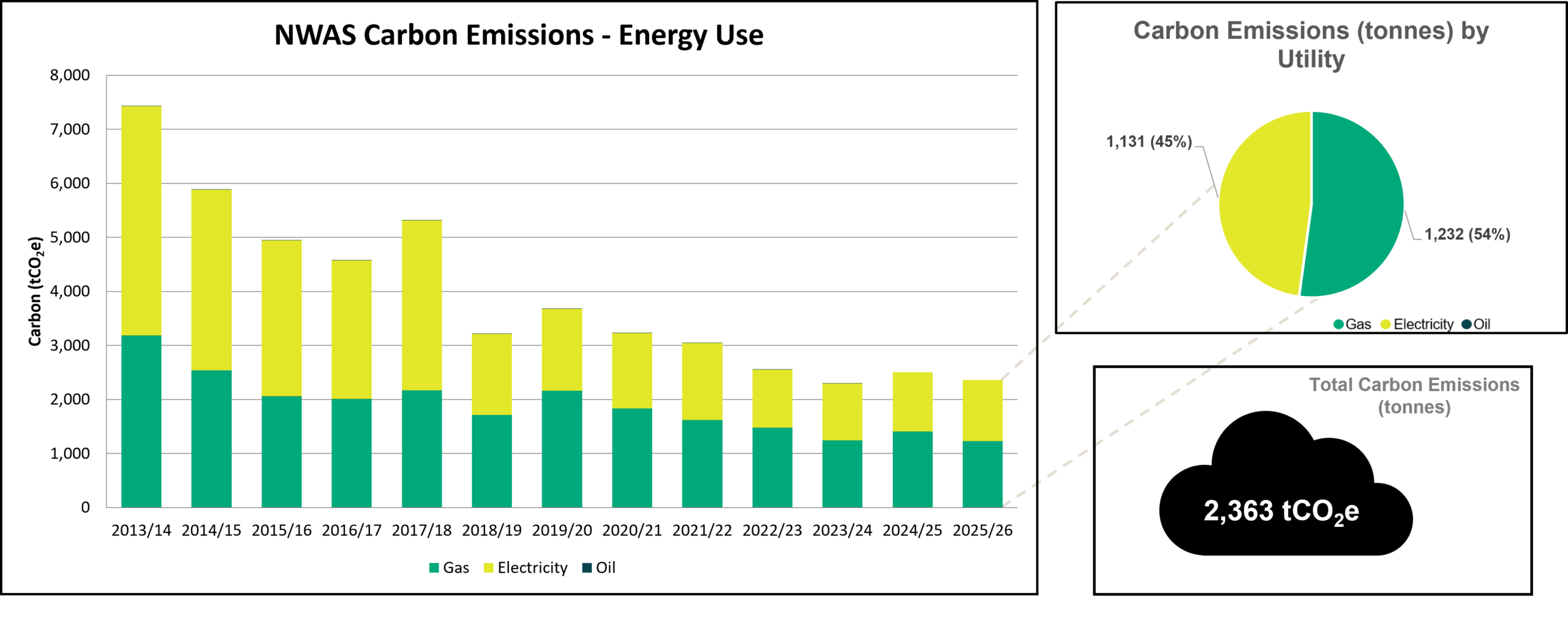
We continue to move in the right direction in line with the annual reduction pathway towards net zero by 2040.
| Utility | Consumption (m3) | Gross cost (£) |
| Water | 32,645 | 513,561 |
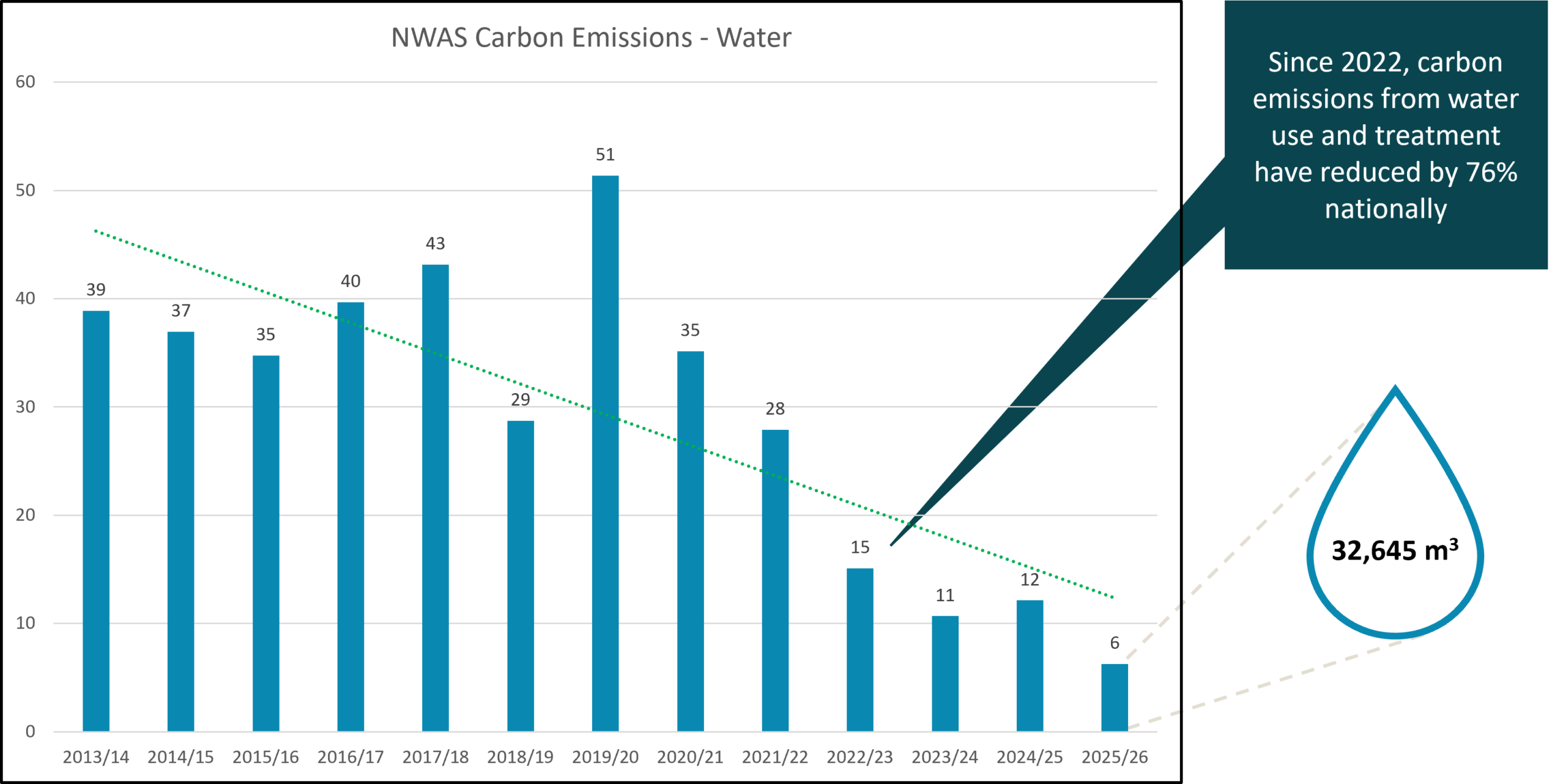
- Carbon emissions from water use and treatment have increased by 49.8% in 25/26 compared to the previous year. This is in part due to a small reduction in consumption but largely attributed to revised carbon conversion factors (published nationally) and applied to actual consumption data for our sites.
- Although mains water consumption can vary year-on-year, the general direction is making progress to net zero. In 2013, we consumed 42,677m3 of water, whereas for 25/26 total consumption was 32,654m3.
We are going into 26/27 more informed than ever before, following several completed feasibility studies as well as securing funds from NHS England for LED lighting schemes and fast EV charging for ambulances at emergency departments.
Other work includes:
- Deep dive energy surveying by the sustainability team at 10 of our sites, identifying projects which could bring about carbon savings of over 400 tonnes per annum based on learning from the NWAS Improvement Academy.
- Feasibility studies around fuel cell CHP, heat batteries and VRV/VRF systems and their wider use for space heating and cooling.
- Building fabric assessments using our in-house developed heat loss calculator.
- Continuing electricity connection upgrades for three of our sites to enable electrification of the buildings (and vehicles) in addition to the 16 upgrades delivered this year.
Work with other blue light services, city and regional partners has increased, particularly around progressing a feasibility study for a heat network at co-located sites in Greater Manchester (this work also extends to EV charging mentioned in later sections). This has culminated in a more strategic estates decarbonisation group which will play a key role in steering the transformational change required to deliver these ambitious carbon reduction objectives.
Given the energy market, we are in a reasonable position with prices protected for the forthcoming financial year to remain on a 100% zero carbon energy tariff. This was only achieved through a combination of reducing payment terms, further digitising billing, and eliminating unnecessary standing charges.
Plans for next year
- Prioritise decarbonisation projects based on learning from the feasibility studies outlined above.
- Deliver the LED rollout which builds on existing works to achieve 95% or more coverage by end of 26/27
- Improve energy optimisation through building management system (BMS) projects and management practices
- Continue to develop and feed-in decarbonisation investment opportunities for the estate’s capital programme
- Further infrastructure and decarbonisation feasibility studies including connection upgrades, solar PV feasibility assessments and alternative heat technologies for example
- Improve engagement on decarbonisation both within the Estates department and trust-wide using our refreshed Green Champions network
Despite the demands from our buildings and estate, the plan for the forthcoming year is to drive energy reductions and use resources as efficiently as possible.
Waste
Aim:
- Generate less waste; reuse and recycle more, and ensure unavoidable waste is disposed of in the most sustainable way.
- Reduce the amount of waste we create by working and purchasing in more resource-efficient ways.
- Increase the number of items we reuse with a focus on reducing single-use plastics.
- Repair or reuse more items that can be repaired or reused.
- Increase the amount of waste that we reuse or recycle to 50% of consignment waste by volume, which we were on the way to achieving pre-pandemic.
- Maintain zero waste to landfill.
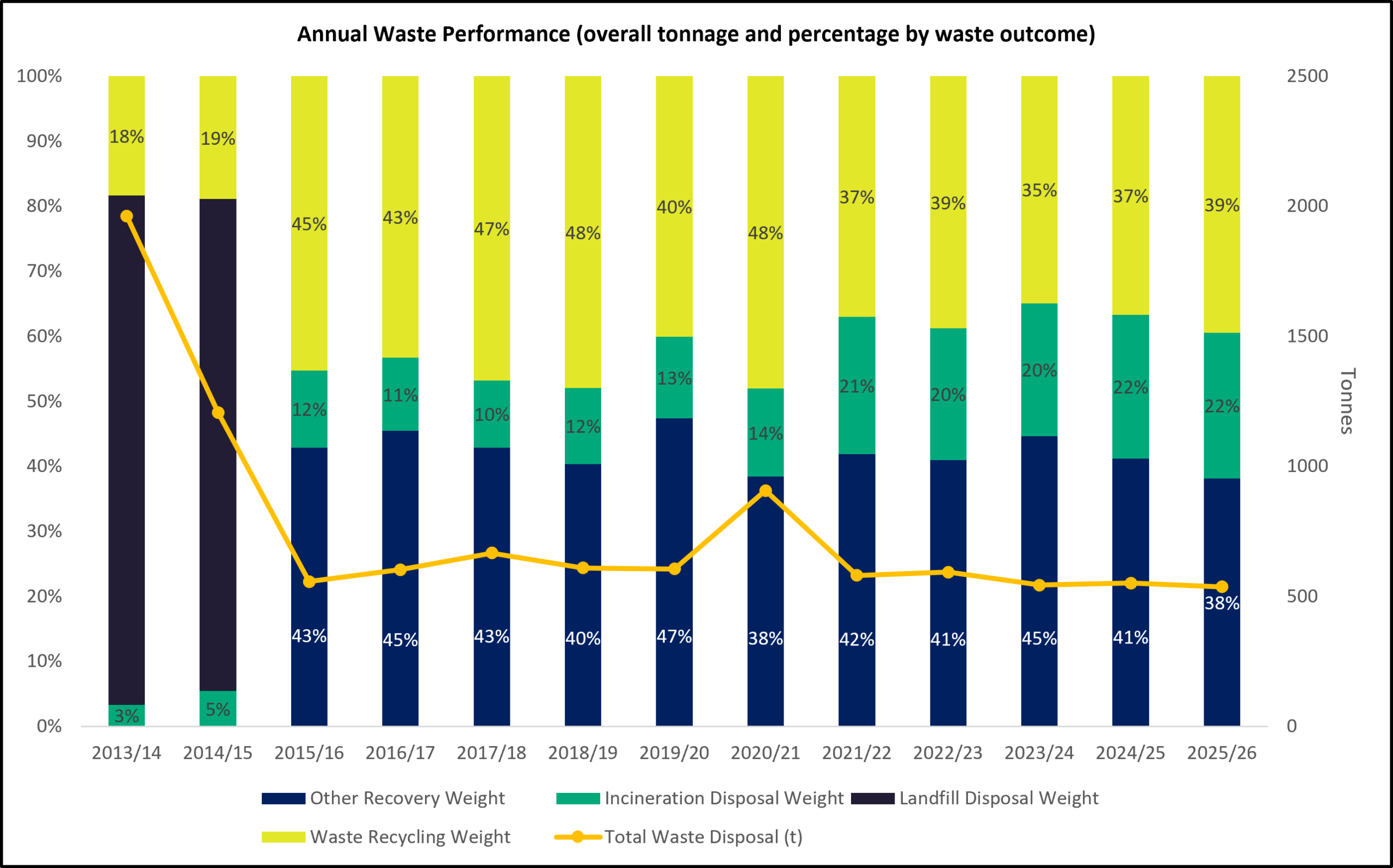
Figure 12: Annual waste performance (overall tonnage and percentage by waste outcome)
Performance
Clinical Waste:
As we continued to respond to the pandemic, clinical waste volumes increased in line with the demands involved with higher patient activity. Since then, we have actively been winding-back additional collections and reclassifying clinical wastes to reduce tonnages to pre-covid levels. Further work is planned for 25/26 which will see large portions of waste destined for high temperature incineration, disposed of through alternative treatment and offensive waste streams, meaning the carbon footprint (and associated costs) will be reduced as we strive towards NHS England’s 20:20:60 split for clinical waste target. NHS England encourages a split of 60% offensive waste, 20% waste sent for high temperature incineration (HTI), and 20% of waste sent for alternative treatment (AT), which if successful would reduce our high temperature incinerated waste to <10% of current tonnage. We are also part of a working group exploring options to dispose of clinical waste at hospital sites as part of a pilot with NHS England. This would represent a huge efficiency saving to ambulance trusts and go way beyond the 20:20:60 target.
General and workshop waste
General waste volumes have remained consistent for the last few years (except for 20/21) and as a result there have been no significant changes in waste composition or total waste volumes. We continue to ensure that all recyclable material, such as paper, cardboard, plastics, metals and glass are segregated at the point of generation, and that safe disposal provisions are in place for hazardous wastes such as used engine oils, other engine fluids and batteries.
Plans for the next year
- Examine the disposal routes for all materials across the trust and look to move waste up the waste hierarchy.
- Work with colleagues in Procurement and NHS Supply Chain for a deeper investigation into data related to key product categories of single use plastic – aimed at reducing consumption.
- Collaborating with ICBs to look at waste management and proposals for a regional approach to reuse and recycling.
- Staff training and understanding will be improved by embedding the healthcare waste management guide into local inductions and developing additional waste training (such as toolbox talks, IPC linked ESR training and guidance documents).
- To develop a metric for measuring and reporting of reuse.
Fleet, Travel and Logistics
The trust produces significant carbon emissions from fleet, staff travel, and the logistics associated with our activities and service provision. To deliver high quality care, we make use of a large and varied fleet of vehicles and the analysis accounts for all vehicles used for NHS duties that are directly owned and leased by the trust, with emissions totalling approximately 7,390 tCO2e for 25/26.
We aim to ensure all vehicles purchased or leased are low and ultra-low emission (ULEV), in line with existing NHS operating planning and contracting guidance and meet the NHS Long Term Plan commitment for 90% of the NHS fleet to use low, ultra-low and zero-emission vehicles by 2028. Ambulances pose a specific challenge and require targeted interventions but for the rest of the fleet, we continue to explore options for a complete transition to zero-emission vehicles by 2032.
Aim
To embed active, clean and low carbon travel to improve air quality and reduce carbon emissions from journeys:
- Reduce air pollution and carbon emissions from our owned and commissioned transport operations.
- Use our influence to help fast-track the decarbonisation of transport in our supply chain.
- Increase the proportion of people commuting to our sites using active and sustainable travel methods.
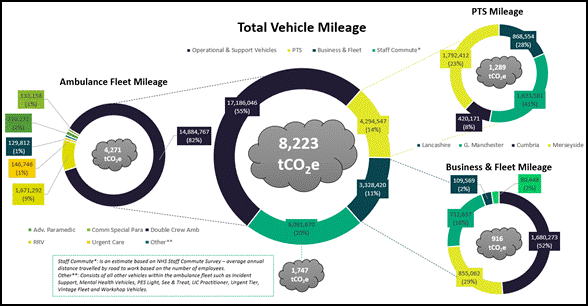
Figure 13: Total Vehicle Mileage
Performance
- This year we have seen an 8.35% decrease in vehicle miles, and subsequent decrease in emssions of 833 tonnes stemming from decreased mileage from double-crewed ambulances and PES vehicles and decreases in staff commuting.
- This represents a 43.4% reduction in emissions compared to the baseline year of 2013. A significant proprotion of this decrease is linked to a reduction in business travel since the pandemic, efficiency improvements in diesel vehicles and the aforementioned roll out of electric service vehicles.
- Mileage from electric operational vehicles reached 1,588,240 this year, saving 438 tCO2e over the former diesel vehicles.
- Fleet, in collaboration with the sustainability team, has overseen the installation of 15 EV chargers at 10 Trust locations using £298,000 of funds from Office for Zero Emission Vehicles and NHS England
- There has also been a significant increase in the number of staff using electric vehicles and hybrids due to emission limitations impose for business fleet vehicles.
- There has been active links with transport authorities to enable more incentivised travel for staff in more urbanised areas. This also links to the planned review of all our sites to ensure they are accessible by public transport and that active travel facilities are provided such as secure cycle parking, showers and lockers
Plans for next year
- Deliver fast EV charging for ambulances at emergency department locations in Liverpool and Blackpool using funds secured from the Department of Zero Emission Vehicles and NHS England.
- Be responsive to fleet decarbonisation funding opportunities and prioritise them based on electrical infrastructure capacity, deliverability and operational requirements.
The Accountability Report
Our Accountability Report has been prepared to meet key accountability requirements to parliament and is based on matters required to be dealt with in a Directors’ Report, as set out in Chapter 5 of Part 15 of the Companies Act 2006 and Schedule 7 of SI 2008 No 410, The Large and Medium-sized Companies and Groups (Accounts and Reports) Regulations 2008, and in a Remuneration Report, as set out in Chapter 6 of the Companies Act 2006 and Schedule 8 of SI 2013 No 1981, The Large and Medium-sized Companies and Groups (Accounts and Reports) (Amendment) Regulations 2013.
Salman Desai KAM
Chief Executive
Date: 24 June 2026
Corporate governance report
Directors’ report
Board membership
In accordance with the Membership and Procedure Regulations 1990 (as amended) Trust’s Standing Orders, the NWAS Board of Directors comprised of a non-executive chair, five non-executive directors, eight executive directors; five voting and three non-voting. The board of directors is a unitary board and has a wide range of skills and experience.
Julia Mulligan, Chair
Commenced 1 July 2025
Julia commenced as chair on 1 July 2025. In addition, Julia holds several senior leadership roles including the senior independent director for the Independent Office for Police Conduct (IOPC), as well as chair of British Eventing. Julia is also a trustee for IDAS, one of the north’s largest specialist domestic and sexual abuse charities. For the past five years, she has been an independent member of the Parole Board, where she sits on the Audit and Risk Committee. Between November 2021 and April 2026, she served as the chair of the Gangmaster and Labour Abuse Authority established after the Morecambe Bay cockle picker tragedy to tackle worker exploitation. Before taking up these positions, Julia ran a business primarily working with the NHS on health inequalities and between 2012-2021, she served as a Police, Fire and Crime Commissioner.
Salman Desai, Chief Executive KAM
Salman was appointed chief executive on 1 January 2025, following a period as the trust’s acting chief executive. He has 29 years’ service in the NHS, initially training as a paramedic, a registration he still holds, before moving into a range of senior leadership roles.
Salman has worked across the ambulance service, acute sector and wider public sector, with a particular focus on improving outcomes and preventing deaths among marginalised communities in Greater Manchester. More recently, he served as deputy CEO and chief operating officer, leading on strategy and service delivery, strengthening the trust’s resilience following the pandemic, and developing a partnership and integration function to support more effective influencing and collaboration across the systems and places we serve.
He joined the NWAS Board of Directors in 2015 as associate director of strategy and planning, and in 2022 was awarded the King’s Ambulance Medal (KAM) for distinguished service and exemplary dedication.
Dan Ainsworth, Executive Director of Operations
Dan is director of operations and has 17 years of NHS service with the past 12 being with NWAS. He has an educational background in law and holds a Law Degree (LLB) from the University of Sheffield. He has worked within a number of roles within the NHS and NWAS. Prior to joining the NHS, he worked with the pharmaceutical and publishing sectors. He initially commenced his NHS career as a health advisor for NHS Direct. He worked at all management levels within the NHS 111 service, then moved into the role of strategic head of EOCs for NWAS. More recently, Dan held the post of integrated contact centre director. He has significant experience working at the national level, representing the ambulance sector, previously chairing the National Heads of EOC Group for three years. Dan is now the chair of the National Director of Operations Group. He has represented the sector in a range of national service change and transformation programmes. Dan’s focus is delivering high quality performance and patient care, empowering and developing leaders and enhancing the culture within the ambulance service.
Catherine Butterworth, Senior Independent Director
Cathy was appointed non-executive director on 1 April 2022 and is the trust’s wellbeing guardian. She also holds a non-executive director position for three health and social care companies in Oldham and is currently operating as interim chair of their board. Cathy has held numerous HR roles for Greater Manchester Police, British Transport Police, and for a number of local authorities historically. As HR consultant for various NHS organisations, Cathy has delivered workforce strategy and planning aspects of HR and has contributed to transformational change across organisations and their partners, including the integration of health and social care at regional and borough levels.
Graeme Chapman, Non-Executive Director
Chair of Resources Committee
Graeme was appointed as non-executive director on 1 January 2026 for three years and is the EPRR NED champion. An experienced industry professional, chair and non-executive director with over 30 years’ experience delivering business transformation to commercial and public sector customers and partners. Graeme has strong multi-industry knowledge in healthcare, life sciences, government, financial services, manufacturing and utilities. Graeme is qualified to master’s degree level in engineering and holds post-graduate qualifications in marketing and management.
Graeme spent his early career in engineering but spent most of his career in information technology. Graeme worked at Microsoft for over 20 years, spending 10 years specialising in health and life sciences with a significant focus on digital transformation.
Prior to joining NWAS, Graeme served as a non-executive director at Newcastle upon Tyne Hospitals NHS Foundation Trust and was the chair of the Quality and Digital and Data Committees. In addition, Graeme was the chair of Newcastle Health Innovation Partners, the Academic Health Science Centre for the North East and North Cumbria.
Anne Cooper, Non-Executive Director
Vice Chair
Anne was appointed as non-executive director on 12 January 2026 for three years. She is a nurse by background and previously worked as chief nurse at NHS Digital, with responsibility for clinical safety of systems, quality and the use of digital tools to support care delivery.
She has extensive experience in senior leadership and non-executive roles in and alongside the NHS. She also has personal experience of using health services as a patient with a long-term condition. Her interests include leadership and governance, patient safety, staff wellbeing, and ensuring ambulance services play an effective role in delivering care within the urgent and emergency care system.
Mike Gibbs, Director of Strategy and Partnerships
Mike joined NWAS on 28 July 2025 as director of strategy and partnerships. He brings over 15 years of NHS experience, having initially trained as a paramedic and progressed through a range of senior clinical, operational and strategic roles across both acute and ambulance services in England. His academic background includes an MBA, an MSc in Advanced Clinical Practice, a BSc (Hons) in Emergency Practice, and a FdSc in Pre-Hospital Unscheduled and Emergency Care. Prior to joining the NHS, Mike spent 10 years working in the electrical engineering industry.
In 2015, Mike was awarded the Ebola Medal for Service in West Africa by Her Majesty’s Government, in recognition of his contribution to the international response in Sierra Leone.
He has played a leading role in system-level transformation programmes, working closely with commissioners, providers, and local government partners to improve health outcomes and reduce inequalities. As director of strategy and partnerships, Mike is responsible for shaping the trust’s long-term strategic direction and building effective partnerships across the health and care system.
Nic Gower, Non-Executive Director
Chair of Audit Committee
Nic was appointed as non-executive director on 12 January 2026 for three years. He is also a non-executive director of Manchester University NHS Foundation Trust.
After graduating from Manchester University, Nic trained as a chartered accountant. He spent the majority of his professional career with PricewaterhouseCoopers LLP and its predecessor firms, including more than 20 years as a partner specialising in audit, assurance and risk management. More recently, Nic has served as a non-executive director in several sectors including the NHS.
Dr Chris Grant, Executive Medical Director
Chris is the executive medical director and has board responsibility for all the clinical elements of NWAS services and provides professional leadership for the healthcare professionals in the service. He acts as the Caldicott guardian, controlled drugs accountable officer, research and development lead, public health and health inequalities lead and is also responsible for the air ambulance. He completed his undergraduate training at Kings College London, before continuing his post graduate training in hospitals across the North West and subsequently in both Australia and the United States.
Clare Todd, Non-Executive Director
Chair, Quality and Performance Committee
Clare was appointed as non-executive director on 1 April 2026 for three years. Clare is the Freedom to Speak Up NED champion. She has had an extensive career in the NHS as a frontline adult, children’s and community nurse as well as director of nursing and quality roles and board level nurse roles in both provider and commissioning organisations. She is currently a non-executive director at Pennine Care NHS Foundation Trust which has helped her develop a keen understanding of the impact of mental ill health on patients, families, staff and services.
Clare has significant experience of partnership and system working as well as organisational change within the NHS over the years. Her real passions are supporting staff and driving forward the quality and patient safety agendas wherever she works
Dr Elaine Strachan-Hall, Executive Director of Quality and Improvement (October 2025)
Interim Director of Quality (March 2025 to October 2025)
Elaine joined NWAS in March 2025 as interim director of quality and was appointed substantively in October 2025. Elaine is an experienced clinical leader with over 45 years of healthcare experience, 20 years of which have been at board or director level, invariably holding the governance and quality portfolio in addition to professional leadership. Since COVID, Elaine has worked in a consultancy capacity assisting NHS trusts with large scale improvement programmes and individual ‘test of change’ projects. As a registered nurse who has recently completed her doctorate in nursing, she has a special interest in digital innovation and strategic nursing leadership. Elaine has responsibility for patient safety and improvement.
Lisa Ward KAM, Deputy Chief Executive / Executive Director of People
Lisa has held the role of director of people since July 2018. Prior to this Lisa had extensive experience in senior human resources leadership roles in NWAS and its predecessor organisation Greater Manchester Ambulance Service. Prior to joining the ambulance service, Lisa spent 10 years in human resources management roles in the Midlands and North West working for the rail industry, having joined as a graduate management trainee following graduation with a degree in history from the University of East Anglia.
She is a Chartered Member of the Chartered Institute of Personnel and Development (CIPD) and has undertaken a range of continuing professional development, including management, coaching and psychometric testing qualifications during her career.
Lisa was recognised in the 2024 King’s New Year Honours and awarded the prestigious King’s Ambulance Medal for her national work in support of the sector, particularly in relation to culture and representing the sector through the NHS Staff Council.
Lisa took on the role of deputy chief executive in July 2025.
Angela Wetton, Executive Director of Corporate Affairs
Angela joined the trust as director of corporate affairs, a non-voting board role, in September 2016. She has 15 years board level experience in corporate affairs, governance, and risk across public and private sectors. She graduated from the Nye Bevan Leading Healthcare Programme in April 2016 with an Executive Leadership in Healthcare award and prior to NWAS, worked in both acute and mental health NHS trusts across the North West.
Carolyn Wood, Executive Director of Finance
Carolyn is a Chartered Public Finance accountant and joined the trust as the executive director of finance in April 2019, having previously held the post of director of finance at Oldham Care Organisation, part of the Northern Care Alliance. She has over 30 years of experience in NHS finance, having worked for a range of NHS organisations across the North West including Salford Royal, Royal Bolton Hospital, Cumbria PCT, North West Strategic Health Authority, NHS England (Lancashire), and Wrightington, Wigan and Leigh NHS Foundation Trust.
The following individuals were also directors of the trust during 25/26:
- Peter White (Chair to 30 June 2025)
- David Whatley (Non-Executive Director to 22 October 2025)
- David Hanley (Non-Executive Director to 30 November 2025)
- Alison Chambers (Non-Executive Director to 12 January 2026 and Associate Non-Executive Director to 31 March 2026)
- Prof Aneez Esmail (Non-Executive Director to 31 March 2026)
Attendance of Board of Directors Meetings and Committees during 25/26:
| Board member | Term of appointment | Board of directors | Audit Committee | Nominations and Remuneration Committee | Charitable Funds Committee | Quality and Performance Committee | Resources Committee |
| Attendance (actual/max) | |||||||
| Non-executive directors | |||||||
| Peter White (Chair) | 1/2/19 – 1/2/23 1/2/23 – 31/1/25 1/2/25 – 31/7/25 | 3/3 | 2/2 | ||||
| Julia Mulligan (Chair) | 1/7/25-30/6/28 | 5/5 | 5/5 | ||||
| David Hanley | 28/5/19 – 27/5/21 28/5/21 – 27/5/23 28/5/23 – 27/5/25 28/5/25 – 30/11/25 | 5/6 | 5/6 | 0/2 | 4/4 | 4/4 | |
| Alison Chambers | 1/8/19 – 31/7/21 1/8/21 – 31/7/23 1/8/23 – 30/11/25 1/12/25 – 31/3/26 | 7/8 | 5/6 | 6/7 | 5/6 | ||
| Aneez Esmail | 1/4/2021 – 31/3/23 1/4/23 – 31/3/26 | 7/8 | 6/6 | 7/7 | 6/6 | ||
| Catherine Butterworth | 1/4/22 – 31/3/24 1/4/24 – 31/3/26 | 5/8 | 4/6 | 3/7 | 3/3 | 4/6 | |
| David Whatley | 24/3/24 – 24/3/26 Left 22 October 2025 | 5/5 | 4/4 | 5/5 | 2/2 | 3/3 | |
| Anne Cooper | 12/1/26 – 11/1/29 | 2/2 | 1/1 | 1/1 | 1/1 | ||
| Nic Gower | 12/1/26 – 11/1/29 | 2/2 | 1/1 | 1/1 | 1/1 | 2/2 | |
| Graeme Chapman | 1/1/26 – 31/12/28 | 2/2 | 1/1 | 2/2 | |||
| Clare Todd | (Associate NED) 12/1/26 – 31/3/26 (NED) 1/4/26 – 31/3/29 | 2/2 | 1/1 | 1/1 | 1/1 | ||
| Board member | Term of appointment | Board of directors | Audit Committee | Nominations and Remuneration Committee | Charitable Funds Committee | Quality and Performance Committee | Resources Committee |
| Attendance (actual/max) | |||||||
| Executive Directors | |||||||
| Salman Desai | 8/8 | ||||||
| Chris Grant | 8/8 | 5/6 | |||||
| Mike Gibbs | Commenced 28/7/25 | 5/5 | 3/4 | ||||
| Dan Ainsworth | 7/8 | 0/3 | 6/6 | 4/6 | |||
| Angela Wetton | 7/8 | 3/3 | 5/6 | ||||
| Lisa Ward | 7/8 | 3/3 | 6/6 | ||||
| Carolyn Wood | 7/8 | 2/3 | 5/6 | ||||
| Elaine Strachan-Hall | 8/8 | 5/6 | |||||
Committees
A number of assurance committees reported to the board of directors during 1April 2025 and 31 March 2026, these committees were as follows:
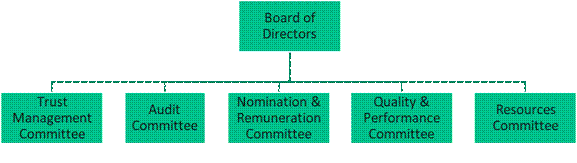
Each committee has formal terms of reference which are approved by the board of directors and sets out the powers and functions of the committees. These terms of reference are subject to annual review by the relevant committee with outcomes subsequently reported to the board of directors for approval. This annual review process incorporates a review of committee effectiveness against four themes and identifies areas of development to further strengthen their remit. These four themes are:
- Committee purpose
- Meeting process and reports
- Composition and dynamics
- Leadership
Following the annual review, the committee chairs for the Quality and Performance Committee and Resources Committee submit an annual report to the board of directors providing information on how the committee met its key functions during the year and key areas of focus for the following year. The terms of reference for all committees are reviewed on an annual basis and approved by the board.
Audit Committee
The terms of reference for the Audit Committee are based on the model terms of reference incorporated in the HFMA Audit Committee Handbook.
During Q1 25/26, the committee reviewed its effectiveness against the two checklists provided within the HFMA Audit Committee handbook to 1) test the committee processes and 2) test its effectiveness against a number of themes; focus, team working, effectiveness, engagement and leadership. The outcome of the effectiveness review was positive, with no significant improvements identified. Members of the Audit Committee held private meetings with internal and external auditors during the year.
Members of the Audit Committee during 25/26 were David Whatley, Committee Chair (to 22 October 2025), Nic Gower, Committee Chair (from 12 January 2026), Alison Chambers, Aneez Esmail, and Catherine Butterworth. The previous and current chair have the relevant financial experience. The Annual Report of the Audit Committee was presented to the Board of Directors on 29 April 2026, which provided a summary of the activities undertaken by the committee and how the terms of reference and key priorities were met during 25/26. The Audit Committee terms of reference for 26/27 were updated and approved by the Board of Directors on 29 April 2026.
In April 2026, the Audit Committee received a summary of compliance against the provisions provided within the Code of Governance for NHS Providers during 25/26. The trust was able to declare compliance with all relevant provisions. The trust is also required to publish information within the annual report against provisions within the NHS Code. A summary of these provisions and where they can be found within the annual report is on page 124.
The Audit Committee is charged with oversight of the trust’s compliance with the NHS Provider Licence. The committee received the bi-annual declaration of compliance with the conditions of our NHS Provider Licence during 25/26 at its meeting in October 2026.
A key aspect of the Audit Committee is to consider significant issues in relation to financial statements. As part of the preparation for the audit of financial statements, Forvis Mazars undertook a risk assessment and identified the significant risks as management override of controls, risk of fraud in expenditure recognition – all of which are required under the auditing standards. In addition, significant risks related to valuation of property, plant and equipment were considered, the Audit Committee raised a specific issue in relation to a newly built property however took comfort from the External Auditors valuations.
External auditors
Following recommendation from the Audit Panel, the board of directors approved the contract award from 1 April 2024 for a period of two years with the option to extend for two further 12 month periods to Forvis Mazars LLP.
The audit fee for the 25/26 financial statements is £97,500. Forvis Mazars LLP have not provided the trust with any non-audit services during the reporting period.
Formal assessment into the effectiveness of external audit was last received by the Audit Committee in January 2023 and indicated a high level of satisfaction in the work undertaken. The next formal assessment will be undertaken during 26/27.
Internal audit
Internal audit and anti-fraud services are provided by Mersey Internal Audit Agency (MIAA).
Independence of directors
All directors have a responsibility to declare relevant interests as defined within the Board Standing Orders and Standards of Business Conduct. The trust maintains a Register of Interest for the NWAS Board of Directors and is subject to bi-monthly review by the board. Where details of company directorships have been declared and where those companies are likely to do business or are seeking to do business with the NHS, board members declare their interest and withdraw from any decision making process. During 25/26, there were no identified breaches in respect of any declarations made by the board of directors.
All non-executive directors are considered to the independent and provide independent scrutiny and challenge to the board.
The board of directors’ register of interest is available to view here.
Statement of Disclosure to Auditors and Directors’ Responsibilities
It is the responsibility of directors to prepare the annual report and accounts. They consider the annual report and accounts, taken as a whole, is fair, balanced, and understandable, and provides the information necessary for stakeholders to assess the trust’s performance, business model and strategy.
As far as the executive directors are aware, there is no information relevant to the auditors for the purposes of their audit report and of which the auditors are not aware. The executive directors have taken all of the steps they ought to have taken to ensure they are aware of any relevant audit information and to establish that the auditors are aware of that information.
Fit and Proper Persons Requirements: directors and non-executive directors
In line with the Health and Social Care Act 2008 (Regulated Activities) Regulations 2014, the trust is required to ensure that all individuals appointed to or holding the role of executive director (or equivalent) or non-executive director meet the requirements of the Fit and Proper Persons Test (Regulation 5) and the additional checks set out in the Fit and Proper Persons Test framework.
The trust has fully implemented the requirements of the Fit and Proper Persons Test Framework, including social media checks, DBS checks, annual attestation, inclusion of board level competences in appraisal, appropriate pre-employment checks and board references. In line with the requirements of the framework, the chair signed the completion of a Fit and Proper Person assessment for all individual board members to the relevant NHSE regional director. This included confirmation of a satisfactory appraisal from the preceding 12 months for all board members.
In May 2025, the board of directors received the Chair’s Annual Declaration confirming that all existing executive and non-executive directors met the requirements of Fit and Proper Persons Test which was informed by the application of the board approved Procedure on Fit and Proper Persons Requirements.
An annual audit of the personal files has been undertaken to ensure that the files remain up to date and in line with the regulations.
Well-led
During 25/26, the trust commissioned a developmental review of the well-led domain of the Single Assessment Framework. Following a competitive tender process, this contract was awarded to the Good Governance Institute (GGI) and was undertaken during Q1 25/26.
GGI provided the trust with 22 recommendations which have been analysed by the board, and a set of actions are underway to continue improvement. The Annual Governance Statement details the recommendations provided.
GGI had no connection with the trust nor any individual directors.
Information governance
Information Governance work programme throughout 25/26 has been reported to the Information and Cyber Group, (ICG), chaired by the senior information risk officer (SIRO). The ICG reports to the Trust Management Committee through an assurance report. ICG effectiveness is monitored via the annual governance process.
The work programme aligns to the outcomes set out in the Data Security and Protection Clinical Toolkit (DSPT). A focus on the work programme in year has been the management of information assets, including developing the information asset register and identifying essential functions. A review has been completed on the Information Asset Owners and Information Asset Administrators. The Asset Register is currently being migrated onto a digital system (IT Health) which will improve functionality and security.
We have a well-established team with the trust’s data protection officer (DPO) provided by a third party, and the trust cyber security lead well integrated with the team.
Key areas of delivery and assurance are outlined as follows:
- Policies and procedures: There is a continuous review of policies managed and overseen by the ICG, with this year seeing a refresh to the Data Protection Policy which was updated to incorporate the requirement from the Data Use and Access Act. The IT Security policy has been reviewed and approved.
- Data Security Protection Toolkit: The DSPT provides a systematic and comprehensive approach to assessing the extent to which cyber and information governance risks to essential functions are being managed. The interim submission, which was made in December 2025, showed six outcomes out of 47 did not meet the required standard. The final submission deadline is June 2026.
- Data Breaches: During 25/26, 179 information governance breaches were reported, each risk scored against the trust’s risk matrix and NHS data breach reporting guidance and investigated thoroughly.
Six incidents were reported, after meeting the criteria for notification to the Information Commissioners (IC), with no action taken against the trust on three of the breaches and awaiting outcome for the other three breaches. The IC are currently experiencing a backlog of responding to reported data breaches of approximately 12 months. Any incidents scored as a risk level 3 (Moderate) or higher are reviewed by the data protection officer and information governance manager. During the financial year the Information Governance team also completed an internal quality improvement project which has helped to optimise the data breach review process along with understanding and responding to themes of reoccurring incidents.
- DPO complaints: The Data Protection Officer (DPO) received a total of 29 complaints. All complaints have been escalated, reviewed and 21 out of 29 cases have been closed.
- Data sharing agreements (DSAs): Nine information sharing agreements have been completed.
- Data Sharing Agreement for Serum Troponin project between NWAS and Tameside and Glossop NHS Foundation Trust
- ‘Non fatal o/d NWAS referrals’ between NWAS and CGL (Change, Grow, Live)
- Cheshire and Mersey Clinical Assessment Services (CAS) and Bridgewater
- Cheshire and Mersey Clinical Assessment Services (CAS) and Mid Cheshire
- Cheshire and Mersey Clinical Assessment Services (CAS) and East Cheshire and St Helens
- Cheshire and Mersey Clinical Assessment Services (CAS) and Countess of Chester
- Cheshire and Mersey Clinical Assessment Services (CAS) and Mersey Care
- Cheshire and Mersey Clinical Assessment Services (CAS) and Mersey and Warrington
- Cheshire and Mersey Clinical Assessment Services (CAS) and Wirral Community
- Subject access requests (SARs): Between April 2025 and March 2026, the Individual Rights team received 3,976 requests, including SARs and Access to Health requests. This represents an increase of 829 requests (26.34%) compared with the previous financial year.
- SIRO key performance indicators: All key performance indictors (KPI) for freedom of information requests, subject access requests, data protection requests and externally reportable data breaches (within 72-hour timeframe) were met.
| KPI | Target | Q1 | Q2 | Q3 | Q4 | Overall |
| Freedom of information request (FOI) | To respond to 90% of requests within 20 working days. | 98.26% | 97.86% | 93.69% | 97.30% | 96.89% |
| Subject access requests (SARs) | To respond to 85% of requests without undue delay and at the latest, within one month. | 100% | 100% | 98.64% | 98.80% | 99.32% |
| Data protection Requests | To respond to 85% of requests within 40 working days | 100% | 100% | 100% | 100% | 100% |
| Data breaches | To report any externally reportable data breaches within the 72-hour timescale. | 100% | 100% | 100% | 100% | 100% |
Modern Slavery Act 2015
In order to support integrated care boards and providers, NHS England has drafted a Modern Slavery Statement as a ‘group statement’ for NHS organisations to refer to, to reduce administrative burden, prevent duplication and increase consistency with organisations strongly encouraged to defer to this ‘group statement’. The statement covers the actions taken by NHSE to support the wider NHS to address the risk of modern slavery in the health service and point to actions best delivered nationally and locally.
View the statementExternal compliance
The trust’s functions are organised to ensure effective compliance with the external requirements placed upon it by bodies such as the Department of Health and Social Care, the Care Quality Commission, NHS England, and NHS Resolution. The trust aims to comply with, and meet, all statutory, legislative, and regulatory requirements placed upon it as an employer, an ambulance service, and an NHS trust. These include:
- National targets for ambulance response times
- Statutory and regulatory financial duties
- Care Quality Commission registration requirements
- NHS Model Employer standards
- Civil Contingencies Act 2004
- NHS Constitution
Disclosure of corporate governance arrangements
The NHS Code is based on the UK Code of Governance to reflect latest and best practice application of good corporate governance and provides a tried and tested framework for the leadership and direction of board led organisations in the UK.
A self-assessment of compliance was undertaken which confirmed compliance with all relevant provisions with the NHS Code. In addition, the NHS Code requires the trust to publish information within the annual report against a specific set of provisions. A summary of these provisions and where they can be found within the annual report is listed below.
| Provision | Annual report disclosure requirements | Annual report section |
| A.2.1 | The board of directors should assess the basis on which the trust ensures its effectiveness, efficiency and economy, as well as the quality of its healthcare delivery over the long term, and contribution to the objectives of the ICP and ICB, and place-based partnerships. | Performance Report Annual Governance Statement |
| A.2.1 | The trust should describe in its annual report how opportunities and risks to future sustainability have been considered and addressed, and how its governance is contributing to the delivery of its strategy. | Performance Report Annual Governance Statement |
| A.2.3 | The board of directors should assess and monitor culture. Where it is not satisfied that policy, practices or behaviour throughout the business are aligned with the trust’s vision, values and strategy, it should seek assurance that management has taken corrective action. | Our People |
| A.2.3 | The annual report should explain the board’s activities and any action taken, and the trust’s approach to investing in, rewarding and promoting the wellbeing of its workforce. | Our People |
| A.2.8 | The board of directors should describe in the annual report how the interests of stakeholders, including system and place-based partners, have been considered in their discussions and decision-making, and set out the key partnerships for collaboration with other providers into which the trust has entered. | Performance Report |
| A.2.8 | The board should set out how the organisation’s governance processes oversee its collaboration with other organisations and any associated risk management arrangements. | Annual Governance Statement |
| A.2.8 | The board of directors should keep engagement mechanisms under review so that they remain effective. The board should set out how the organisation’s governance processes oversee its collaboration with other organisations and any associated risk management arrangements. | Performance Report Annual Governance Statement |
| B.2.6 | The board of directors should identify in the annual report each non-executive director it considers to be independent. | Directors Report |
| B.2.13 | The annual report should give the number of times the board and its committees met, and individual director attendance. | Directors Report |
| C.4.2 | The board of directors should include in the annual report a description of each director’s skills, expertise and experience. | Directors Report |
| C.4.7 | All trusts are strongly encouraged to carry out externally facilitated developmental reviews of their leadership and governance using the well-led framework every three to five years, according to their circumstances. The external reviewer should be identified in the annual report and a statement made about any connection it has with the trust or individual directors. | Directors Report |
| C.4.13 | The annual report should describe the work of the nominations and remuneration committee. | Annual Governance Statement Remuneration Report |
| D.2.4 | The annual report should include the significant issues relating to the financial statements that the audit committee considered, and how these issues were addressed. | Corporate Governance Report |
| D.2.4 | The annual report should include an explanation of how the audit committee (and/or auditor panel for an NHS trust) has assessed the independence and effectiveness of the external audit process and its approach to the appointment or reappointment of the external auditor; length of tenure of the current audit firm, when a tender was last conducted and advance notice of any retendering plans | Directors Report |
| D.2.4 | The annual report should include where there is no internal audit function, an explanation for the absence, how internal assurance is achieved and how this affects the external audit | Not applicable |
| D.2.4 | The annual report should provide an explanation of how auditor independence and objectivity are safeguarded if the external auditor provides non-audit services. | Directors Report |
| D.2.6 | The directors should explain in the annual report their responsibility for preparing the annual report and accounts, and state that they consider the annual report and accounts, taken as a whole, is fair, balanced and understandable, and provides the information necessary for stakeholders to assess the trust’s performance, business model and strategy. | Directors Report |
| D.2.7 | The board of directors should carry out a robust assessment of the trust’s emerging and principal risks. | Directors Report |
| D.2.8 | The board of directors should monitor the trust’s risk management and internal control systems and, at least annually, review their effectiveness and report on that review in the annual report. The board should report on internal control through the annual governance statement in the annual report. | Annual Governance Statement |
| D.2.9 | In the annual accounts, the board of directors should state whether it is considered appropriate to adopt the going concern basis of accounting when preparing them and identify any material uncertainties regarding going concern. | Performance Report |
| E.2.3 | Where a trust releases an executive director, eg to serve as a non-executive director elsewhere, the remuneration disclosures in the annual report should include a statement as to whether or not the director will retain such earnings. | Not applicable during 25/26 |
Statement of the Chief Executive’s Responsibilities as the Accountable Officer of the Trust
The chief executive of NHS England has designated that the chief executive should be the accountable officer of the trust. The relevant responsibilities of accountable officers are set out in the NHS Trust Accountable Officer Memorandum. These include ensuring that:
- There are effective management systems in place to safeguard public funds and assets and assist in the implementation of corporate governance.
- Value for money is achieved from the resources available to the trust.
- The expenditure and income of the trust has been applied to the purposes intended by parliament and conform to the authorities which govern them.
- Effective and sound financial management systems are in place.
- Annual statutory accounts are prepared in a format directed by the secretary of state to give a true and fair view of the state of affairs as at the end of the financial year and the income and expenditure, other items of comprehensive income and cash flows for the year.
As far as I am aware, there is no relevant audit information of which the trust’s auditors are unaware, and I have taken all the steps that I ought to have taken to make myself aware of any relevant audit information and to establish that the entity’s auditors are aware of that information.
To the best of my knowledge and belief, I have properly discharged the responsibilities set out in my letter of appointment as an accountable officer.
Salman Desai KAM
Chief Executive Officer
Date: 24 June 2026
Statement of Directors’ Responsibilities in respect of the accounts
The directors are required under the National Health Service Act 2006 to prepare accounts for each financial year. The secretary of state, with the approval of HM Treasury, directs that these accounts give a true and fair view of the state of affairs of the trust and of the income and expenditure, other items of comprehensive income and cash flows for the year. In preparing those accounts, the directors are required to:
- Apply on a consistent basis accounting policies laid down by the secretary of state with the approval of the Treasury.
- Make judgements and estimates which are reasonable and prudent.
- State whether applicable accounting standards have been followed, subject to any material departures disclosed and explained in the accounts.
- Prepare the financial statements on a going concern basis and disclose any material uncertainties over going concern.
The directors are responsible for keeping proper accounting records which disclose with reasonable accuracy at any time the financial position of the trust and to enable them to ensure that the accounts comply with requirements outlined in the above mentioned direction of the secretary of state. They are also responsible for safeguarding the assets of the trust and hence for taking reasonable steps for the prevention and detection of fraud and other irregularities.
The directors confirm to the best of their knowledge and belief they have complied with the above requirements in preparing the accounts.
The directors confirm that the annual report and accounts, taken as a whole, is fair, balanced, and understandable and provides the information necessary for patients, regulators, and stakeholders to assess the NHS trust’s performance, business model and strategy.
By order of the North West Ambulance Service NHS Trust Board
Date…24 June 2026……………… Chief Executive: Salman Desai
Date:… 24 June 2026…………… Director of Finance: Carolyn Wood
Annual governance statement
Scope of responsibility
As Accountable Officer, I have responsibility for maintaining a sound system of internal control that supports the achievement of the NHS trust’s policies, aims and objectives, whilst safeguarding the public funds and departmental assets for which I am personally responsible, in accordance with the responsibilities assigned to me. I am also responsible for ensuring that the NHS trust is administered prudently and economically and that resources are applied efficiently and effectively. I also acknowledge my responsibilities as set out in the NHS Trust Accountable Officer Memorandum.
The purpose of the system of internal control
The system of internal control is designed to manage risk to a reasonable level rather than to eliminate all risk of failure to achieve policies, aims and objectives; it can therefore only provide reasonable and not absolute assurance of effectiveness. The system of internal control is based on an ongoing process designed to identify and prioritise the risks to the achievement of the policies, aims and objectives of North West Ambulance Service NHS Trust, to evaluate the likelihood of those risks being realised and the impact should they be realised, and to manage them efficiently, effectively and economically. The system of internal control has been in place in North West Ambulance Service NHS Trust for the year ended 31 March 2026 and up to the date of approval of the annual report and accounts.
Capacity to handle risk
Leadership
The Board of Directors has overall responsibility for providing strategic leadership of risk management throughout the organisation, which includes maintaining oversight of strategic risks to achieving the Trust’s objectives via the Board Assurance Framework (BAF) and leading by example in creating a culture of risk awareness.
As the Accountable Officer I have overall responsibility for ensuring that an effective system of risk management and assurance is in place and for maintaining a sound system of internal control. I am advised by the executive lead for risk management, the Director of Corporate Affairs, who oversees the risk management arrangements.
The Board of Directors is presented with a quarterly risk management assurance report, containing the BAF and the Corporate Risk Register (CRR), both of which are subject to scrutiny at the Trust Management Committee (TMC) meetings.
Executive Directors of the Trust are responsible for the consistent application of the Risk Management Policy within their areas of accountability, which includes maintaining an awareness of the overall level of risk within the organisation, the management of specific risks that have been identified and promoting a risk aware culture within their Directorates. Senior Management Teams scrutinise Directorate, Departmental/Team risk registers at their meetings.
Managers within the Trust are responsible for making active use of risk registers to support safe management of their service, management of specific risks that have been identified, promoting a risk aware culture, and ensuring that risk assessments are carried out within their service.
Risk Management Training
Risk management training is incorporated into the Trust’s induction programme and annual mandatory training programme.
Each year sessions on risk management, risk appetite, and the development of the BAF are held with the Board of Directors and these focused sessions provide the Board of Directors with an additional opportunity to discuss and debate the strategic risks and Risk Appetite Statement (RAS) and to understand and define the risk tolerance levels for the organisation, prior to formal approval.
The risk and control framework
Risk Management Policy
The Risk Management Policy defines the approach taken by North West Ambulance Service NHS Trust in applying risk management awareness to its decision-making processes at all levels. The main objective of this policy is to establish the foundations for a culture of effective risk management throughout the organisation by setting out clear definitions, responsibilities, and processes to enable the principles and practices of risk management to be applied consistently.
The Trust risk scoring matrix ensures standardisation of risk assessments across the Trust. All risks are recorded and managed via the Trust-wide risk management system.
Risk management is everybody’s responsibility, and the principles of effective risk management should form an integral component of decision-making at all levels.
Where a risk is identified but cannot be managed without some significant change to the way the organisation operates, it is escalated through the relevant governance structure for decision on appropriate action at the respective level of the organisation in line with the Scheme of Delegation and Standing Financial Instructions. The policy also requires risk mitigating action plans to be determined and implemented for those risks that are inadequately controlled.
Board Assurance Framework (BAF)
The BAF is an effective method for the oversight of the organisation’s strategic risks i.e., those which could prevent the Trust from achieving its aims/objectives as described within the Trust’s strategy. It provides structures for evidence to support the Annual Governance Statement (AGS) and as a result, streamlines oversight reporting to the Board of Directors. The BAF has continued to mature into a comprehensive system and is embedded within the organisation’s Integrated Governance Structure.
The BAF includes the following key elements:
- Strategic risks of the Trust, aligned to the Executive Director Lead and mapped to a Board Assurance Committee for monitoring;
- A description of the strategic risk, including opening, quarterly, in-year and aspirational target scores;
- Projected forecast for the upcoming quarter, including supporting rationale;
- The corporate risks which link to the strategic risk, including risk scoring;
- Risk appetite category and risk tolerance score;
- Key controls in place to mitigate the risks;
- Assurance regarding the effectiveness of the key controls;
- Any gaps in controls and assurances;
- Action plans to address gaps in controls and assurances.
The BAF is approved by the Board of Directors at the commencement of the financial year and is managed through delegation to its Board Assurance Committees. The Trust Management Committee (TMC) continues to promote effective risk management and leadership whilst overseeing and monitoring the management of the BAF.
The Board of Directors reviews the BAF on a quarterly basis and approves the quarterly position. The final position of the 2025/26 Board Assurance Framework was approved at the end of April 2026, by the Board of Directors.
Risk Management
All departments within Directorates maintain a live, and dynamic risk register via the Trust’s risk management system. Risk is a key agenda item on all meeting agendas across the Trust. The Trust supports its people throughout the organisation to manage risk at the most appropriate level, ensuring there is a clear process for risk escalation. Risks are escalated via Departmental and Directorate risk registers to the Corporate Risk Register in accordance with the Risk Management Policy.
All business cases must include a full risk assessment and Equality Quality Impact Assessment (EQIA) prior to formal approval. All efficiency schemes have processes in place to identify and mitigate risks to quality and safety.
Risk Appetite
As part of the cyclical Board Development Programme, the Board of Directors received a focused session pertaining to risk appetite. Collectively, the Board of Directors assessed and agreed its risk appetite, which is reviewed and approved annually. Risk appetite is considered by Board when making decisions.
Risk Management Internal Audit
During 2025/26, the internal auditors conducted an audit to provide assurance that core risk management controls have been adequately designed. The audit opinion was concluded as ‘high assurance’, meaning there is a strong system of internal control which has been effectively designed to meet the system objectives, and that controls are consistently applied in all areas reviewed.
Key findings included:
- There was a robust level of control within the risk management system.
- Areas of good practice included the Trust had an up-to-date Risk Management Policy in place, with roles and responsibilities of all staff including the Chief Executive, Director of Corporate Affairs, executives, and senior management teams are clearly defined.
- Training requirements were clearly defined within the Risk Management Policy and completion of training was monitored.
- Audit review confirmed the risk registers had been suitably designed and the Trust had clearly segmented risks into those which were operational and strategic.
- The Trust had clear procedures for the assessment, monitoring, control and mitigation of risks.
- The Audit Committee and Executive Led Groups were responsible for reviewing and monitoring all aspects of the risk management system.
- Executive Led Groups confirmed the groups received and discussed the risks associated with the Groups.
- Trust Management Committee (TMC) also received reports on the Corporate Risk Register (CRR).
- The Board provided effective oversight of risks, with the Board of Directors regularly received, reviewed and approved Board Assurance Framework (BAF) updates and strategic risks.
Quality Governance
Quality governance is overseen via the Trust’s Quality and Performance Committee which monitors the delivery of the Trust’s Quality Strategy and compliance with the Care Quality Commission (CQC) regulatory requirements under the Health and Social Care Act (2008, 2015) and the Health and Care Act 2022.
The work of the Quality and Performance Committee is supported by the Trust Management Committee (TMC). The Trust Management Committee (TMC) is supported by the Clinical and Quality Group, Emergency Preparedness Resilience & Response (EPRR) Group, and the Diversity and Inclusion Group.
In line with the Patient Safety Incident Response Framework (PSIRF) the Trust has a Complex Case Review Group (CCRG) and Patient Safety Event Cases (PSEC) meeting. The purpose of these arrangements is set out in the Patient Safety Incident Response Policy and Plan which describes how weekly decision-making governance meetings operate with delegated powers, to review patient safety events from escalation within service lines and make decisions on the appropriate level of response. The Patient Safety Event Cases (PSEC) meeting has delegated responsibility for the consideration of events for Patient Safety Incident Investigation (PSII) or a patient safety learning response for oversight of outcomes. The Quality and Performance Committee maintains oversight of these processes, to provide assurance to the Board of Directors that we are meeting national response standards.
The Quality and Performance Committee receives assurance from an Integrated Performance Report (IPR) which provides oversight against the relevant sections of the NHSE Oversight Framework (2021) including quality indicators, patient experience, patient outcomes, performance, and effectiveness. It also reports on the actions required by national patient safety alerts, progress and accountability.
The Quality and Performance Committee work plan is set to ensure the Committee receives assurances that the Trust is safe, effective, caring and responsive to people’s needs and well led. The Committee requests and receives additional assurances throughout the annual cycle via a series of deep dives which are focused on areas where the Board of Directors requires additional information or assurances.
Clinical Risk Management
Clinical risk is monitored via the Trust’s Clinical and Quality Group and Quality and Performance Committee.
Clinical risk is managed on a day-to-day basis by operational and clinical staff and is collaboratively monitored by the Corporate Affairs Directorate, Quality Directorate and the Clinical Directorate. Clinical risk is reported through the integrated governance, risk and compliance system, Datix Cloud IQ (DCIQ), which allows themes and trends to be identified to inform wider organisational learning.
All clinical practices are carried out using the best available clinical evidence base; this includes advice that is given to patients via telephone as well as advice and clinical interventions performed when our clinicians are in face-to-face situations. In the former, the evidence base is largely taken from the papers published in the UK. For the latter, the evidence base is the Joint Royal Colleges Ambulance Liaison Committee’s (JRCALC) latest clinical guidelines.
The Audit Committee reviews the establishment and maintenance of an effective system of governance, risk management and internal control, across the entire organisation’s activities. This includes activities that are both clinical and non-clinical.
Corporate Governance
There are clear Terms of Reference (ToR) for each Board Assurance Committee and executive-led group, which are reviewed annually.
There are three Board Assurance Committees, each chaired by a Non-Executive Director (NED) that oversee risk management, both clinical and non-clinical and these are:
- Audit Committee, which seeks assurance over the risk management processes and control in place rather than the content and management of individual risks themselves.
- Quality and Performance Committee.
- Resources Committee.
Each year, the Trust undertakes effectiveness reviews of all Board Assurance Committees and Groups, with agreed improvement actions implemented from April to ensure a consistent and standardised approach to governance, assurance and reporting across the Board.
The effectiveness reviews also comprise a self-assessment which is made available to all core members, based on four key themes:
- Committee Purpose
- Meeting process and reports
- Composition and dynamics
- Leadership.
Outcomes of the annual effectiveness reviews are presented to the governance meetings, along with draft work plans, revised Terms of Reference for discussions and recommendation for approval.
Board Assurance Committees continue to undertake ‘deep dives’ into key areas of risk during the year. This is driven by the gaps in assurances highlighted on the Board Assurance Framework (BAF), in a continued drive to strengthen assurance, or emerging risks.
2025/26 Strategic Risks
The key risks for the Trust as it moved into 2025/26 focused on patient safety and experience, financial sustainability and value for money, environmental sustainability, operational performance, inclusivity and workforce wellbeing, regulatory compliance, engagement with system partners, cyber security, organisational leadership stability and strategic planning.
The following list identifies the strategic risks for 2025/26:
- There is a risk that if the Trust does not provide the right care, at the right time, in the right place, this may lead to avoidable harm and/or poorer outcomes and experience for patients.
- There is a risk that if the Trust does not achieve financial sustainability, its ability to deliver high quality (safe and effective) services will be affected.
- There is a risk that if the Trust does not deliver against NHS net zero targets, it will impact on the Trust’s ability to contribute towards environmental improvements and delivery of its Green Plan.
- There is a risk that if the Trust does not deliver improved sustained national and local operational performance standards across all services, patients may experience delayed care and/or suffer harm.
- There is a risk that if the Trust does not create an inclusive environment and look after its people’s wellbeing, safety and development, then it will be unable to attract, retain and maximise the potential of its workforce for the benefit of patients.
- There is a risk that a breach of legislative or regulatory standards could result in avoidable harm and/or regulatory action.
- There is a risk that due to the geographical size of the Trust it will be unable to effectively engage with its numerous system partners which may impact on its ability to achieve the medium-long-term plan.
- There is a risk that if the Trust suffers a cyber incident, it could result in an inability to deliver a service and associated harm.
- There is a risk that the recent planned changes around the Board over the next 12 months could destabilise the organisation and impact delivery of strategic plans.
- There is a risk that the volume of planned and unplanned changes within the Non-Executive Director Board membership during Q3 and Q4 could destabilise or divert the Board’s focus, potentially impacting the Trust’s strong performance, national standing, and delivery of strategic objectives.
- There is a risk that due to the timing of contracting decisions for NWAS commissioned services (PTS and 111), this will impact the development of our strategic priorities and objectives.
Future 2026/27 Strategic Risks
The key risks for the Trust as it moves into the new financial year are focused on inclusivity and addressing health inequalities, workforce recruitment, retention and culture, financial sustainability, continuous improvement, cyber security, environmental sustainability, operational performance and system partner engagement.
The following list denotes the key strategic risks identified for 2026/27:
- There is a risk that if we do not consistently provide inclusive care or effectively address health inequalities, it could result in avoidable harm and poorer outcomes or experiences for our patients.
- There is a risk that if we do not develop an inclusive culture this may limit our ability to attract, retain, and maintain a diverse, thriving workforce and increase negative staff experiences impacting on patient care.
- There is a risk that system-wide Urgent & Emergency Care pressures across the region may limit our ability to improve national UEC performance standards, which could impact our financial and workforce plans and the quality of patient care.
- There is a risk that if we do not engage effectively with strategic regional partners, we will miss opportunities to influence UEC reconfiguration and improvement, which could affect the delivery of our medium & long term plans.
- There is a risk that the Trust is unable to deliver long-term financial sustainability, this may lead to increased regulatory scrutiny, which will impact on our ability to deliver our long-term plans and strategy.
- There is a risk that if we do not embed a Trust-wide continuous improvement culture, it will impact our ability to harness innovation, learning, and deliver effective sustainable service transformation.
- There is a risk that if we do not fully address environmental sustainability within our strategic priorities, we will reduce our positive impact on local communities and limit our contribution to NHS Net Zero targets.
- There is a risk of a cyber incident that could impair operational continuity, compromise sensitive information, and adversely affect our ability to deliver safe and effective services.
The Governance Framework
The Trust has reviewed its corporate governance arrangements against the NHS Code, a declaration of compliance against all relevant (non-FT) provisions during 2025/26 was reported to Audit Committee and the Board of Directors in April 2026. The Trust has declared compliance with all relevant clauses.
The Board of Directors recognises its accountabilities and provides strategic leadership with a framework of prudent and effective controls which enables risks to be assessed and managed throughout the organisation.
The Board of Directors sets the strategic direction for the organisation and ensures that resources are in place to meet its objectives. It receives reports at each meeting held in public on the principal strategic risks through a combination of assurance reports, and/or an Escalation and Assurance Reports from the Board Assurance Committees.
The Board of Directors currently meets at least six times per annum and during the reporting period consisted of:
- The Chair plus 5 other Non-Executive Directors, including a Senior Independent Director (SID)
- The Chief Executive Officer and 4 other voting Executive Directors
- 3 non-voting Executive Directors.
During 2025/26, there were changes to the composition of the Board of Directors:
- Following the exit of the Trust Chair having served the maximum term of office, a new Non-Executive Director Chair was appointed and commenced in role on 01 July 2025.
- A new Non-Executive Director Vice-Chair was appointed and commenced in role in January 2026.
- A new Non-Executive Director Audit Committee chair was appointed and commenced in role in January 2026.
- A new Non-Executive Director Resources Committee chair was appointed and commenced in role in January 2026.
- Appointment of a new Director of Quality & Improvement in October 2025.
- Appointment of a new Director of Strategy and Partnerships who commenced in role in July 2025.
The Board of Directors has three key roles:
- Formulating strategy for the organisation.
- Ensuring accountability by; holding the organisation to account for the delivery of the strategy; and by seeking assurance that the systems of control are robust and reliable.
- Shaping a healthy culture for the Board of Directors and the organisation.
Quality is a central element of all Board of Directors meetings. The Integrated Performance Report (IPR), which continues to be developed and enhanced, is aligned with the System Oversight Framework (SOF) with focus on key quality indicators.
A patient or a staff story opens each meeting of the Board, to ensure that the focus on quality of patient care and the safety and wellbeing of our people remains at the core of all Board of Directors’ activity and decision-making.
At each Board of Directors meeting, the Board reviews reportable events which includes Patient Safety Incident Investigations (PSIIs), serious case reviews, reportable events to the Health and Safety Executive (HSE), and coroner’s inquests. The Clinical and Quality Group, Health, Safety, Security & Fire Group, the Quality and Performance Committee, and the Resources Committee review these matters in greater detail along with complaints and concerns, and learning from clinical and non-clinical incidents is disseminated via the Trust’s local Learning Forums held within geographical areas and for clinical and patient safety learning and improvement at the Regional Clinical and Improvement Group.
During the year, there has not been any nationally defined ‘Never Events’ as a result of the care and services provided by the Trust.
The Trust Management Committee (TMC) meets monthly and is accountable for oversight of the operational management of the Trust. The Trust Management Committee (TMC) provides the Board of Directors with assurance concerning all aspects of delivering the Trust’s operations and strategic direction and associated operational plans. The remit also extends to management of organisational risk and governance; investment and disinvestment; performance delivery; horizon scanning; strategy and policy development, interpretation and implementation, and stakeholder and partner engagement.
Arrangements are in place through the Board of Directors and Board Assurance Committees meetings throughout 2025/26 and are detailed on page 115 of the Annual Report.
There is a statutory requirement for all NHS Trusts to hold a Provider Licence issued by NHS England. Whilst there is no obligation for NHS provider Trusts to produce a formal document detailing compliance with the Licence, there is an expectation for regulators, that should they seek assurance, the Trust will be able to declare compliance and evidence the basis on which that declaration is made. The Trust self-certified as being compliant with the conditions of the Provider Licence for 2025/26 and reported this through Audit Committee mid 2025/26. Full year compliance for 2025/26 will be reported through Audit Committee in July 2026.
During Q1 2025/26, the Trust commissioned an external Well-Led developmental review. The findings and recommendations of the review have been analysed by the Board, and a set of actions are underway to continue improvement. The findings were centred around key headings:
- Shared direction and culture – The Trust has a clear vision and strategy that is being refreshed, but its large geography and workforce make developing a unified culture challenging. Cultural changes have been positively received so far, though further improvement is needed, and staff report pride in their work alongside a strong sense of community.
- Capable, compassionate and inclusive leadership – The Trust is led by a capable, collaborative, and inclusive board and demonstrates a strong commitment to leadership development. However, board and leadership visibility is challenged by the Trust’s large geography and range of services, and recent board changes present a timely opportunity for a focused board development programme.
- Freedom to speak up – The Trust’s Freedom to Speak Up (FTSU) service is well resourced, with dedicated guardians and strong executive support, and staff show high awareness and confidence in using it. While staff are encouraged to raise concerns, further work is needed to build confidence in informal routes and to strengthen data triangulation through closer working between FTSU and trade unions.
- Equality, diversity and inclusion – Workforce data indicates the Trust is not yet fully representative of the communities it serves, particularly in terms of ethnic diversity, and highlights opportunities to improve career progression and overall staff experience. However, this is balanced by a strong, well resourced commitment from management to equality, diversity, and inclusion, supported by practical and tangible action.
- Governance, management and sustainability – Board and committee meetings operate effectively, with some scope for further refinement. The Trust has implemented a redesigned governance structure below board level that aligns with good governance principles and is becoming embedded, supported by a robust approach to managing strategic and operational risks. However, the board would benefit from a more structured method of assurance around compliance with key regulations, including the CQC fundamental standards.
- Partnership and communities – The Trust is well regarded by regional healthcare partners for its strong performance in finance, quality, and delivery. Partners are keen for the new strategy to align with the NHS 10 year plan’s focus on community based services. While patient and public involvement is challenging due to the Trust’s large catchment area, there is clear effort to engage meaningfully with service users and communities. However, the relationship between management and trade unions is currently strained and would benefit from being reset in the organisation’s wider interests.
- Learning, improvement and innovation – The Trust has a strong strategic focus on learning, improvement, and innovation, actively supported by senior leadership through a range of initiatives and mechanisms for shared learning. Research and development is a particular strength compared with other ambulance Trusts, underpinned by effective governance and efforts to involve staff and patients. However, further work is needed to fully embed a culture of a learning organisation across the trust.
- Environmental sustainability – The Trust demonstrates a strong commitment to environmental sustainability, underpinned by senior leadership support. Its refreshed 2025–2028 Green Plan is comprehensive, aligned with NHS guidance, and sets out clear, measurable targets. Sustainability is supported by robust governance arrangements, including dedicated funding, a steering group, and board level reporting. Staff engagement is increasing, though progress is constrained by infrastructure limitations and the challenges of a mobile workforce.
Workforce
The Trust’s approach to workforce planning and development takes account of the NHSE priorities and operational planning guidance, issued each year. In 2025, the 10 Year health plan was published and this set out a new way of working in the NHS, with a fundamental shift in the way the NHS deploys, retains and trains its workforce. The plan also highlights the need for workforce plans to triangulate with finance and activity plans.
The Trust’s workforce plans are set in the context of this integrated strategic direction which reflects the requirements of the 10-year plan and urgent and emergency care plans.
The Trust’s workforce planning process seeks to ensure appropriate and robust governance and monitoring at the strategic, tactical and operational levels. These plans are reviewed regularly with assurance on the progress of plans provided to the Board of Directors, Resources Committee and the Trust Management Committee (TMC).
At a strategic level we take a fully triangulated approach to the development of the medium-term workforce plans, reflecting the direction of travel set out in strategy and worked through in detail with operational, clinical and finance colleagues. This takes into account recruitment and training capacity, growth funding for UEC, initiatives to transform services over the period of the plan and an analysis of underlying turnover and sickness forecasts. Plans are approved through Board.
At a tactical level, agreed plans are actively monitored with service lines and Finance on a monthly basis to identify and address any developing trends. The planning process is dynamic which allows the opportunity to discuss emerging issues that may impact on the plans and allow flexibility to accommodate changes. The People Directorate work closely with the Director of Finance to ensure that both the workforce and finance plans triangulate on a monthly basis.
The Trust produces workforce information in the form of workforce dashboards and workforce plans for the frontline workforce within Paramedic Emergency Service (PES), Patient Transport Service (PTS) as well as Integrated Contact Centres (ICC). The Board of Directors and Senior Management Teams receive monthly reports on workforce data through the Integrated Performance Report (IPR) and supporting workforce dashboards, which demonstrates the position against planned establishment.
Operationally, the People Directorate work closely with service lines with regular meetings to discuss the current workforce position against the planned position in accordance with the operating plan. Discussions include the emerging recruitment requirements and the position of fill rates for planned courses. Managers work within the context of the financial boundaries and governance processes, especially regarding the appropriate use of agency within the delegated ceiling and agency framework. The People and Finance teams work closely to ensure clear triangulation between the workforce and financial position.
The anticipated turnover rate is mapped throughout these plans to allow a forward view over the next twelve months allowing service lines to visualise the anticipated workforce position. For Paramedic staffing, these detailed annual plans sit within the context of a five-year plan focused on ensuring appropriate Paramedic supply which is reviewed through regular engagement with NHS England and Higher Education Institute (HEI) partners.
Throughout 2025/26, assurance has been provided against the workforce and recruitment plans to the People and Culture Group and onward assurance is provided to the Trust Management Committee (TMC). Ad hoc reports have also been provided on specific risks associated with the workforce plan to Board Assurance Committees.
To ensure that the Trust is able to deliver its efficiency programme, a Vacancy Control Panel (VCP) meet on a weekly basis to assess recruitment requests to ensure that this is considered against local efficiency plans and waste reduction targets. Requests are scrutinised and considered prior to recruitment commencing. It should be noted that recruitment to frontline posts is considered and agreed as part of the Operating Plan submission and tactical level monthly meetings which prevents recruitment over budgeted levels.
The Trust utilises the Model Ambulance dashboard and Corporate Benchmarking metrics to gain an overview of clinical and non-clinical workforce composition including staff numbers, pay costs, skill mix ratios and productivity in terms of clinical outputs. This in turn supports the Trust to identify potential opportunities to improve efficiencies and productivity.
The Trust has successfully continued to reduce agency usage through improved workforce planning with a focus on prioritising alternative options above using agency staff. During 2025/26, the Trust has reduced its agency spend to zero and plans for 2026/27 seek to keep bank usage at a low rate.
The Trust’s Paramedic workforce supply is currently strong and is maintained through longer term strategic plans to develop and support internal development routes to Paramedic through degree apprenticeships, to maintain external supply, to develop partnerships and to actively recruit.
As an employer with staff entitled to membership of the NHS Pension Scheme, control measures are in place to ensure all employer obligations contained within the Scheme regulations are complied with. This includes ensuring that deductions from salary, employer’s contributions and payments into the Scheme are in accordance with the Scheme rules, and that member Pension Scheme records are accurately updated in accordance with the timescales detailed in the Regulations.
Control measures are in place to ensure that all the organisation’s obligations under equality, diversity and human rights legislation are complied with.
The Trust is fully compliant with the registration requirements of the Care Quality Commission.
The Trust has published on its website an up-to-date register of interests, including gifts and hospitality, for decision-making staff (as defined by the Trust with reference to the guidance) within the past twelve months, as required by the ‘Managing Conflicts of Interest in the NHS’ guidance.
Review of economy, efficiency and effectiveness of the use of resources
The Trust has effective arrangements in place to secure economy, efficiency and effectiveness in the use of its resources through a variety of methods, including:
- Operating within a robust governance and control framework, underpinned by Standing Orders, Standing Financial Instructions and a Scheme of Delegation, which clearly define accountability, authority and responsibility for the stewardship of public funds.
- These arrangements are supported by an established integrated governance structure, which enables appropriate oversight, accountability, transparency, challenge and escalation, and supports effective decision-making across the Trust.
- Effective Corporate Directorates are responsible for the planning, management and control of revenue and capital resources.
- A robust, structured planning process aligned with the priorities of NHS England and the Integrated Care System, culminating in the approval of an annual financial plan by the Board of Directors.
- Budgets are formally delegated across the Trust, and budget holders receive regular detailed financial information to support accountability and corrective action where required.
- Senior Management Teams and budget holders play an active role in the continual monitoring of financial performance and in the development and delivery of the efficiency programmes.
- Comprehensive financial reporting to the Trust Management Committee (TMC) and the Resources Committee, including income and expenditure; the statement of financial position; progress against the efficiency and productivity programmes; capital expenditure; and key financial risks.
- The Trust Management Committee (TMC) provides leadership on financial planning and delivery and is responsible for initiating recovery actions where significant variances from plan arise.
- Throughout the year, the Trust Management Committee (TMC) regularly reviews performance against clinical quality, operational performance, workforce and financial indicators.
- The Trust continues to invest in strengthening systems and internal controls to enhance the quality, timeliness and consistency of financial and performance reporting.
- Recruitment controls are exercised through the Vacancy Control Panel (VCP), which ensures that posts are substantiated, financially affordable, and aligned to service-level performance and efficiency expectations prior to approval.
The in-year use of resources and delivery of value for money is subject to ongoing scrutiny by the Board of Directors and assurance committees, in particular:
- Audit Committee.
- Resources Committee.
- Quality and Performance Committee.
The Audit Committee provides scrutiny and challenge over the adequacy and effectiveness of the Trust’s governance, risk management and internal control arrangements, including those relating to financial management and value for money. The Trust uses benchmarking and comparative analysis to provide assurance and inform service improvements, productivity initiatives and cost control, supporting both financial sustainability and improvements in quality and patient experience.
The Trust’s governance framework is supported by a risk-based internal audit programme, which provides assurance on the effectiveness of key controls and mitigations of principle risks. External audit provides an independent assessment of the Trust’s financial statements and value for money arrangements, reporting their findings directly to the Audit Committee. Collectively, these sources of assurance support the conclusion that the Trust’s systems of internal control are operating effectively.
The Trust maintains a dedicated and appropriately qualified Local Counter Fraud Specialist (LCFS), providing a clear mechanism for the reporting and investigation of suspected fraud, bribery or corruption. Counter fraud arrangements operate in line with the NHS requirements and are subject to oversight by the Audit Committee.
External Audit, Internal Audit and Counter Fraud services report to each meeting of the Audit Committee and routinely meet with Committee members without management present, further reinforcing the independence and robustness of assurance arrangements.
Information governance
The Trust uses the Datix Cloud IQ (DCIQ) system to capture data breached via the incidents module. During 2025/26 financial year (April 2025 to March 2026), 171 data breaches were reported. Each information breach is risk scored against the Trust risk matrix and investigated. The main category of reported data breaches was ‘data confidentiality’. Six incidents were deemed a high risk to the rights and freedoms of individuals and were reported externally via the Data Security Protection Toolkit (DSPT) to the Information Commissioners Office (ICO):
- One breach involved inaccurate data provided by the police, that resulted in an incorrect staff member being suspended.
- Three breaches involved personal identifiable data disclosed as part of the disciplinary process. One of the three breaches involved mental health data being shared in a meeting pack and caused severe distress to the data subject.
- One breach involved health data being identifiable on a sickness management system through the labelling of the absence, causing distress to the data subject.
- One breach involves a complaint regarding incorrect markers on patients’ health records and is currently being investigated by a multi-disciplinary team at senior level.
The response of the Information Commissioners Office (ICO) for each externally reported data breach has been advisory, with personal data security guidance shared for dissemination across the Trust’s footprint. Two externally reported data breaches are still pending ICO’s response.
Learning from information incidents and breaches are discussed at the Information and Cyber Governance Group and action plans developed accordingly for management of local issues and sharing learning.
Data quality and governance
The Data Quality Team has worked against a programme of data quality audits over the last year to support key priorities for the Trust. This has included:
- Auditing business continuity plans to ensure data is accurately input into the Computer Aided Dispatch system.
- Monitoring Reporting for our Trust Electronic Patient Record (EPR) to include public health related fields to identify when they may not have been accurately recorded
- Supporting the Patient Transport Services (PTS) team through an improvement programme of work.
- Enhanced reporting and ways of working with our operational teams to investigate and rectify erroneous time stamps relating to negative time travel and high times, which has assisted with the Ambulance Data Set and Patient level costings submissions. The implementation of additional validation into front end systems has resulted in there being zero-time travel issues recorded since 22 February 2026. 
The prioritisation of data quality work will continue to align to the reporting priorities established by the Data steering group. This will allow for monitoring reports to organically grow for Information Asset Owners (IAO) and Information Asset Administrators (IAA) enabling proactive management of the data quality within their respective systems.
Review of effectiveness
As Accountable Officer, I have responsibility for reviewing the effectiveness of the system of internal control. My review of the effectiveness of the system of internal control is informed by the work of the internal auditors, clinical audit and the executive managers and clinical leads within the NHS Trust who have responsibility for the development and maintenance of the internal control framework. I have drawn on the information provided in this annual report and other performance information available to me. My review is also informed by comments made by the external auditors in their management letter and other reports. I have been advised on the implications of the result of my review of the effectiveness of the system of internal control by the board, the audit committee, quality and performance committee, the resources committee and a plan to address weaknesses and ensure continuous improvement of the system is in place.
My review is informed in several ways:
- The Audit Committee’s Annual Report for 2025/26.
- The Head of Internal Audit provides me with an independent opinion of the overall arrangements for gaining assurance through the Board Assurance Framework (BAF), and the controls reviewed as part of the internal audit work.
- Executive Directors and senior managers provide assurance on the effectiveness of the system of internal control through clear delegated accountability, regular performance, quality, finance and risk reporting to the Board and its Committees, active ownership and management of risks within the Board Assurance Framework (BAF) and Corporate Risk Register (CRR), and the scrutiny of executive-led assurance groups and internal audit, with timely escalation of significant issues.
- The Board Assurance Framework (BAF) itself provides me with evidence of the effectiveness of controls that manage the key risks to the organisation achieving its strategic aims and objectives have been reviewed.
- The overall rating of ‘Good’, and ‘Outstanding’ for the Trust’s urgent and emergency care responsiveness domain, by the Care Quality Commission (CQC) during their last inspection of the Trust.
- The findings and recommendations of the commissioned external Well-Led review.
My review also reflects that during 2025/26, the Trust was assessed under the NHS Oversight Framework as segment 1 for the entirety of the reporting period, reflecting sustained delivery against national requirements and effective governance arrangements. The Trust was also ranked first nationally in the ambulance oversight league tables, providing further assurance on operational performance and system leadership. In addition, NHS England rated the Trust ‘green’ through its provider capability assessments, indicating there is strong leadership, effective governance and the organisational capability required to sustain delivery and manage risk.
My review is also informed by:
- The NHS Data Security and Protection Toolkit.
- Assessment against the NHS Counter Fraud Authority Standards for Providers.
- Peer reviews within the ambulance service sector.
- Internal audit reports.
- Clinical audit findings.
- External audit findings.
- External consultancy reports on key aspects of the Trust’s governance.
The Board of Directors seeks assurance that risk management systems and processes are identifying and managing risks to the organisation appropriately through the following:
- At least annually, a review of the effectiveness of the Trust’s system of internal control.
- The Board of Directors ensures that the review covers all material controls, including financial, clinical, operational, and compliance controls, and risk management systems.
- A review of the Risk Management Policy.
- A quarterly presentation of the Board Assurance Framework (BAF) at Board of Director meetings.
- Monthly integrated performance reporting at Board of Directors meetings, outlining achievements against key performance, safety and quality, and finance indicators.
- Assurance reports at each meeting, providing information on progress against compliance with national standards.
- Assurance from internal and external audit reports that the Trust’s risk management systems are being implemented.
The follow-up of internal audit recommendations is regularly monitored at the Trust Management Committee (TMC), Internal Audit, and Audit Committee. The Trust has a comprehensive risk-based internal audit plan in place, and this programme was delivered during 2025/26. The outcome of the 2025/26 internal audit programme, reported via the Head of Internal Audit Opinion, which overall gave the Trust Substantial Assurance – that there is a good system of internal control designed to meet the organisation’s objectives, and that controls are generally being applied consistently.
During the year, the following audit assurance outcomes were reported:
- 3 high assurance opinions
- 5 substantial assurance opinions
- 1 moderate assurance opinion
- 1 limited assurance opinion
- 0 reviews with a ‘no’ assurance opinion
- 1 review without an opinion – Assurance Framework summarised as ‘Met Requirements’.
The Trust’s internal auditors have also supported the organisation in strengthening arrangements in respect of risk management and internal control. The 2025/26 Internal Audit Programme, audit work has provided assurance across the Trust’s critical business systems, namely, financial systems, information and technology, performance, quality and safety, workforce, governance and risk, and legality. Recommendations made have resulted in actions taken to further strengthen systems and controls in year.
The Trust’s internal auditors, as required by NHS England to assess and provide assurance based upon the security and governance of information risk and identify opportunities for improvement, whilst also satisfying the annual requirement for an independent assessment of the Data Security Protection Toolkit (DSPT) submission.
Out of the 12 outcomes, the audit found that, for 9 outcomes, the organisation met the minimum achievement level. However, 3 outcomes were rated as not meeting minimum achievement levels. The internal auditors assessed the risk in these areas and outcomes reviewed as ‘High Risk’ – between two and four outcomes are rated as not meeting minimum achievement levels required. The internal auditors assessed the 12 outcomes and found all 12 outcomes the rating aligned with the organisations’ self-assessment, resulting in low level of deviation between the independent and self-assessment. The internal auditors assessed the confidence level of the Independent Assessor in the veracity of the self-assessment as ‘High Confidence’ – low level or no deviation.
During 2025/26, the Trust’s Clinical Audit department participated as a provider of information to the national clinical audits, and these are as follows:
- National Ambulance Clinical Quality Indicators, a national audit of the care of the patient who were assessed by ambulance clinicians are:
o Suffering a pre-hospital cardiac arrest;
o Suffering a pre-hospital heart attack;
o Suffering from falls in older adults;
o Recontacts within 24 hours
Conclusion
Following my review and taking into account the contents of this report and the evidence-based assurance seen at the Board Assurance Committees, I can confirm that no significant internal control issues have been identified.
Signed:
Salman Desai KAM
Chief Executive
Date: 24 June 2026
Remuneration report
Nominations and Remuneration Committee
The board of directors has an established Nominations and Remuneration Committee that reviews the appropriate remuneration and terms of service of the chief executive and other executive directors including:
- At least annually review the structure, size and composition (including the skills, knowledge and experience) of the board of directors
- Identify and appoint candidates to fill the position of chief executive and any director vacancies in conjunction with NHSE
- With regard to the chief executive, directors; trust secretary and other very senior managers; in conjunction with NHSE where required and ensuring that officers are fairly rewarded for their individual contribution to the trust – having proper regard to the trust’s circumstances and performance and to the provisions of any national arrangements for such staff
- Arrangements for termination of employment and other contractual terms.
The members of the committee are the chair and non-executive directors. The chief executive, other directors and any other officers in attendance are not present for discussions about their own remuneration and terms of service.
Policy on remuneration
The determination of salaries for very senior managers for 25/26 onwards is informed by the NHS Very Senior Managers pay framework, introduced on 15 May 2025 and which applies to all integrated care boards (ICBs) and NHS provider trusts from the 1 April 2025. The framework applies to all VSMs including those who are at a sub-board level and includes the approach to pay scales, pay awards, compliance and the ability to apply a non-pensionable bonus for exceptional performance. Remuneration of very senior managers in the trust is fully compliant with these arrangements.
Contracts of employment
The Executive Leadership Team are employed on full time contracts which meet the current requirements of the national guidance. The period of notice required for these posts is six months. Termination payments are governed by guidelines set by HM Treasury that allowfor compensation to be paid in relation to the notice period given, together with any statutory redundancy settlement, if applicable. Any exceptions to this require the prior approval of NHS England and HM Treasury. No such termination payments have been made in 25/26.
Performance related pay
The broad arrangements for annual salary uplifts and the performance bonus scheme are specified in the NHS Very Senior Managers Pay Framework
For 25/26 VSM, the annual pay uplift was recommended under the remit of the Senior Salaries Review Body (SSRB). The government agreed to accept the recommendation of the SSRB:
The 3.25% VSM pay award recommended by the Senior Salaries Review Body and NHS England, was applied to all directors employed on VSM contracts at 1April 2025.
The Nominations and Remuneration Committee agreed with the recommendations and details of senior managers’ remuneration and pensions are shown in the following tables.
Salaries and Allowances 25/26 (subject to audit)
| Name | Title | FROM 1ST APRIL 2025 TO 31ST MARCH 2026 | FROM 1ST APRIL 2024 TO 31ST MARCH 2025 | |||||||||||
| Salary (bands of £5,000) £000 | Expense Payments (taxable) to nearest £100 £ | Performance pay and bonuses (bands of £5,000) £000 | Long term performance pay and bonuses (bands of £5,000) £000 | All pension-related benefits (bands of £2,500) £000 | TOTAL (bands of £5,000) £000 | Salary (bands of £5000) £ | Expense Payments (taxable) to nearest £100 £ | Performance pay and bonuses (bands of £5,000) £000 | Long term performance pay and bonuses (bands of £5,000) £000 | All pension-related benefits (bands of £2,500) £000 | TOTAL (bands of £5,000) £000 | |||
| Peter White | Chair (left 30/06/25) | 15 – 20 | 0 | 15 – 20 | 50 – 55 | 0 | 50 – 55 | |||||||
| Julie Mulligan | Chair (started 01/07/25) | 40 – 45 | 0 | 0 – 2.5 | 40 – 45 | |||||||||
| Executive Directors | ||||||||||||||
| Daren Mochrie | Chief Executive (left 30/11/2024) | 155 – 160 | 200 | 0 | 155 – 160 | |||||||||
| Maxine Power | Director of Quality, Improvement and Innovation (left 31/3/25) | 130 – 135 | 0 | 37.5 – 40 | 170 – 175 | |||||||||
| Angela Wetton | Director of Corporate Affairs | 125 – 130 | 200 | 32.5 – 35 | 160 – 165 | 115 – 120 | 2,200 | 37.5 – 40 | 155 – 160 | |||||
| Salman Desai | Chief Executive from 1 January 2025 | 195 – 200 | 12,200 | 265 – 267.5 | 445 – 450 | 165 – 170 | 11,900 | 217.5 – 220 | 395 – 400 | |||||
| Lisa Ward | Director of People, Deputy Chief Executive (from 1/06/25) | 135 – 140 | 500 | 112.5 – 115 | 250 – 255 | 120 – 125 | 100 | 17.5 – 20 | 140 – 145 | |||||
| Chris Grant | Medical Director | 155 – 160 | 7,600 | 47.5 – 50 | 215 – 220 | 150 – 155 | 7,600 | 0 | 160 – 165 | |||||
| Carolyn Wood | Finance Director | 145 – 150 | 100 | 200 – 202.5 | 350 – 355 | 140 – 145 | 0 | 0 | 140 – 145 | |||||
| Daniel Ainsworth | Director of Operations (from 1st July 2024) | 135 – 140 | 200 | 45 – 47.5 | 185 – 190 | 120 – 125 | 0 | 27.5 – 30 | 150 – 155 | |||||
| Dr Elaine Strachan-Hall | Interim Director of Quality (from 1/4/25) Director of Quality (from 1/10/25) | 130 – 135 | 100 | 35 – 37.5 | 165 – 170 | |||||||||
| Michael Gibbs | Director of Strategy and Partnerships (from 28/07/25) | 75 – 80 | 0 | 27. 5 – 30 | 105 – 110 | |||||||||
| Non-Executive Directors | ||||||||||||||
| Dr David Hanley | Non-Executive Director (left 30/11/25) | 5 – 10 | 0 | 5 – 10 | 10 – 15 | 0 | 10 – 15 | |||||||
| Catherine Butterworth | Non-Executive Director | 10 – 15 | 0 | 10 – 15 | 10 – 15 | 0 | 10 – 15 | |||||||
| Dr Alison Chambers | Non-Executive Director (till 11/01/2026), Associated Non-Executive Director (from 12/01/26) | 10 – 15 | 0 | 10 – 15 | 15 – 20 | 0 | 15 – 20 | |||||||
| Prof Aneez Esmail | Non-Executive Director | 10 – 15 | 0 | 10 – 15 | 10 – 15 | 0 | 10 – 15 | |||||||
| David Whatley | Non-Executive Director (left 22/11/25) | 5 – 10 | 0 | 5 – 10 | 15 – 20 | 0 | 15 – 20 | |||||||
| Graeme Chapman | Non-Executive Director (started 01/01/26) | 0 – 5 | 0 | 0 – 5 | ||||||||||
| Nic Gower | Non-Executive Director (started 12/01/26) | 0 – 5 | 0 | 0 – 5 | ||||||||||
| Anne Cooper | Non-Executive Director (started 12/01/26) | 0 – 5 | 0 | 0 – 5 | ||||||||||
| Clare Todd | Non-Executive Director (started 12/01/26) | 0 – 5 | 0 | 0 – 5 | ||||||||||
The value of pension benefits accrued during the year is calculated as the real increase in pension multiplied by 20, less the contributions made by the individual. The real increase excludes increases due to inflation or any increase or decrease due to a transfer of pension rights.
This value does not represent an amount that will be received by the individual. It is a calculation that is intended to convey to the reader of the accounts an estimation of the benefit that being a member of the pension scheme could provide.
The pension benefit table provides further information on the pension benefits accruing to the individual.
Pension Benefits (subject to audit)
| Name | Title | Real increase in pension at pension age (bands of £2,500) £,000 | Real increase in pension lump sum at pension age (bands of £2,500) £,000 | Total accrued pension at pension age at 31 March 2026 (bands of £5,000) £,000 | Lump sum at pension age related to accrued pension at 31 March 2026 (bands of £5,000) £,000 | Cash equivalent transfer value at 1 April 2025 £,000 | Real increase/(decrease) in cash equivalent transfer value £,000 | Cash equivalent transfer value at 31 March 2026 £,000 | Employers’ contribution to stakeholder pension £,000 |
| Angela Wetton | Director of Corporate Affairs | 0 – 2.5 | 0 – 2.5 | 5 – 10 | 0 – 5 | 146 | 25 | 104 | 18 |
| Salman Desai | Chief Executive (from 01/01/25) | 12.5 – 15 | 30 – 32.5 | 75 – 80 | 190 – 195 | 1,672 | 291 | 1,336 | 26 |
| Lisa Ward | Director of People, Deputy Chief Executive (from 01/06/25) | 5 – 7.5 | 10 – 12.5 | 45 – 50 | 110 – 115 | 1,105 | 127 | 945 | 20 |
| Chris Grant | Medical Director | 2.5 – 5 | 0 – 2.5 | 65 – 70 | 160 – 165 | 1,485 | 58 | 1,384 | 23 |
| Carolyn Wood | Finance Director | 10 – 12.5 | 12.5 – 15 | 60 – 65 | 145 – 150 | 1,353 | 215 | 1,101 | 21 |
| Daniel Ainsworth | Director of Operations (from 01/07/24) | 2.5 – 5 | 0 – 2.5 | 20 – 25 | 0 – 5 | 311 | 27 | 262 | 20 |
| Dr Elaine Strachan-Hall | Interim Director of Quality (from 1/4/25) Director of Quality (from 1/10/25) | 0 – 2.5 | 0 – 2.5 | 0 – 5 | 0 – 5 | 44 | 29 | 2 | 19 |
| Michael Gibbs | Director of Strategy and Partnerships (from 28/07/25) | 2.5 – 5 | 0 – 2.5 | 15 – 20 | 0 – 5 | 237 | 25 | 199 | 11 |
Notes to accompany remuneration tables:
Auditable content
Salaries and Allowances 25/26
Pension benefits
Staff numbers and costs
Exit packages
Pay multiples
Cash equivalent transfer values – A cash equivalent transfer value (CETV) is the actuarially assessed capital value of the pension scheme benefits accrued by a member at a particular point in time. The benefits valued are the member’s accrued benefits and any contingent spouse’s pension payable from the scheme. A CETV is a payment made by a pension scheme or arrangement to secure pension benefits in another pension scheme or arrangement when the member leaves a scheme and chooses to transfer the benefits accrued in their former scheme. The pension figures shown relate to the benefits that the individual has accrued as a consequence of their total membership of the pension scheme, not just their service in a senior capacity to which disclosure applies. The CETV figures and the other pension details include the value of any pension benefits in another scheme or arrangement which the individual has transferred to the NHS pension scheme. They also include any additional pension benefit accrued to the member as a result of their purchasing additional years of pension service in the scheme at their own cost. CETVs are calculated within the guidelines and framework prescribed by the Institute and Faculty of Actuaries.
Real increase in CETV – This reflects the increase in CETV effectively funded by the employer. It takes account of the increase in accrued pension due to inflation, contributions paid by the employee (including the value of any benefits transferred from another scheme or arrangement) and uses common market valuation factors for the start and end of the period.
Compensation for early retirement or loss of office
There were no such payments made during 25/26.
Payments to past directors
There were no such payments made during 25/26.
Pay multiples (subject to audit)
Entities are required to disclose pay ratio information and detail concerning percentage change in remuneration concerning the highest paid director. The banded remuneration of the highest paid director in North West Ambulance Service NHS Trust in the financial year 25/26 was £205,000-210,000k (24/25, £170,000-175,000k, please note that in this year the highest paid director was in position for the part of the year only).
The range of staff remuneration during 25/26 was £20,000 – £25,000 to £200,000 – £205,000 (24/25 £20,000 – £25,000 to £170,000- £175,000). The table below shows percentage changes in remuneration within 2025/26:
| Average | Staff costs average | Highest paid director |
| 25/26 | 44,604 | 207,500 |
| 24/25 | 41,771 | 172,500 |
| 6.8% | 20.3% |
Reporting bodies are required to disclose the relationship between the remuneration of the highest paid director in their organisation and the 25th percentile, median and 75th percentile of remuneration in organisation’s workforce. Total remuneration is further broken down to show the relationship between the highest paid director’s salary component of their total remuneration against the 25th percentile, median and 75th percentile of salary components of the organisation’s workforce.
Total remuneration includes salary, non-consolidated performance-related pay, benefits-in-kind, but not severance payments. It does not include employer pension contributions and the cash equivalent transfer value of pensions. The relationship to the remuneration of the organisation’s workforce is disclosed in the below table.
The increase in ratios in 25/26 reflects the fact that, in 24/25 the highest paid director was in post for only eight months, resulting in a lower reported remuneration. The comparison for 25/26 reflects a full year of costs.
| 25th percentile pay ratio | Median pay ratio | 75th percentile pay ratio | |
| 25/26 | 6.4:1 | 5.2:1 | 3.8:1 |
| 24/25 | 5.6:1 | 4.6:1 | 3.3:1 |
The table below shows the difference between salary and full remuneration and the relation to the highest paid director.
| 25th percentile | Median | 75th percentile | |
| Salary component of pay (£) | 32,106 | 39,885 | 55,019 |
| Total pay and benefits excluding pension benefits (£) | 32,186 | 40,031 | 55,324 |
| Pay and benefits excluding pension: pay ratio for highest paid director | 6.4:1 | 5.2:1 | 3.8:1 |
Staff report
During 25/26, there were a number of changes to the composition of the board of directors. These changes are documented within the Annual Governance Statement.
Executive directors
During the year, the trust had eight director positions for which VSM salaries are payable.
In addition, the trust has four further VSM positions as part of the senior operational team. These posts operate at a sub-board level.
For further details please see the Remuneration Report table.
Non-executive directors
During the year, the trust had the following non-executive directors in place:
- Five non-executive directors on non-executive pay bands
- Two associate non-executive director posts (from January 2026 to March 2026)
- Chair of the trust board on chair pay band
Whilst non-executive directors and the trust board chair are senior managers of the organisation, they are not trust staff and their terms and conditions are determined by NHSE.
Following the exit of the trust chair having served the maximum term of office, a new non-executive director chair was appointed and commenced in role on 1 July 2025.
During the year, NHS England extended the terms of office for two non-executive directors in order to support onboarding of newly appointed non-executive directors who commenced in January 2026. One longstanding non-executive director stepped back to associate non-executive director in order to comply with the trust’s establishment order.
For further details please see the Remuneration Report table.
Senior manager by band
The trust’s definition of a senior manager is the chief executive and director posts. For a breakdown of salary bands, please refer to the salaries and allowances detailed within the Remuneration Report.
Staff Numbers and costs (subject to audit)
The breakdown of staff at 31 March 2026 is as follows:
| Average number of employees (whole time equivalent basis) |
| Permanent number | Other number | 2025/26 Total number | 2024/25 Total number | ||||
| Medical and dental | 3 | – | 3 | 2 | |||
| Ambulance staff | 6,436 | – | 6,436 | 6,187 | |||
| Administration and estates | 693 | – | 693 | 679 | |||
| Healthcare assistants and other support staff | 94 | – | 94 | 97 | |||
| Nursing, midwifery and health visiting staff | 137 | – | 137 | 128 | |||
| Nursing, midwifery and health visiting learners | – | – | – | – | |||
| Scientific, therapeutic and technical staff | 4 | – | 4 | 5 | |||
| Healthcare science staff | – | – | – | – | |||
| Social care staff | – | – | – | – | |||
| Other | |||||||
| Total average numbers | 7,368 | – | 7,368 | 7,098 |
| Permanent £000 | Other £000 | 2025/26 Total £000 | 2024/25 Total £000 | ||||
| Salaries and wages | 340,331 | 419 | 340,750 | 314,146 | |||
| Social security costs | 42,563 | – | 42,563 | 32,118 | |||
| Apprenticeship levy | 1,666 | – | 1,666 | 1,551 | |||
| Employer’s contributions to NHS pension scheme | 68,595 | – | 68,595 | 62,585 | |||
| Pension cost – other | – | – | – | – | |||
| Other post employment benefits | – | – | – | – | |||
| Other employment benefits | – | – | – | – | |||
| Termination benefits | 481 | – | 481 | – | |||
| Temporary staff | – | 3 | 3 | 392 | |||
| Total gross staff costs | 453,636 | 422 | 454,058 | 410,792 | |||
| Recoveries in respect of seconded staff | – | – | – | – | |||
| Total staff costs | 453,636 | 422 | 454,058 | 410,792 |
Staff composition and staff policies
We continue aiming towards having a workforce which is representative of the communities we serve across the North West and being an employer of choice for all.
As required in the NHS contract, we continued to meet all our statutory and regulatory reporting requirements in relation to EDI – including submitting our its Workforce Disability Standard, Workforce Race Equality Standard, Gender Pay Gap and Equality Delivery System data.
The summaries below for the Workforce Disability Equality Standard (WDES), Workforce Race Equality Standard (WRES) and pay gap reporting are based on data extracted as at 31 March 2025 and submitted in subsequent months in line with national reporting requirements. Data covering the period from 1 April 2025 to 31 March 2026 will be published later in 2026.
Workforce Disability Equality Standard
Disability declaration rates continue to rise, with 9.4% of staff having declared a disability as at the end of March 2025. This represents an increase from 7.8% in 2024 and is almost double the rate recorded in 2022 (5.0%). This sustained improvement is likely linked to continued promotion encouraging staff to update their disability status on the electronic staff record, MyESR, alongside ongoing engagement initiatives led by the Disability Network.
Progress has also been made in recruitment outcomes. The relative likelihood of non-disabled staff being appointed from shortlisting, compared with disabled staff, was 1.17. This marks an improvement on 23/24 and represents the closest the organisation has come to its target figure in the past five years, indicating that disabled candidates are now more likely to be appointed than in previous years. We also have strong and comparable representations from disabled employees across the organisation.
However, challenges remain in relation to the formal capability process. Disabled staff were almost four-and-a-half times more likely than non-disabled staff to enter the performance capability process, representing a significant deterioration compared with the previous year. A detailed review of data from the current and previous WDES years showed that while disabled staff make up 9% of the workforce, they accounted for 21% of performance capability cases.
Notwithstanding this disproportionate representation, the actual number of cases remained in the low double-digits. A deep dive identified a number of improvement recommendations, which are being progressed collaboratively with corporate and operational teams and the Disability Network.
Findings from the NHS Staff Survey which inform the WDES, highlight mixed experiences for disabled staff. Although overall satisfaction levels for both groups remained broadly consistent with the previous year, the gap between disabled and non-disabled staff widened after narrowing in 2023.
Encouragingly, over 70% of disabled staff reported that reasonable adjustments had been made for them, representing a significant increase on the previous year. Since the launch of the Reasonable Adjustments Policy, training has been delivered to managers to support the effective handling of adjustment requests.
Workforce Race Equality Standard
There has been year-on-year growth in the number of staff from black and minority ethnic (BME) backgrounds, with overall representation almost doubling since 2019. As at 31 March 2026 representation stands at 7.2%
Despite this progress, inequalities within recruitment outcomes persist. White applicants were nearly two-and-a-half times more likely to be appointed than BME applicants, representing a deterioration compared with the previous year. This is despite increases in the number of BME applicants and shortlisted candidates during 24/25.
A range of actions are underway to address these disparities. Job descriptions and person specifications have been reviewed, particularly for entry-level and high-volume recruitment roles such as ICC call handlers and EMT apprenticeships, to ensure requirements are relevant, accessible and inclusive. Work has also been undertaken to improve the diversity of interview and assessment panels.
In addition, the Positive Action Team has improved processes to track and monitor the progress of BME applicants throughout the recruitment journey. This will support a clearer understanding of where applicants may be disproportionately exiting the process and inform further targeted interventions.
The indicator measuring entry into the formal disciplinary process continues to highlight a significant disparity. BME staff were more than two-and-a-half times more likely to enter the formal disciplinary process than their white colleagues, representing the greatest disparity recorded since reporting began. A detailed analysis has been undertaken which has identified many cases are low level with a concentration involving staff working within the Integrated Contact Centres (ICC), where the majority of BME staff are employed. To address this, a dedicated task and finish group was established to undertake further detailed analysis of disciplinary data and develop a targeted action plan. This work is being led by the ICC, with support from the HR Business Partnering Team.
Just like the WDES, the WRES data is partly based on responses in the NHS Staff Survey, and these figures relate to the 2024 survey. Staff survey results showed a positive shift from BME colleagues in perceptions of equality of opportunity. Following a decline in 2023, the proportion of BME staff who felt the organisation provides equal opportunities for career progression or promotion increased by 5.6% in 2024 to 45.6%. Notably, the gap between BME and white staff reduced by half, from 12% to 6%.
Responses relating to experiences of discrimination from managers, team leaders or colleagues showed little change from the previous year for both BME and white staff. While perceptions among white staff have remained broadly stable over the past five years, responses from BME staff have fluctuated, with 12.4% reporting experiences of discrimination in 2024 which is an improving position since 2021. The gap to the experience of white staff is 2.3%.
Findings from the latest staff survey (2025) show an improvement for BME staff, with fewer reporting experiences of discrimination compared to the 2024 results. As a result, there is now virtually no difference in the proportion of BME (9.25%) and white staff (9.23%) who report experiencing discrimination.
The organisation remains firmly committed to becoming an anti-racist employer and to fostering inclusive, respectful and supportive working environments for all staff.
Pay gaps
Pay gap reporting supports transparency in reward practices, promotes fairness and inclusion, and enables the organisation to identify and address disparities. NWAS follows government guidance issued by the Women and Equalities Unit, reporting on the average hourly pay difference between:
- Men and women (gender pay gap)
- White staff and staff from black and minority ethnic (BME) backgrounds (ethnicity pay gap)
- Non-disabled and disabled staff (disability pay gap)
Gender pay gap
Female representation within the NWAS workforce has continued to increase over several years. As at 31 March 2025, 56.19% of staff were female, compared with 53.13% in 2024.
Female representation increased across the lower, lower-middle and upper pay quartiles. There was a slight reduction in the upper-middle quartile compared with the previous year. The most notable growth was in the lower quartile, where female representation rose to 59.89%, an increase of 2.26%. Women continue to make up the majority of staff in the two lower pay quartiles and remain the majority, by a smaller margin, in the upper-middle quartile.
The mean (average) hourly gender pay gap was -7.63%, a marginal increase from -7.27% in 2024. While the gap remains notable, this is the second-lowest mean figure reported since 2020. In contrast, the median hourly pay gap widened to 12.68%, representing the highest level recorded since reporting began.
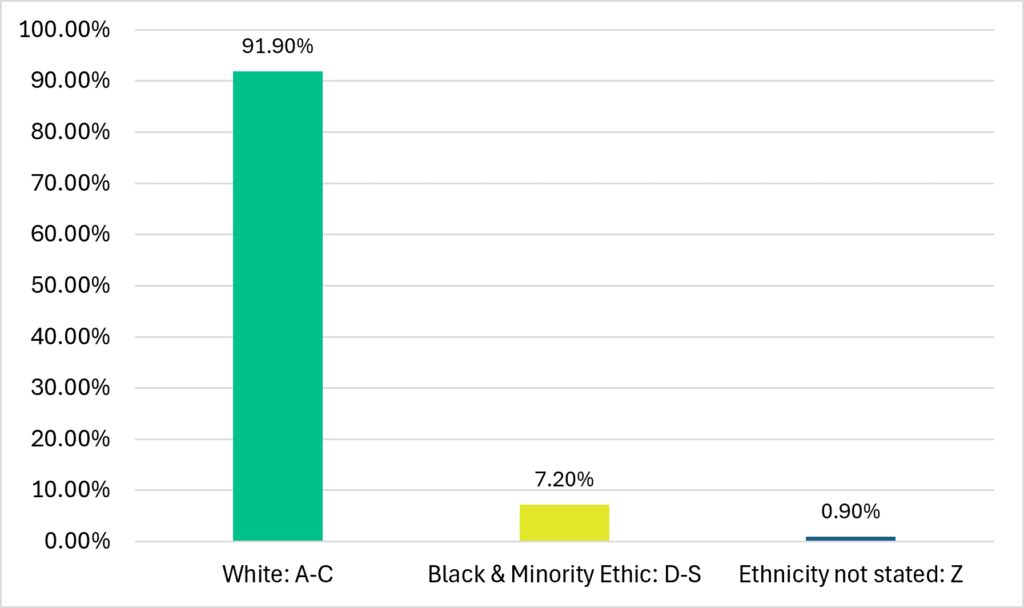
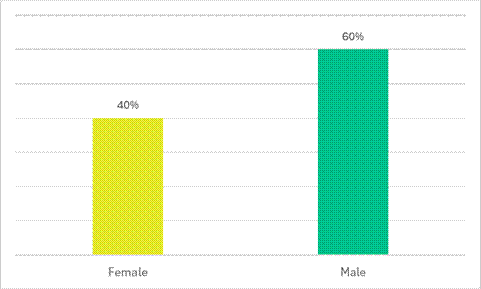
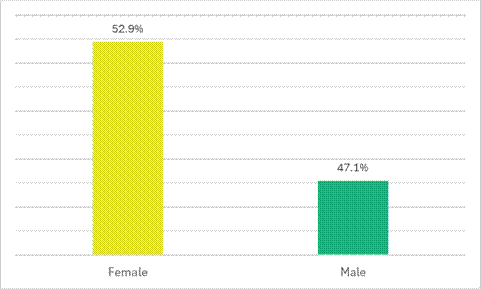
Sickness absence data
Total days lost in 25/26 due to sickness is 121,532 averaging 16.6 days per 1 full time equivalent
Staff turnover percentage
The turnover percentage for permanent and fixed term employees up to 31 March 2026 was 7.35%.
Expenditure on consultancy
Expenditure on consultancy totalled £386k during 25/26.
Ill health retirements
During 25/26 there were 10 ill health retirements.
Off-payroll engagements
There are no off-payroll engagements to disclose during 25/26.
Exit packages (subject to audit)
| Number of compulsory redundancies | Cost of compulsory redundancies | Number of other departures agreed | Cost of other departures agreed | Total number of exit packages | Total cost of exit packages | Number of departures where special payments have been made | Cost of special payment element included in exit packages | |
| Number | £000 | Number | £000 | Number | £000 | Number | £000 | |
| Exit package cost band (including any special payment element) | ||||||||
| <£10,000 | 1 | 9 | 1 | 9 | ||||
| £10,000 – £25,000 | 2 | 24 | 2 | 24 | ||||
| £25,001 – 50,000 | 2 | 68 | 2 | 68 | ||||
| £50,001 – £100,000 | 1 | 57 | 1 | 57 | ||||
| £100,001 – £150,000 | 1 | 146 | 1 | 146 | ||||
| £150,001 – £200,000 | 1 | 176 | 1 | 176 | ||||
| >£200,000 | 0 | 0 | 0 | 0 | ||||
| Total | 8 | 480 | 0 | 0 | 8 | 480 | 0 | 0 |
Independent Auditor’s Report to the Board of Directors of North West Ambulance Service NHS Trust
Report on the audit of the financial statements
Opinion on the financial statements
We have audited the financial statements of North West Ambulance Service NHS Trust (‘the Trust’) for the year ended 31 March 2026, which comprise the Statement of Comprehensive Income, the Statement of Financial Position, the Statement of Changes in Taxpayers’ Equity, the Statement of Cash Flows, and notes to the financial statements, including material accounting policy information.
The financial reporting framework that has been applied in their preparation is applicable law and international accounting standards as interpreted and adapted by HM Treasury’s Financial Reporting Manual 2025/26 as contained in the Department of Health and Social Care Group Accounting Manual 2025/26, and the Accounts Direction issued by the Secretary of State with the approval of HM Treasury as relevant to NHS Trusts in England.
In our opinion, the financial statements:
- give a true and fair view of the financial position of the Trust as at 31 March 2026 and of its income and expenditure for the year then ended;
- have been properly prepared in accordance with the Department of Health and Social Care Group Accounting Manual 2025/26; and
- have been properly prepared in accordance with the requirements of the National Health Service Act 2006.
Basis for opinion
We conducted our audit in accordance with International Standards on Auditing (UK) (ISAs (UK)) and applicable law. Our responsibilities under those standards are further described in the “Auditor’s responsibilities for the audit of the financial statements” section of our report. We are independent of the Trust in accordance with the ethical requirements that are relevant to our audit of the financial statements in the UK, including the FRC’s Ethical Standard, and we have fulfilled our other ethical responsibilities in accordance with these requirements. We believe that the audit evidence we have obtained is sufficient and appropriate to provide a basis for our opinion.
Conclusions relating to going concern
In auditing the financial statements, we have concluded that the Directors’ use of the going concern basis of accounting in the preparation of the financial statements is appropriate.
Based on the work we have performed, and taking into account the requirements of the Department of Health and Social Care Group Accounting Manual, we have not identified any material uncertainties relating to events or conditions that, individually or collectively, may cast significant doubt on the Trust’s ability to continue as a going concern for a period of at least twelve months from when the financial statements are authorised for issue.
Our responsibilities and the responsibilities of the Directors with respect to going concern are described in the relevant sections of this report.
Other information
The other information comprises the information included in the Annual Report, other than the financial statements and our auditor’s report thereon. The Directors are responsible for the other information. Our opinion on the financial statements does not cover the other information and, except to the extent otherwise explicitly stated in our report, we do not express any form of assurance conclusion thereon.
Our responsibility is to read the other information and, in doing so, consider whether the other information is materially inconsistent with the financial statements or our knowledge obtained in the audit, or otherwise appears to be materially misstated. If we identify such material inconsistencies or apparent material misstatements, we are required to determine whether there is a material misstatement in the financial statements or a material misstatement of the other information. If, based on the work we have performed, we conclude that there is a material misstatement of this other information, we are required to report that fact.
We have nothing to report in this regard.
Responsibilities of the Directors and the Accountable Officer for the financial statements As explained more fully in the Statement of Directors’ Responsibilities, the Directors are responsible for the preparation of the financial statements and for being satisfied that they give a true and fair view. The Directors are required to comply with the Department of Health and Social Care Group Accounting Manual 2025/26 and prepare the financial statements on a going concern basis, unless the Trust is informed of the intention for dissolution without transfer of services or function to another public sector entity. The Directors are responsible for assessing each year whether or not it is appropriate for the Trust to prepare its accounts on the going concern basis and disclosing, as applicable, matters related to going concern.
As explained in the Statement of the Chief Executive’s Responsibilities as the Accountable Officer of the Trust, the Accountable Officer is responsible for such internal control as the Accountable Officer determines is necessary to enable the preparation of financial statements that are free from material misstatement, whether due to fraud or error. The Accountable Officer is responsible for ensuring that the financial statements are prepared in a format directed by the Secretary of State.
Auditor’s responsibilities for the audit of the financial statements
Our objectives are to obtain reasonable assurance about whether the financial statements as a whole are free from material misstatement, whether due to fraud or error, and to issue an auditor’s report that includes our opinion. Reasonable assurance is a high level of assurance, but is not a guarantee that an audit conducted in accordance with ISAs (UK) will always detect a material misstatement when it exists. Misstatements can arise from fraud or error and are considered material if, individually or in aggregate, they could reasonably be expected to influence the economic decisions of users taken on the basis of these financial statements.
The extent to which our procedures are capable of detecting irregularities, including fraud is detailed below.
Irregularities, including fraud, are instances of non-compliance with laws and regulations. We design procedures in line with our responsibilities, outlined above, to detect material misstatements in respect of irregularities, including fraud.
Based on our understanding of the Trust, we considered that non-compliance with the following laws and regulations might have a material effect on the financial statements: employment regulation, health and safety regulation, anti-money laundering regulation, data protection, environmental protection, corruption and anti-bribery.
To help us identify instances of non-compliance with these laws and regulations, and in identifying and assessing the risks of material misstatement in respect to non-compliance, our procedures included, but were not limited to:
- gaining an understanding of the legal and regulatory framework applicable to the Trust, the environment in which it operates, and the structure of the Trust, and considering the risk of acts by the Trust which were contrary to the applicable laws and regulations, including fraud;
- inquiring with management and the Audit Committee, as to whether the Trust is in compliance with laws and regulations, and discussing their policies and procedures regarding compliance with laws and regulations;
- inspecting correspondence, if any, with relevant licensing or regulatory authorities;
- reviewing minutes of relevant meetings in the year; communicating identified laws and regulations throughout our engagement team and remaining alert to any indications of non-compliance throughout our audit; and considering the risk of acts by the Trust which were contrary to applicable laws and regulations, including fraud.
We also considered those laws and regulations that have a direct effect on the preparation of the financial statements, such as the National Health Service Act 2006 (as amended by the Health and Social Care Act 2012). Based on our understanding of the Trust, we did not identify any laws and regulations that have an indirect effect on the preparation of the financial statements where non-compliance might have a material effect on the financial statements.
In addition, we evaluated management’s incentives and opportunities for fraudulent manipulation of the financial statements (including the risk of override of controls) and determined that the principal risks were related to posting manual journal entries to manipulate financial performance, management bias through judgements and assumptions in significant accounting estimates.
Our audit procedures in relation to fraud included, but were not limited to:
- making enquiries of management, Head of Internal Audit and the Audit Committee on whether they had knowledge of any actual, suspected or alleged fraud;
- gaining an understanding of the internal controls established to mitigate risks related to fraud;
- discussing amongst the engagement team the risks of fraud; and
- addressing the risks of fraud through management override of controls by performing journal entry testing.
- Testing payments in the pre and post year end period to ensure they have been recognised in the right year;
- Testing individual accruals to supporting documentation to confirm the method of calculation and to confirm inclusion in the correct period.
- Testing capital additions of Property, Plant and Equipment (PPE) and/or intangible assets focusing on the transactions recorded in quarter 4 to confirm they met the recognition criteria of capital expenditure;
- Considering the completeness and valuation of deferred income recorded in the statement of financial position; and
- Considering the completeness and valuation of provisions recorded in the statement of financial position.
There are inherent limitations in the audit procedures described above and the primary responsibility for the prevention and detection of irregularities including fraud rests with both management and the Audit Committee. As with any audit, there remained a risk of non-detection of irregularities, as these may involve collusion, forgery, intentional omissions, misrepresentations or the override of internal controls.
We are also required to conclude on whether the Directors’ use of the going concern basis of accounting in the preparation of the financial statements is appropriate. We performed our work in accordance with Practice Note 10: Audit of financial statements and regularity of public sector bodies in the United Kingdom, (Revised 2024) and Supplementary Guidance Note 01, issued by the Comptroller and Auditor General in November 2024.
A further description of our responsibilities for the audit of the financial statements is located on the Financial Reporting Council’s website at www.frc.org.uk/auditorsresponsibilities. This description forms part of our auditor’s report.
Report on the trust’s arrangements for securing economy, efficiency and effectiveness in the use of resources
Matter on which we are required to report by exception
We are required to report to you if, in our opinion, we are not satisfied that the Trust has made proper arrangements for securing economy, efficiency and effectiveness in its use of resources for the year ended 31 March 2026.
We have nothing to report in this respect.
Responsibilities of the Accountable Officer
As explained in the Statement of Accountable Officer’s responsibilities, the Accountable Officer is responsible for putting in place proper arrangements for securing economy, efficiency and effectiveness in the use of the Trust’s resources.
Auditor’s responsibilities for the review of arrangements for securing economy, efficiency and effectiveness in the use of resources
We are required under section 21 of the Local Audit and Accountability Act 2014 (as amended) to satisfy ourselves that the Trust has made proper arrangements for securing economy, efficiency and effectiveness in its use of resources, and to report where we have not been able to satisfy ourselves that it has done so. We are not required to consider, nor have we considered, whether all aspects of the Trust’s arrangements for securing economy, efficiency and effectiveness in its use of resources are operating effectively.
We have undertaken our work in accordance with the Code of Audit Practice, having regard to the guidance issued by the Comptroller and Auditor General in March 2026.
Report on other legal and regulatory requirements
Opinion on other matters prescribed by the Code of Audit Practice
In our opinion:
- the parts of the Remuneration and Staff Report subject to audit have been properly prepared in accordance with the Accounts Direction made under the National Health Service Act 2006; and
- the other information published together with the audited financial statements in the Annual Report for the financial year for which the financial statements are prepared is consistent with the financial statements.
Matters on which we are required to report by exception under the Code of Audit Practice
We are required to report to you if:
- in our opinion the Annual Governance Statement does not comply with the guidance issued by NHS England; or
- we refer a matter to the Secretary of State under section 30 of the Local Audit and Accountability Act; or
- we issue a report in the public interest under section 24 and schedule 7(1) of the Local Audit and Accountability Act 2014; or
- we make a written recommendation to the Trust under section 24 and schedule 7(2) of the Local Audit and Accountability Act 2014.
We have nothing to report in respect of these matters.
Use of the audit report
This report is made solely to the Board of Directors of North West Ambulance Service NHS Trust, as a body, in accordance with part 5 of the Local Audit and Accountability Act 2014. Our audit work has been undertaken so that we might state to the Directors of the Trust those matters we are required to state to them in an auditor’s report and for no other purpose. To the fullest extent permitted by law, we do not accept or assume responsibility to anyone other than the Directors of the Trust, as a body, for our audit work, for this report, or for the opinions we have formed.
Delay in certification of completion of the audit
We cannot formally conclude the audit and issue an audit certificate until we have received confirmation from the NAO that the group audit of the Department of Health and Social Care has been completed and that no further work is required to be completed by us.
Daniel Watson, Key Audit Partner
For and on behalf of Forvis Mazars LLP (Local Auditor)
One St Peter’s Square Manchester
M2 3DE
25 June 2026
Annual Accounts 25/26
Further Information
Contact the director of corporate affairs at the address, e-mail, or telephone number below for information about the board of directors or if you would like:
- To view the register of board of directors’ interests
- To contact the chair or any member of the board of directors
- Information about board of directors meetings which are open to the public. Details of meetings are also available on the trust’s website.
To contact the chief executive’s office for more information or if you have any comments
Write to: Director of Corporate Affairs
North West Ambulance Service NHS Trust
Ambulance Headquarters
Ladybridge Hall
Chorley New Road
Bolton
BL1 5DD
Telephone: 01204 498400
E-mail: [email protected]
Website: www.nwas.nhs.uk