



NWAS Quality Account 2025-26 (pdf)
Chief executive statement
As Chief Executive, I am proud to present this Quality Account, which reflects the progress we have made over the past year to strengthen quality, performance, and patient care at North West Ambulance Service NHS Trust. This has been a challenging year for the NHS, but one in which I have seen real delivery, innovation, and resilience across our organisation. We have continued to adapt and improve while maintaining a clear focus on what matters most: providing safe, timely, and compassionate care for our patients.
At NWAS, we are privileged to support people at some of the most vulnerable moments in their lives. I am always mindful of the responsibility this brings, and it continues to shape everything we do. Our Quality Strategy for 2026 to 2031 sets out a clear and ambitious vision to deliver outstanding, inclusive care and to improve outcomes for the communities we serve.
Despite rising and increasingly complex demand, and ongoing hospital handover challenges, we have made measurable progress. We have delivered our fastest Category 1 and Category 2 response times since the pandemic, strengthening our ability to reach patients in urgent need. While we recognise that we are not yet where we want to be against national standards, this progress reflects the focus, professionalism, and determination of our teams.
We have also continued to expand care closer to home. Our hear and treat model now supports around one in five patients without the need to dispatch an ambulance. This means patients receive timely and appropriate care, while ensuring that emergency resources are available for those in greatest need.
Collaboration with system partners has been central to our progress. Working together, we have reduced hospital handover delays and improved patient flow across the region, helping to deliver safer and more timely care. We have also strengthened resilience through the next phase of our Integrated Contact Centre, bringing 999 and NHS 111 services into a single, more efficient and responsive model.
Targeted investment has supported these improvements. An additional £17 million in funding has enabled over 1,300 extra ambulance hours each week, increasing frontline capacity. Alongside this, we have continued to invest in digital innovation, including enhancements to our command and dispatch systems, new maternity tools within our electronic patient record, and the introduction of artificial intelligence enabled technology to better support our workforce and decision making.
Quality and experience remain at the heart of our approach. More than 92% of patients report being treated with dignity, compassion, and respect, which is something we are rightly proud of. At the same time, we are strengthening our improvement capability across the Trust, ensuring that learning is consistently translated into meaningful and sustained improvements in patient care.
We have also taken important steps to support our people and address inequalities in care. This includes action to reduce violence and aggression towards staff, continued investment in safety and wellbeing, and progress in equality, diversity, and inclusion through new frameworks and improved population health insight. We are also investing in leadership and development, ensuring our workforce is equipped to deliver high quality care in an increasingly complex environment.
None of this progress would be possible without the dedication, professionalism, and compassion of our staff and volunteers. I continue to be inspired by their skill, their commitment, and the care they provide to patients and communities every day.
This Quality Account reflects the progress we are making while recognising that there is more to do. As we look ahead, we will continue to focus on improving outcomes, reducing inequalities, and strengthening our role within the wider urgent and emergency care system. We are determined not only to improve performance, but to deliver consistently high quality care that makes a meaningful difference to the lives of the people we serve.
Salman Desai KAM
Chief Executive
Statement of directors’ responsibilities in respect of the quality account
Under the Health Act 2009, National Health Service (Quality Account) Regulations 2010 and National Health Service (Quality Account) Amendment Regulation 2011, the directors must prepare a Quality Account for each financial year. The Department of Health has issued guidance on the form and content of a Quality Account (which incorporates the above legal requirements). In preparing the Quality Account, directors must take steps to satisfy themselves that:
- The Quality Account presents a balanced picture of the trust’s performance over the period covered.
- The performance information reported in the Quality Account is reliable and accurate.
- There are proper internal controls over the collection and reporting of the measures of performance included in the Quality Account, and these controls are subject to review to confirm that they are working effectively in practice.
- The data underpinning the measures of performance reported in the Quality Account is robust and reliable, conforms to specified data quality standards and prescribed definitions, is subject to appropriate scrutiny and review, and the Quality Account has been prepared in accordance with Department of Health guidance.
The directors confirm to the best of their knowledge and belief they have complied with the above requirements in preparing the Quality Account.
By order of the Board.
This year in brief 25/26
| Our services | |
| 999 calls we answered | 1,442,253 |
| NHS 111 calls we answered | 2,116,885 |
| Patient transport service journeys | 1,445,927 |
| Emergency incidents requiring a response | 1,155,397 |
| Hear and Treat | 17% |
| See and Treat | 26% |
| Ambulance response times | |
| Category 1 response time mean | 00:07:04 |
| Category 1 response time 90th percentile | 00:12:02 |
| Category 2 response time mean | 00:26:59 |
| Category 2 response time 90th percentile | 00:53:32 |
| Category 3 response time mean | 01:40:06 |
| Category 3 response time 90th percentile | 03:31:42 |
| Category 4 response 90th percentile | 04:14:42 |
| Patient Experience | |
| The number of complaints we received | 2,073 |
| The number of compliments we received | 1,528 |
| The number of Friends and Family Test we received | 24,818 |
| Overall service experience / recommending the ambulance service to others (PES) | 93.02% |
| Clinical effectiveness | |
| Patients achieved a return of spontaneous circulation (ROSC) | 30.4% |
| Cardiac arrest survival at 30 days (Apr – Nov 25/26) | 11.2% |
| Post ROSC care bundle | 90.6% |
| STEMI care bundle | 91% |
| Older adult falls care bundle | 54.3% |
| Patient safety events | |
| The number of patient safety events | 10,385 |
| Patient safety events resulting in no physical harm | 8,624 |
| Patient safety events resulting in moderate physical harm | 83 |
| Patient safety events resulting in fatal harm | 28 |
Successes and achievements
- Delivered Phase 3 of the Integrated Contact Centre programme, creating a single, joined-up model across PES, PTS and NHS 111.
- Achieved sustained improvement in response performance, with fastest Category 1 and Category 2 response times since the pandemic.
- Expanded ‘hear and treat’, safely managing around one in five patients without ambulance dispatch, improving resource utilisation.
- Secured £17 million funding, delivering 1,300 additional ambulance hours per week and expanding frontline clinical capacity.
- Reduced hospital handover delays, including significant reductions in waits over 45 minutes and improved system flow.
- Achieved strong patient experience results, with over 92% of patients reporting dignity, compassion and respect in care delivery.
- Increased Friends and Family Test responses and broadened patient engagement, with expanded Patient and Public Panel influence on service development.
- Strengthened safeguarding, making over 48,000 referrals with low rejection rates, demonstrating high-quality safeguarding practice.
- Delivered digital advancements, including enhanced CAD systems, maternity tools in EPR, and deployment of AI-enabled Microsoft Copilot.
- Upgraded fleet and sustainability initiatives, including investment in electric vehicles and reduced reliance on third-party PTS provision.
- Improved workforce capability through leadership programmes, improvement training, and over 93% compliance in mandatory training.
- Reduced incidents of violence and aggression against staff and strengthened staff safety and support systems.
- Advanced health inequalities work through a new organisational framework and population health insight tools.
- Expanded research activity and improvement capability, embedding a trust-wide improvement framework and delivering measurable clinical improvements.
About us
North West Ambulance Service NHS Trust (NWAS) provides urgent and emergency healthcare services to around seven million people across the North West of England, serving one of the most diverse and geographically varied regions in the country. We deliver a range of services including 999 emergency response, NHS 111, patient transport services and specialist support to partner organisations across the health and care system.
We employ 7,988 staff across over 100 sites and provide services to patients in rural and urban communities, coastal resorts, affluent areas, and some of the most deprived areas in the country.
We work closely with integrated care systems, NHS providers, local authorities and voluntary sector partners to ensure patients receive the right care, in the right place, at the right time. This collaborative approach supports our ambition to improve outcomes, reduce health inequalities and ensure services are accessible and responsive to the needs of the communities we serve.
During 25/26, we continued to strengthen our focus on quality, safety and inclusion while responding to increasing demand for urgent and emergency care. We have continued to invest in workforce development, service improvement and partnership working to ensure patients receive high-quality, compassionate care.
A key milestone during the year has been the development of Our Strategy 2026 – 2031. This work has involved engagement with colleagues, system partners and patient representatives to ensure the trust’s future direction reflects the needs of both staff and the communities served. The strategy provides a clear framework for how we will continue to deliver safe, effective and person-centred care while supporting a sustainable and resilient health and care system for the future.
Our shared purpose, vision and values
At NWAS, our purpose is to help people when they need us the most. We aim to achieve the best possible physical and mental health outcome for each person who needs us.
Our vision is to deliver the right care, at the right time, in the right place, every time. This vision reflects our commitment to ensuring that patients receive safe, effective and compassionate care whenever they need it, while working closely with partners across the health and care system to ensure services are responsive and accessible.
The vision is underpinned by three core values: working together, being at our best and making a difference. These values guide how colleagues across the organisation work with patients, support one another and collaborate with partners. They reflect our commitment to professionalism, respect and continuous improvement.
We recognise that delivering excellent care depends on creating a supportive and inclusive working environment where colleagues feel valued and empowered. Throughout 25/26 we have continued to promote a culture that prioritises wellbeing, inclusion and learning, ensuring colleagues are supported to deliver the highest standards of care.
By working together with patients, communities and partner organisations, we continue to place compassion, collaboration and quality at the centre of everything we do.
Our strategy
Our strategy sets out how we will continue to deliver our vision and values over the next five years. The strategy reflects the evolving needs of patients, communities and the wider health and care system, and provides a clear direction for future development.
It is built around four strategic ambitions: providing outstanding, inclusive care; building a safe, supportive and inclusive culture; delivering a responsive care model through strong partnerships; and embedding continuous improvement and innovation for a sustainable future.
These ambitions are supported by four strategic plans: the Quality Plan, People and Culture Plan, Clinical Response Plan and Future Sustainability Plan, which together guide how we will improve services and outcomes.
Our services
Integrated contact centres (ICC)
The integrated contact centre (ICC) includes 999, NHS 111 and patient transport service (PTS) contact centre – these are the teams at the end of the phone who answer over a million calls each year.
- 999 staff provide emergency care and advice, and dispatch ambulances to the scene as appropriate. The clinical hub (CHUB), based within ICC, assesses patients via telephone, providing the most appropriate care based on that assessment. This may be an ambulance (either emergency or urgent care), GP referral, referral to other services or self-care.
- NHS 111 delivers urgent healthcare assessment and advice. The service is a major contributor to the delivery of integrated urgent care for the North West. It signposts patients to the most appropriate care following triage and can advise on community services such as pharmacies or mental health support.
- The PTS contact centre takes bookings for patients and goes through the eligibility test with callers to understand their needs and advises on transport for pre-booked appointments.
Paramedic emergency service (PES)
Our paramedic emergency service (PES) consists of solo responders, double-crewed ambulances and approved private providers who together deliver 999 emergency care in the North West.
Patient transport service (PTS)
Patient transport service (PTS) provides essential transport to non-emergency patients in Cumbria, Lancashire, Merseyside and Greater Manchester, who are unable to make their own way to or from hospitals, outpatient clinics or other treatment centres.
Resilience
Our hazardous area response team (HART) and resilience teams are specially trained and equipped to provide a response to high-risk and complex emergency situations. They respond to major incidents to deliver our statutory responsibilities as a category 1 responder under the Civil Contingencies Act 2004.
Volunteering
We have one of the largest and longest-established community first responder (CFR) schemes in England, with CFRs operating across all areas of the North West, providing an invaluable service in their local communities.
We also offer several other volunteering roles, including Patient and Public Panel (PPP), voluntary car drivers (VCD), voluntary car service (VCS), welfare support volunteers and vehicle movement volunteers.
Corporate services
Behind the scenes, our corporate and support staff play a vital role in enabling our frontline services to operate safely and effectively. These teams include, for example, finance, estates and facilities, communications, legal services, governance, health and safety, digital, vehicle maintenance, and human resources. Every role contributes to delivering high-quality care. Together, we ensure our people are supported, our systems are reliable, and our services continue to evolve to meet the needs of our communities.
Our quality strategic plan (26/31)
Every day, thousands of people across the North West rely on us at some of the most critical moments of their lives. It is a responsibility we hold with respect for the trust placed in us. Our new strategy for 2026 – 2031 has been shaped by the insight, experience and ambition of our people, patients, volunteers and partners, and reflects what matters most to those we serve.
Our quality strategic plan 2026 – 2031 sets out our ambition to deliver outstanding, inclusive care for everyone we serve, with quality acting as the lens through which all strategic and operational decisions are made. Building on achievements from the previous quality strategy, the plan focuses on improving patient safety, clinical effectiveness, patient experience, and reducing health inequalities, whilst embedding a culture of learning and continuous improvement.
Central to the strategy is a commitment to reducing avoidable harm by 30%, supported by systematic learning through the Patient Safety Incident Response Framework (PSIRF), strengthened safety insight, and targeted improvement in priority risk areas including cardiac arrest, non-conveyance, and pre-hospital maternity and newborn care.
The strategy also prioritises improving the effectiveness and equity of care by addressing unwarranted variation and targeting improvement activity for patient groups who experience poorer outcomes, including people with mental health needs, frailty, maternity, respiratory and cardiovascular conditions, and learning disability and autism. A strong emphasis is placed on making every contact count and delivering measurable improvements in outcomes.
Improving clinical outcomes remains a key ambition, with the trust seeking to achieve top-quartile performance against Ambulance Clinical Quality Indicators through strengthened clinical supervision, improved governance and assurance, investment in digital tools and equipment, and better use of data and learning to drive improvement.
Finally, the strategy commits to enhancing patient experience, achieving a 5% uplift, and embedding meaningful patient and public involvement in quality improvement, with a particular focus on engaging under-represented groups and ensuring patient voice shapes service design and delivery at every level.
Our aims and achievements in 25/26
In last year’s Quality Account, we laid out our aims for 25/26. The paragraphs below outline our progress against these over the last year with the bold text outlining our specific commitments.
Safer first
Focus on delivering national and local priorities in line with the Patient Safety Incident Response Framework (PSIRF).
We have embedded the PSIRF framework and we continue to support learning and improvement from patient safety events nationally. Our local priorities have focused on:
- Managing a cardiac arrest.
- Clinical assessment and treatment of women during maternity care that is managed outside of JRCALC guideline of trust policy.
- Harm resulting from a patient refusal where there is an absence of documented informed consent/refusal/mental capacity assessment.
These three priorities have had specific improvement projects managed through our NWAS improvement academy, and work is ongoing to scale this across our footprint.
Highly effective care
Continue to strengthen our delivery against the Care Quality Commission (CQC) assessment framework for safety, effectiveness, patient centeredness, responsiveness and well-led in readiness for future inspection.
Our leaders have been prepared with an understanding of the Single Assessment Framework (SAF) from our regulatory body, the CQC. This process has enabled staff to build on their successes and identify areas for improvement to ensure the quality of care we deliver is safe, effective, patient centred and responsive. We have also undertaken a series of CQC workshops and commissioned an external review of the Well-led domain, both of which have strengthened our evidence of compliance against each of the new ‘we’ statements.
Improve the processes associated with medicines management including controlled drugs.
We have procured a digital stock management system following the submission of a business case to procure an electronic controlled drugs register. This will help to significantly reduce the risks associated with medicines management.
Improving safety culture for staff and patients
Continue building capacity and application of improvement methodology from board to frontline to strengthen delivery of strategic objectives.
This year, we have strengthened organisational improvement capability through the continued expansion of the Improvement Academy, delivering improvement training at varying levels to over 300 colleagues. Improvement methodology has been embedded within leadership development programmes and applied through real-time projects, enabling staff to translate theory into practice.
We have introduced a range of new learning approaches, including classroom-based training, coaching, and self-directed learning, supported by enhanced systems to record and track improvement science development. Alongside this, we have established an internal NWAS dosing model and accreditation framework, providing a structured pathway for colleagues to develop and evidence their improvement skills.
Training has been extended across the wider workforce and recorded within the Electronic Staff Record, ensuring visibility of capability and supporting the development of a workforce equipped to identify opportunities for improvement and implement change using a recognised methodology. A forward plan for further development has been agreed, embedding improvement as a core component of the trust’s future strategic direction.
Our operational performance
Integrated contact centre (ICC)
In January 2025, we approved phase three of the restructure of the integrated contact centre to align call handling, dispatch and planning, and clinical delivery functions. As a result, service lines 111, PTS, and EOC were reorganised to create a more resilient, integrated team.
The final structure was launched in October 2025 and the delivery of this has now been concluded. This final phase will be critical to completing the structural changes and embedding the integrated teams in 25/26. This includes the ongoing implementation of joint governance procedures, helping maintain uniformity among all three services, making sure the integration proceeds in a systematic, compliant, and efficient way.
Activity and demand: NHS 111
111 calls
During 24/25, the number of NHS 111 calls offered to us across the North West increased by 13% compared with the previous year. This rise was driven in part by the withdrawal of external support previously provided to the trust by Vocare, an independent healthcare provider that supports NHS 111 services.
In 25/26, 70% of calls were answered within 60 seconds, representing a 13-percentage-point reduction compared with 24/25. This decline aligns with the increased call volumes following the cessation of external support. Timely call answering remains a critical factor in patient experience and in ensuring that urgent cases are identified and managed without delay.
| % Calls answered in 60s (95%) | Q1 | Q2 | Q3 | Q4 | Total |
| 24/25 | 82.61% | 82.61% | 82.61% | 82.61% | 82.61% |
| 25/26 | 70.47% | 70.47% | 70.47% | 70.47% | 70.47% |
Activity and demand: paramedic emergency service (PES)
999 call demand
During 25/26, overall demand for 999 services increased by 0.4% compared with the previous year. Demand fluctuated across the year, reflecting the impact of external factors such as seasonal winter pressures. Alongside this increase, enhancements to clinical triage have enabled call handlers to more effectively direct patients to appropriate alternative care pathways. This has reduced the number of repeat calls from patients who historically may have remained waiting for an ambulance response, supporting more efficient use of emergency resources while ensuring patients receive timely and appropriate care.
| Fiscal year | 999 Call demand | % difference to previous year |
| 22/23 | 1,531,958 | -6.2% |
| 23/24 | 1,446,700 | -5.6% |
| 24/25 | 1,436,327 | -0.7% |
| 25/26 | 1,442,253 | 0.4% |
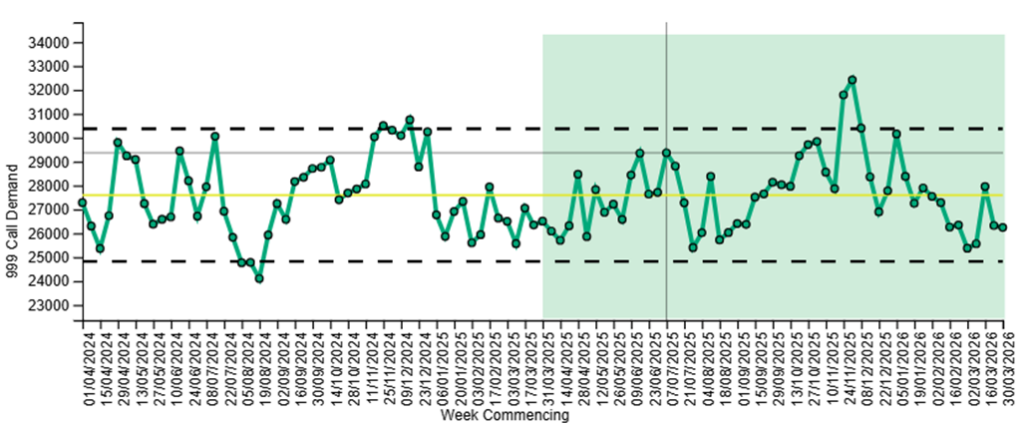
Figure 1 presents a statistical process control chart illustrating a marked increase in demand during the winter period, followed by a return to more stable activity levels throughout quarter four. Although December showed some statistically significant increases, overall demand during the remainder of quarter four was consistent with anticipated seasonal patterns.
Incidents requiring a response
During 25/26, the number of emergency response incidents increased by 3.3% meaning more pressure on ambulance resources and further challenge to meeting response targets. The total number of incidents attended remained lower than the volume of 999 calls received. This is because we can receive multiple calls relating to the same incident, additional calls to request updates on ambulance arrival times, and we have also continued our improvements in telephone triage, which enabled a greater proportion of patients to be safely directed to appropriate alternative services without the need for an ambulance response.
| Fiscal year | Emergency incidents | % Difference to previous year |
| 22/23 | 1,074,933 | -4.8% |
| 23/24 | 1,121,403 | 4.3% |
| 24/25 | 1,118,427 | -0.3% |
| 25/26 | 1,155,397 | 3.3% |
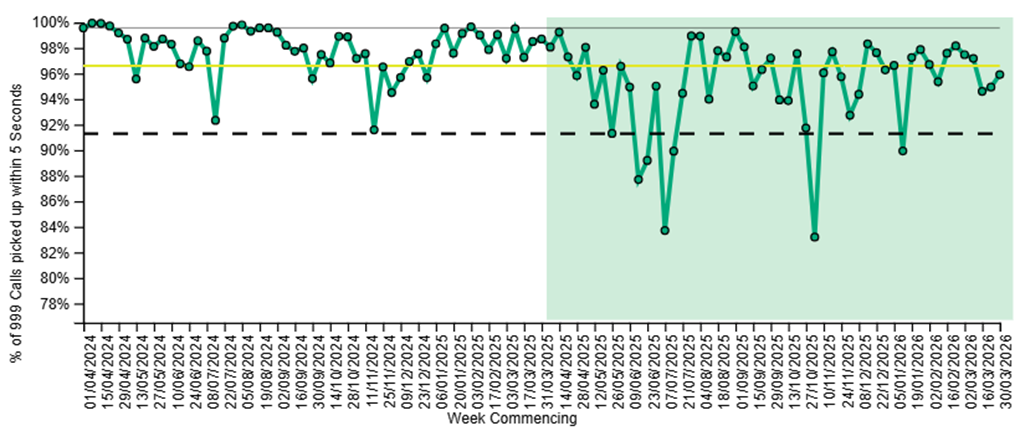
Call pick up is a vital safety metric for patients with the most life-threatening conditions (category 1) as cardiopulmonary resuscitation advice over the telephone is a critical success factor in survival.
Weekly performance data for 999 call answering during 25/26 shows increased consistency, with performance maintained at or above 95% for much of the year. However, there was a 3% overall deterioration in 999 call pick-up performance compared with the previous year. Analysis of the data identifies specific periods where performance fell below established control limits, notably in August 2025 and November 2025. These variations coincided with periods when NWAS was providing support to another trust, during which call volumes exceeded planned activity levels.
| Fiscal year | % of Calls answered in 5 seconds | % Difference to previous year |
| 22/23 | 72.8% | -3.1% |
| 23/24 | 96.8% | 24.0% |
| 24/25 | 97.8% | 1.0% |
| 25/26 | 95.2% | -2.6% |
Patients we help on the telephone (hear and treat)
The integrated contact centre (ICC) clinical delivery team has continued to strengthen the delivery of telephone-based clinical assessment and care, supporting the reduction of avoidable ambulance dispatches. During 25/26, 17.4% of emergency incidents were safely managed through clinical triage and treated over the telephone, representing an improvement of three percentage points compared with the previous year.
Ongoing expansion of the ‘hear and treat’ programme has increased the number of patients receiving timely clinical advice via telephone, ensuring that ambulance resources are more effectively prioritised for those with the most urgent needs. As a result, approximately 18–20% of all emergency incidents, equivalent to nearly one in five, are now safely managed through telephone assessment by ICC clinicians.
In addition, advanced practitioners in urgent and emergency care (APUEC) responded to 7,989 incidents during 25/26, with 85% of these cases resolved without the need for ambulance attendance, further supporting the efficient use of emergency response capacity while maintaining patient safety.
Ambulance response programme
Ambulance service emergency performance is measured through the ambulance response programme (ARP), which aims to make sure patients are reached as quickly as possible depending on their need. Under ARP there are five categories, with category one being the most serious, life-threatening incidents. All categories have a performance standard based on the time it takes to respond to the incident. These performance standards can be seen below.
- Category 1 is for calls about people with life-threatening injuries and illnesses. The aim is to respond to these in an average time of seven minutes and at least nine out of ten times within 15 minutes.
- Category 2 is for emergency calls. The aim is to respond to these in an average time of 18 minutes and at least nine out of ten times within 40 minutes.
- Category 3 is for urgent calls. In some instances, patients may be treated by ambulance staff in their own home. The aim is to respond to these within 120 minutes at least nine out of ten times.
- Category 4 is for less urgent calls. In some instances, advice may be given over the telephone, or patients may be referred to another service such as a GP or pharmacist. The aim is to respond to these at least nine out of ten times within 180 minutes.
- Category 5 is for low acuity, non-emergency calls where signposting advice is provided. No response time applies.
Our response to the most critically ill patients continued to improve in 25/26. On average, ambulance crews attended category 1 incidents 40 seconds faster than in 24/25. While performance remained four seconds above the national target of seven minutes, this represents the strongest performance since the pandemic and marks the fourth consecutive year of year-on-year improvement. Given that category 1 calls relate to the most serious and life-threatening conditions, these patients remain the highest priority to maximise opportunities for life-saving intervention. Importantly, this improvement was achieved despite a 6.8% increase in the proportion of calls classified as category 1 compared with 24/25.
Ambulance crews also achieved their fastest response to category 2 incidents since the pandemic during 25/26. Category 2 calls, which account for most face-to-face responses, had a mean response time of 26 minutes and 59 seconds. This represents an improvement of more than two and a half minutes compared with 24/25 and is better than the revised national target of 30 minutes. Further improvement is planned in 26/27, supported by additional NHS England funding to increase frontline resource capacity and expand integrated contact centre capacity to strengthen call triage.
Response times for category 3 and category 4 incidents also improved for the third consecutive year. As a result, patients with lower-acuity needs continue to receive a faster response than at any point since the pandemic. We saw a 50 minute improvement in our 90th percentile response to Category 3 patients, bringing the time down to 3 hours and 31 minutes. We saw a 17 minute improvement in our 90th percentile response to Category 4 patients, bringing the time down to 4 hours and 14 minutes. Despite these improvements we are still below the targets and work continues to improve further in 26/27.
During 25/26, the service responded to a higher number of incidents than in the previous year, representing a 3.3% increase overall compared with 24/25. However, a greater proportion of incidents than ever before were also managed without conveying patients to hospital. Patients were supported through telephone clinical assessment, referral to alternative services such as community pharmacy, community response teams or their own GP, or through face-to-face care delivered at home by ambulance service clinicians. This was enabled by expanding the clinical workforce supporting 999 call triage, working collaboratively with system partners to improve access to alternative services through care coordination hubs, and continuing to utilise non-emergency department pathways, including urgent treatment centres, same-day emergency care units and medical assessment centres.
Hospital handover
Hospital handover refers to the period from an ambulance arriving at a hospital to the point at which the patient is transferred from the ambulance trolley into the care of hospital staff, including the clinical handover detailing the patient’s presenting condition and treatment provided. The national target set by NHS England for ambulance handover is 15 minutes.
While ambulance handover performance continues to be challenged and remains above the 15-minute target, significant improvements were achieved during 25/26. Across our footprint, the average hospital handover time was just over 28 minutes, representing an improvement of five minutes compared with 24/25. The most substantial improvement was observed in Cheshire and Merseyside, where average handover times reduced by over ten minutes. Improvements were also delivered in Greater Manchester (just under three minutes), Cumbria and Lancashire (just under three minutes), and North Cumbria (two and a half minutes). Average handover times now stand at just under 23 minutes in Greater Manchester, just under 28 minutes in Lancashire and South Cumbria, and just over 35 minutes in Cheshire and Merseyside.
These improvements have been driven by the introduction of the ‘Handover 45’ principles in August 2025. This approach establishes an expectation that no ambulance crew should wait longer than 45 minutes to hand over a patient. Where this threshold is exceeded, responsibility for the patient is transferred to the hospital and the ambulance crew is released to be available for further emergency incidents. While implementation has been challenging in some areas, the adoption of ‘Handover 45’ has significantly reduced the number of prolonged waits at many hospital sites across the North West. In 24/25, ambulance crews experienced over 91,000 handovers exceeding 45 minutes; this reduced to 67,500 in 25/26, with further reductions anticipated in 26/27 as the initiative operates for a full year.
Despite overall progress, arrival-to-handover times remain higher in Cheshire and Merseyside than in other integrated care board (ICB) areas. Extensive engagement has taken place across the Cheshire and Merseyside system throughout the year to address this, including the development of initiatives to reduce emergency department attendances through enhanced 999 call triage, the use of care coordination to identify alternative pathways for providing care closer to home, and the implementation of the ‘Handover 45’ principles.
There are a small number of hospital sites across the North West where handover performance deteriorated during 25/26. Work continues with senior leadership teams at these sites to address the issues identified. Plans are in place to sustain and strengthen this improvement activity into 26/27, supported by ICBs and the NHS England regional team, with a continued focus on reducing average handover times and minimising long waits.
Timely release of ambulances following arrival at hospital is critical to maximising ambulance availability and improving system capacity to respond to emergencies. For this reason, reducing hospital handover delays has remained a key priority for leadership teams across NWAS, as well as for integrated care boards and acute hospital trust partners.
Outcomes
See and treat/see and convey
As performance in ‘hear and treat’ continues to improve, ambulances are increasingly dispatched only to patients whose needs cannot be safely managed through telephone assessment. As a result, patients receiving a face-to-face ambulance response are often more clinically complex or acutely unwell. In some cases, following on scene clinical assessment, patients can still be identified as suitable for management through primary care or urgent care services, rather than requiring conveyance to an emergency department. This approach is referred to as ‘see and treat’.
During 25/26, the three main integrated care boards (ICBs) across the North West footprint progressed the introduction of care coordination hubs. These hubs are staffed by senior clinicians who support ambulance crews to access appropriate community-based resources, enabling patients to be managed safely without the need for attendance at an emergency department. Through these hubs, clinicians can refer patients to virtual wards, arrange an urgent community response within two hours, or access specialist community pathways, including for frail patients and those with conditions such as respiratory illness. These represent examples of the range of alternative pathways available to support care delivery outside of a hospital setting.
There has been a reduction in the proportion of patients receiving a face-to-face response who are subsequently managed without being transported to hospital. This proportion reduced from 27.6% in 24/25 to 26.4% in 25/26 and is primarily attributable to improvements in ‘hear and treat’ performance where almost 3% more patients were managed over the phone when a clinician calls them back compared to the previous year. As a greater number of patients are managed safely without the need to dispatch an emergency ambulance, there are fewer opportunities to deliver face-to-face care in patients’ homes or other community settings through ‘see and treat’. This shift reflects more effective demand management rather than a reduction in clinical capability.
The improvement in ‘hear and treat’ performance, alongside the associated reduction in ‘see and treat’, has increased ambulance availability for patients with higher acuity needs. It has also enabled more patients to be directed to the most appropriate care pathway at the earliest opportunity, without waiting for ambulance attendance.
Between 24/25 and 25/26, the percentage of patients transported by ambulance to an emergency department fell by 1.3%, while conveyances to non-emergency department destinations reduced by 0.3%. As with reductions in ‘see and treat’, this change is largely attributable to more patients being appropriately managed through ‘hear and treat’ pathways.
Urgent and emergency care growth
In 25/26, we received £17 million of additional funding to support rising demand across urgent and emergency care services. This investment enabled the delivery of an additional 1,300 doubled crew ambulance (DCA) hours per week, expanded rapid response vehicle (RRV) capacity, and the introduction of new clinical roles within the integrated contact centres to strengthen ‘hear and treat’ activity and provided senior clinical decision-making support to ambulance crews. This support has been essential in maintaining safe and effective ‘see and treat’ decision making, particularly for more junior staff. Funding also supported additional 999 call handler recruitment to ensure calls for emergency assistance are answered more as quickly.
Investment was also directed towards improving productivity and operational efficiency. Dedicated logistics roles were introduced to manage medical devices, vehicle checks, fleet availability and stock control, reducing vehicle downtime and enabling clinical leaders to focus on staff supervision and quality oversight. Additional ICC roles were established to manage real-time operational resourcing, supporting improved crew booking on and off duty, reducing post-incident wrap-up times and minimising prolonged vehicle unavailability.
Further posts were created to enhance collaboration with system partners, expand access to alternative care pathways through care coordination hubs, and reduce unnecessary conveyance to emergency departments.
Additional leadership capacity was also funded to manage the increase in staff across the organisation. This increase in supervisory support to frontline staff helps provide clinical supervision and make sure paramedics and emergency medical technicians are supported to provide the best care possible.
Collectively, these measures have contributed to supporting our Urgent and Emergency Care improvement plan which focused on making the improvements in category two response times in 25/26. The work also contributed to the improvements we have seen Category 1 calls due to the increase in RRVs to respond to higher acuity calls, and Category 3, and Category 4 performance due to the additional DCA hours.
Activity and demand: patient transport service (PTS)
The patient transport service (PTS) contracts covering Merseyside, Greater Manchester, Lancashire and Cumbria were originally due to expire in 2024 but have been extended until 31 March 2027 to allow sufficient time for completion of a formal procurement process. The tender process commenced in January 2026 and is expected to conclude imminently, with mobilisation of the new contract arrangements taking place up to March 2027.
During 25/26, the trust maintained a strong focus on delivering the PTS improvement programme commissioned by the trust management committee in November 2024. The programme was deliberately ambitious, with the aim of improving outcomes and experience for patients and staff, while ensuring contractual compliance and achieving financial efficiencies. Delivery of the programme has taken place within a complex operating environment, with limited scope for long-term planning due to the extended contractual position.
In response, the trust prioritised a smaller number of key improvement actions during 25/26, focusing on those with the greatest potential to deliver tangible benefits for patients and our PTS staff.
The priority areas for delivery in 25/26 included:
- Improvement in digital solutions and innovations
- Targeted leadership development
- Improving operational procedures
- Improving communication and culture
- Financial efficiency
A brief overview of five of our priorities is provided below:
Digital solutions and innovations
Patient safety remained a core priority throughout 25/26. PTS completed a trial of the Ferno Compact Power Traxx chair, designed to support safer patient movement on stairways while maintaining safe manual handling practices for staff. Following positive outcomes, additional chairs have been added to the PTS fleet.
Approval was secured in December 2025 to procure upgraded handheld digital devices across the entire PTS fleet. During 2026, each PTS vehicle will be equipped with a mobile phone to support communication, navigation and access to journey information, alongside the introduction of a tablet device. This will enhance access to digital information, improve communication and strengthen safety systems for PTS staff.
Leadership development
During 25/26, a targeted leadership development programme was designed and delivered for PTS concluding in March 2026. A total of 65 PTS leaders, including team leaders, operations managers and sector managers, participated in a programme of workshops and webinars focused on leadership capability, coaching skills, reflective practice and the promotion of a positive wellbeing culture. The programme concluded with a celebration event held on 25 March 2026, providing an opportunity for participants to reflect on learning and share experiences. The next phase of this work will involve collaboration with our Learning and Organisational Development team to develop clearly defined PTS leadership pathways, including progression from ambulance care assistant to team leader and from team leader to operations manager.
A new PTS learning and innovation forum was also established, creating a collaborative space for staff and leaders to share learning from incidents and propose innovations to improve practice.
Operational procedures
In 25/26, we focused on reviewing and strengthening a range of operational procedures, including standard operating procedures (SOPs), recruitment and retention planning, staff engagement approaches, and internal and external escalation processes. This work included particular emphasis on the safe use of wheelchairs, stretchers and other assistive equipment. Monthly staff forums were re-established, alongside piloting a ‘roadshow’ approach to strengthen staff voice and increase visibility of managers and senior leaders. In addition, a dedicated clinical escalation process was introduced to ensure the safe and timely management of medical emergencies occurring on PTS vehicles. A new PTS learning and innovation forum was also established, creating a collaborative space for staff and leaders to share learning from incidents and propose innovations to improve practice.
Communication and culture
Throughout 2025/26 the senior PTS leadership team have been working to improve the communication to staff, through increased number of specific PTS staff briefings published on the intranet and regular staff fora using the ‘You said We did approach’ and testing a roadshows approach at hospital sites. In addition, we have been working on the delivery of a cultural improvement plan.
Financial efficiency
During 25/26, PTS successfully reduced reliance on third party providers, decreasing average daily vehicle usage from 55 to 46 vehicles from 1 April 2025, equating to an average reduction of nine vehicles per working day. This enabled a greater proportion of contracted activity to be delivered using NWAS resources, supporting improved efficiency and more effective use of capacity across the service.
PTS activity
During 25/26, overall PTS activity remained approximately 9% below baseline, compared with 8% below baseline in 24/25. Activity levels varied across the footprint, with Merseyside and Greater Manchester recording activity levels 11% and 1% above expected, respectively. In contrast, Lancashire and Cumbria experienced reductions of 28% and 20% against expected activity, reflecting a continuation of patterns seen in the previous year.
| Contract | 25/26 Baseline | 25/26 Activity | Activity Variance | Activity Variance % |
| Cumbria | 168,291 | 133,805 | -34,486 | -20% |
| Greater Manchester | 526,588 | 582,264 | 55,676 | 11% |
| Lancashire | 589,180 | 425,546 | -163,634 | -28% |
| Merseyside | 300,123 | 303,989 | 3,866 | 1% |
| NWAS | 1,584,182 | 1,445,604 | -138,578 | -9% |
Utilisation
Work continued in year to look at how our PTS resources are used in each area to support more effective deployment of vehicles and staff to areas of greatest need. Our service continues to benefit from the valued contribution of its volunteer car drivers, whose support makes a meaningful difference to patients and local communities. As of 31 March 2026, 140 volunteer car drivers were actively supporting the service. We continued to analyse system configuration to optimise use of available PTS resources. This work focuses on establishing area-specific average utilisation targets and clear improvement trajectories to support more effective deployment of vehicles and staff.
Performance: patient transport service (PTS)
There are four quality performance indicators within the patient transport service contract known as quality standards:
- Call answering
- Travel time on a vehicle
- On time arrival
- Collection after treatment
These performance indicators are measured based on whether the journey was planned or unplanned, or if the journey was for someone receiving enhanced priority service (EPS) which includes patients travelling for renal dialysis, or oncology.
We have seen a deteriorating position across the range of operational PTS quality indicators from 24/25 to 25/26 most significantly in our call handling service with minimal deterioration across operational delivery including (EPS, planned and unplanned specification), whilst performance is reported at a trust level there have been pockets of improvements in the Cumbria area (EPS collection and planned arrival).
The PTS service is currently operating in a challenging environment. The existing contract has been extended, but it is not designed to support a modern service. This makes it difficult to plan for the future or make improvements. It is also having a negative impact on staff morale.
To mitigate these challenges the trust has a dedicated PTS improvement programme however there is a need to develop long term strategies to improvement to deliver the sustainable impact on performance including interventions such as whole service rota review.
Performance is also impacted by a range of complex issues including:
- Complexity and acuity of patients that impact on occupancy rates and therefore productivity (e.g. increasing patients with high mobility needs).
- An ever-evolving operating environment with changes to physical locations of provision of healthcare and the hours of operating.
- The behaviours of our acute trust partners in effective booking strategies with high rates of aborted journeys which significantly impacts the ability of the service to operate optimally.
- A relatively small call handling workforce means that any sickness or increased attrition has a disproportionate impact on our ability to improve call pick-up performance.
We continue to work within the scope of the contract to consider areas for improvement and invested in digital developments and a significant leadership development programme as well as increasing the capacity in the leadership team. However, there is a need for longer term stability that facilities medium to long term transformation and investment plans.
| PTS Contractual Quality Indicators 25/26 | 25/26 performance |
| 75% of calls answered within 20 seconds | 15% |
| Average length of time taken to answer inbound calls (Average is 60 seconds) | 11:29 (seconds) |
| Planned Care: 85% passenger time on vehicles is less than 60 minutes | 95% |
| Planned Care: 90% of patients arriving within 60 minutes of scheduled appointment time | 78% |
| Planned Care: 80% of patients collected within 60 minutes of scheduled collection time or patient readiness notification | 62% |
| Planned Care: 90% of patients collected within 90 minutes of scheduled collection time or patient readiness notification | 80% |
| Unplanned Care: 80% passenger time on vehicles is less than 60 minutes | 93% |
| Unplanned Care: 80% of journeys where the patient is picked up no later than 60 minutes after booked collection time | 52% |
| Unplanned Care: 90% of journeys where the patient is picked up no later than 90 minutes after booked collection time | 64% |
| Enhanced Priority Service: 85% passenger time on vehicles is less than 60 minutes | 96% |
| Enhanced Priority Service: 90% of patients arriving 45 minutes prior to scheduled appointment time | 77% |
| Enhanced Priority Service: 85% of patients collected within 60 minutes of scheduled collection time or patient readiness notification | 81% |
| Enhanced Priority Service: 90% of patients collected within 90 minutes of scheduled collection time or patient readiness notification | 93% |
Our quality assurance
Ambulance quality indicators (AQIs)
A key indicator of service effectiveness is the trust’s monthly submission to the National Ambulance Quality Indicators (AQIs), produced by the clinical audit team and submitted to NHS England. This data is used by clinical leadership teams to work collaboratively with system partners to review outcomes, share learning and inform local quality improvement priorities.
| National Ambulance Quality Indicators | April-November performance 24/25 | April-November performance 25/26 | April-November national average 25/26 |
| Cardiac arrest (all-ROSC at hospital) | 29.7% (771/2,597) | 30.4% (797/2,622) | 28.9% (5,840/20,522) |
| Cardiac arrest (Utstein-ROSC at hospital) | 51.9% (246/474) | 50.6% (226/447) | 51.3% (1,560/3,042) |
| Post ROSC care bundle | 87.8% (310/353) | 90.6% (328/362) | 81.2% (2,276/2,802) |
| Cardiac arrest (all-survival to 30 days) | 10.5% (270/2,577) | 11.2% (293/2,606) | 10.1% (2,067/20,387) |
| Cardiac arrest (Utstein-survival to 30 days) | 28.3% (131/463) | 31.0% (137/442) | 30.5% (922/3,025) |
| STEMI care bundle | 90.7% (568/626) | 91% (514/565) | 82.6% (4,248/5,141) |
| STEMI PPCI patients (call to angiography) | 02:35:00 (1,082) | 02:29:00 (807) | 02:26:00 (6,909) |
| Confirmed stroke patients (call to door) | 01:21:00 (4,925)* | 01:21:00 (5,199) | 1:31:00 (36,957) |
| Older adult falls care bundle | 19% (114/300) | 54.3% (326/600) | 52.5% (3,222/6,135) |
*Stroke (SSNAP) data differs from the figures reported in last year’s Quality Account due to refinements in the data.
Quarterly AQI reports are provided to the clinical and quality group and the quality and performance committee. In addition, more detailed, condition-specific reports, including ST-segment elevation myocardial infarction (STEMI) and older adult falls, are produced for clinical leads to support targeted learning and service improvement.
Between 01 April and 30 November 2025, we submitted 100% of eligible cases for national AQIs and for all relevant national clinical audit programmes, including the Myocardial Ischaemia National Audit Project (MINAP) and the Sentinel Stroke National Audit Programme (SSNAP). All challenges previously identified in relation to SSNAP performance during 24/25 have now been fully resolved.
Since the introduction of the older adult falls AQI in 24/25, we have made significant progress in improving compliance with the associated care bundle, with current performance exceeding the national average. Improvement activity has included face-to-face training delivered through mandatory training programmes and the introduction of a dedicated falls section within the electronic patient record (EPR), providing structured prompts to support clinical assessment and documentation. Ongoing improvement work includes increased audit frequency from quarterly to monthly, continued collaboration with digital teams to support consistent completion of the EPR documentation, and the provision of sector-level performance data to enable sector clinical leads to implement targeted local improvement actions.
Overall cardiac arrest outcomes have improved compared with the previous year, with the trust performing above the national average for most reported measures. While there has been a slight reduction in return of spontaneous circulation (ROSC) at hospital within the Utstein comparator group, survival to 30 days has increased for this cohort. A dedicated quality improvement programme focusing on cardiac arrest care, including the Utstein population, is ongoing. Performance against both the STEMI and post-ROSC care bundles has continued to improve year on year and remains consistently above national averages.
Learning from deaths
Our approach to learning from deaths extends beyond the routine processes of counting, classifying, and reporting deaths. The primary purpose of this work is to protect future patients from avoidable harm, reduce unwarranted variation in care, and support the delivery of genuinely patient-centred services. To achieve this, we use a Structured Judgement Review (SJR) methodology to review each case in detail. This includes senior clinical review, peer-to-peer moderation, and thematic analysis of learning identified. This systematic approach enables the identification of both areas for improvement and examples of excellent practice, which are shared across the trust through established learning forums and internal communication channels. Importantly, the process is further strengthened by the involvement of our patient safety partners, ensuring that the patient voice is embedded and heard throughout what can be a sensitive and complex process.
The SJR moderation panels are multidisciplinary and consist of sector clinical leads, integrated contact centre (ICC) investigators and audit colleagues, representatives from the clinical audit team, and patient safety partners. Panels are chaired by a consultant paramedic. Following the completion of the ICC restructure, responsibility for ICC phase reviews has transitioned from call handling managers to the ICC investigations team. This change has enabled more detailed and granular review of the ICC phase, providing greater insight into both good practice and areas for improvement across call handling, clinical delivery, and dispatch functions.
The moderation panels operate as open meetings, allowing any member of clinical staff to attend and contribute. This inclusive approach ensures that both frontline staff perspectives and patient insights are considered when determining outcomes and identifying learning. A key success during the year has been the increased number of operational staff requesting to attend the panels. Feedback from attendees has been overwhelmingly positive, particularly in relation to personal learning and professional development. Examples of feedback include:
“It deepened our understanding of what happens after incidents, how to ensure accurate documentation is carried out when attending difficult incidences such as refusals etc., and how the trust learn from the incidences without a blame culture.”
“I understand the importance of detailed paperwork and how documentation is key for referring back and will take this to my practice operationally. I have recommended the panel to other students.”
Through the SJR process, several areas of good practice have been consistently identified, including:
- Effective recognition and escalation of critically unwell patients within both the ICC and patient engagement services.
- Clinicians making holistic, patient-centred decisions focused on the patient’s best interests, including appropriate involvement of families and those close to the patient.
Areas for learning and improvement have also been identified, specifically:
- Limited documentation of patient assessments, reducing the ability to make fully informed judgements during review.
- Insufficient detail within documented management plans.
- Inadequate recording of specific worsening advice provided to patients or carers.
These areas for improvement are consistently linked to electronic patient record (EPR) quality, which remains a recurrent theme within learning from deaths work. This issue extends beyond this specific workstream, and a range of improvement initiatives are underway to support clinicians in strengthening the quality of clinical documentation across the organisation.
Themes and trends identified through SJR reviews are shared through local area learning forums, the integrated contact centre (ICC), and the incident learning and improvement forum. This enables alignment with existing improvement activity across the organisation. Where no current workstream exists to address identified learning, issues are escalated to the regional clinical learning and improvement group (RCLIG) to support prioritisation and coordinated organisational learning.
Prevention of future deaths
We are committed to ensuring that all Regulation 28 (prevention of future deaths) reports issued by HM Coroners are managed in a timely, transparent, and robust manner. This process is underpinned by a strong focus on patient safety, organisational learning, and continuous quality improvement. Each report is reviewed in detail, with actions identified and implemented to reduce the risk of recurrence and to strengthen systems and practice where required.
During 25/26, we received five Regulation 28 (prevention of future deaths) reports from HM Coroners. In accordance with statutory requirements, all reports and our formal responses are published on the Chief Coroner’s website, ensuring openness and accountability. These were as follows:
- 5 June 2025 – Issued by the Cheshire senior coroner in relation to a patient presenting with an increased respiratory rate, shortness of breath, and breathing difficulties. The coroner raised concerns that the patient’s significant history of heart failure was not adequately considered when the decision was made to administer salbutamol nebulisers.
- 30 June 2025 – Issued by the Cumbria assistant coroner concerning a patient who developed gastroenteritis and made multiple calls to NHS 111 and 999 over a four-day period. Concerns included the absence of alerts to call handlers regarding recent prior contacts for the same condition, a lack of notification when a call passed to another agency had not been actioned, and issues relating to the management of out-of-hours GP services for Cumbria in the context of NHS 111 calls.
- 20 August 2025 – Issued by the Manchester North senior coroner following an inter-facility hospital transfer. The coroner identified concerns regarding ineffective communication between Greater Manchester Police (GMP) and NWAS, which delayed the deployment of officers to support our staff. This delay contributed to a prolonged period of distress and agitation for the patient.
- 26 February 2026 – Issued by the Manchester South assistant coroner in relation to a 13-year-old patient with group A streptococcal infection following a 111 call to NWAS. The coroner raised concerns about the absence of a system to trigger a follow-up call when ambulance attendance is delayed significantly beyond the timescale communicated to the caller.
- 16 March 2026 – Issued by the Cumbria assistant coroner concerning a patient experiencing worsening mental health difficulties whose 999 call was passed to Cumbria Health on Call. Concerns were raised about unclear information flow and communication between NWAS and Cumbria Health on Call, and about ambiguity regarding the process for returning calls to NWAS when contact with the patient cannot be established.
Each Regulation 28 report has informed targeted learning and system improvement activity. Actions arising from coronial concerns are monitored through established governance arrangements to ensure sustained improvement, shared learning, and strengthened inter-agency working where required.
Compliments
A total of 1,528 compliments were received, with some compliments attributed to multiple service lines, hence the variation in numbers in the two tables.
| Service Line | Cheshire & Merseyside | Cumbria & Lancashire | Greater Manchester | Total |
| Paramedic emergency services (PES) | 562 | 413 | 457 | 1,432 |
| NHS 111 | 0 | 0 | 43 | 43 |
| Patient transport services (PTS) operations | 9 | 8 | 10 | 27 |
| Integrated contact centres (ICC) Call Handling | 1 | 2 | 18 | 21 |
| Integrated contact centres (ICC) clinical delivery | 0 | 0 | 3 | 3 |
| Emergency operations centres (EOC) | 0 | 1 | 0 | 1 |
| Total | 572 | 424 | 531 | 1,527 |
Table 8 shows that 1,502 (98.4%) compliments received attributed to PES, NHS 111 and PTS operations, with PES at 93.8% of total received. Cheshire and Merseyside received the highest number of compliments with 572 (37.5% of all compliments received).
| Themes | Cheshire & Merseyside | Cumbria & Lancashire | Greater Manchester | Total |
| Clinical treatment – face to face | 555 | 404 | 424 | 1,383 |
| Attitude and behaviour | 4 | 15 | 41 | 60 |
| PES response | 0 | 1 | 33 | 34 |
| Communication – face to face | 11 | 2 | 4 | 17 |
| Other | 0 | 1 | 13 | 14 |
| PTS journeys | 1 | 0 | 5 | 6 |
| Competence | 1 | 1 | 3 | 5 |
| Communication – virtual | 1 | 0 | 3 | 4 |
| Clinical treatment – virtual | 0 | 0 | 3 | 3 |
| End of life | 0 | 0 | 1 | 1 |
| Patient privacy/ dignity | 0 | 0 | 1 | 1 |
| Total | 573 | 424 | 531 | 1,528 |
The top three compliment themes as illustrated in table 9 relate to clinical treatment – face to face, 1,383 (90.5%), attitude and behaviour, 60 (3.9%) and PES response, 34 (2.2%), with these featuring as top three across all areas.
Patient engagement and experience
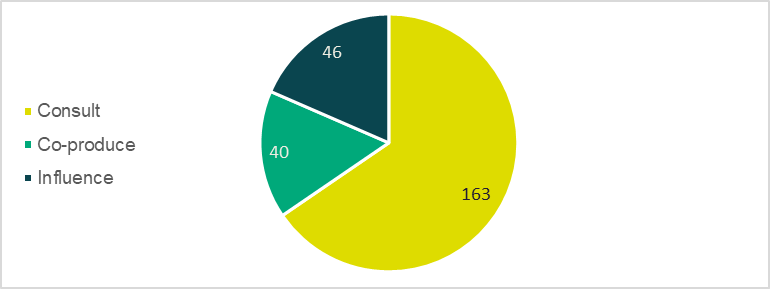
Established in 2019, the PPP brings together local community members, interest groups, voluntary sector representatives and partner organisations to provide meaningful opportunities for shaping service improvement. Members offer valuable lived experience across urgent and emergency care, patient transport service (PTS), NHS 111 and corporate service areas via three distinct levels:
- Consult – virtual input through digital platforms and surveys
- Co-production – collaborative, time limited project work supporting specific service developments
- Influence – active and ongoing participation in strategic and high-level meetings.
Membership
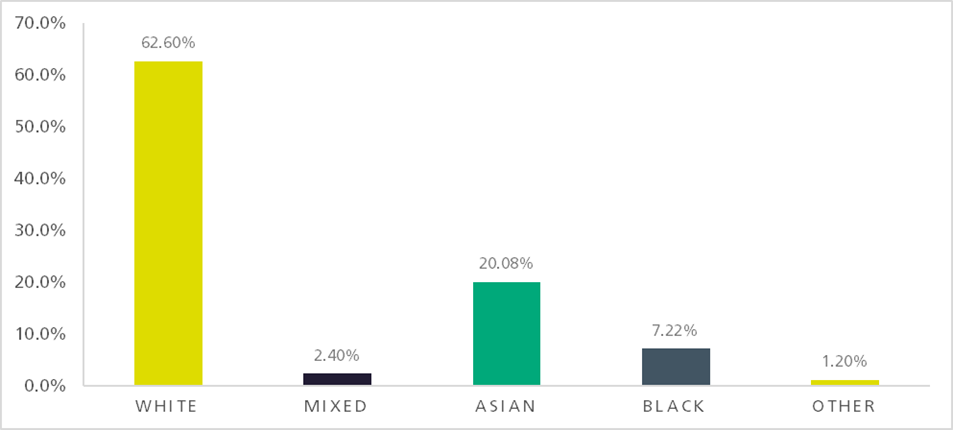
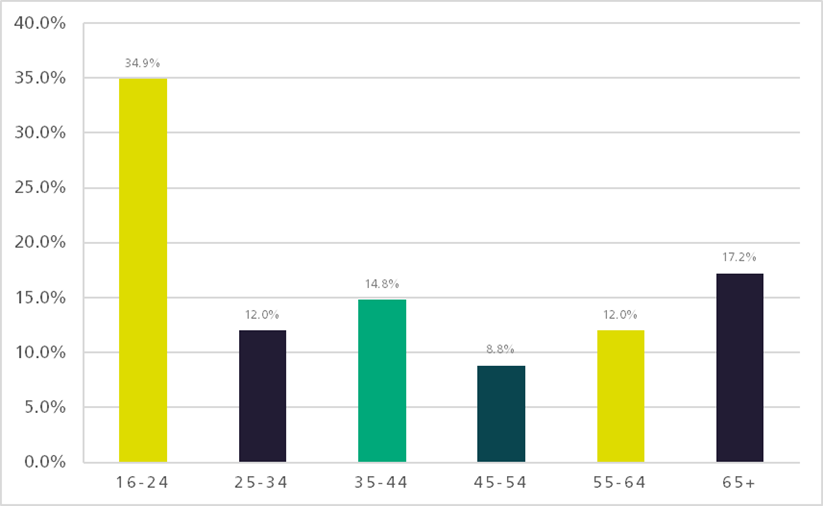
As of March 2026, our Patient and Public Panel (PPP) membership stands at 249 with notable increases in representation across cultural communities (37%), young people (35%) and patients with disabilities (26%), refer to figures 3 and 4. Feedback and lived experience from PPP members continue to play an essential role in shaping service development.
Programme of work
Each year, our Patient Engagement team delivers a comprehensive programme aligned to our Patient, Public and Community Engagement (PPCE) Implementation Plan. This plan outlines how we engage with patients across all service areas, including the paramedic emergency service (PES), the patient transport service (PTS), NHS 111 and the urgent care desk.
Each month, a minimum of 1% of PTS and PES ‘see and treat’ patients are invited to complete the Friends and Family Test (FFT) via short message service (SMS). In addition, 300 NHS 111 patients per week receive the national postal patient experience survey and ‘real-time’ feedback opportunities are available on both 999 and PTS vehicles.
We deliver a blended approach to engagement, combining virtual and face-to-face activity with specialist community groups. We also connect with diverse communities through ambulance awareness days, university freshers’ fairs and other large-scale public events.
Locality membership
Panel membership continues to be strong, with 249 fully inducted members actively engaged via face-to-face and virtual platforms. A breakdown of PPP member involvement across these levels is presented in figure 5.
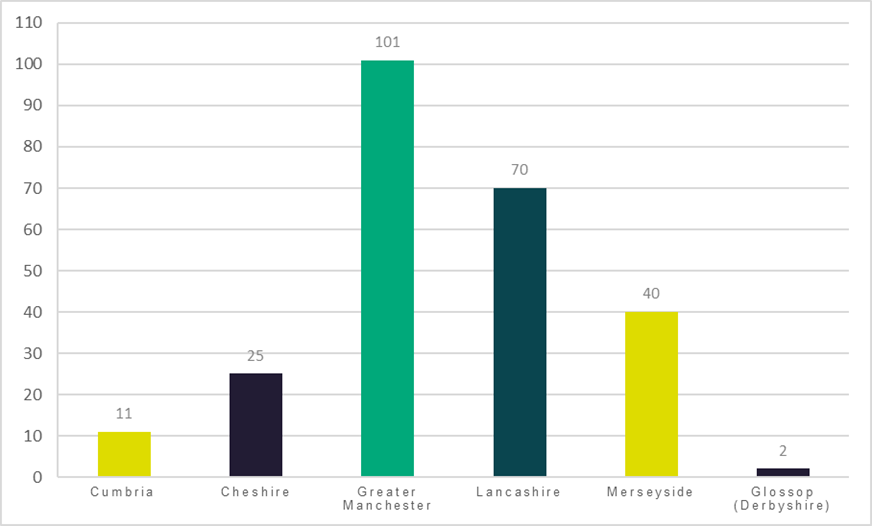
Membership by locality is illustrated in figure 6. Representation from Cheshire and Cumbria is currently below recommended levels.
Patient and public panel and future development
Patient and public panel (PPP) involvement expanded during 25/26, including development sessions with ‘In Control’, participation in regional projects requested by ICB commissioners, and co-production of updated guidance on assistance and emotional-support dogs. A PPP achievements infographic and consolidated ‘You said, we did’ summary will be published.
A refreshed Community Engagement Guidance Framework (26/31), co-developed with PPP members, will be implemented in 26/27.
Engagement activities
Between April 2025 and March 2026, the PPP members participated in 64 engagement activities, including 28 requests originating from staff and external partners such as NHS England. Their involvement spanned a range of strategic forums – including area learning forums and the Right Care Steering Group – as well as key projects focused on health inequalities, artificial intelligence (AI) assisted call triage and recruitment assessment processes.
Throughout 25/26, 51 editions of the weekly PPP newsletter were issued, providing updates on engagement opportunities, project outcomes and notable member contributions. Highlights included participation in a research project on organ donation with the North West Air Ambulance and representation at a lunar new year celebration held at 10 Downing Street.
A PPP development session, delivered by training partner ‘In Control’ in November 2025, supported the continued growth of the panel’s skills and confidence. This was followed by a volunteer celebration event, with additional development sessions planned for 26/27 to further strengthen member involvement and impact.
Patient, public and community engagement
During 25/26, we strengthened patient, public and community engagement by combining survey insight with extensive qualitative feedback from diverse communities. We participated in 27 engagement events (17 virtual and 10 face-to-face), acting as speakers, facilitators and advisors. Key partners included Manchester Migrant Support Group, Sahara Preston, and the Chinese Health Information Centre (CHIC).
Community feedback directly informed trust activity, supporting the continued delivery of basic life support and cardio-pulmonary resuscitation (CPR) awareness training to improve community confidence and emergency preparedness. Collaborative work with the British Islamic Medical Association (BIMA) and Lancashire faith communities addressed gaps in understanding NHS urgent care pathways and supported wider defibrillator access initiatives. CPR training was also delivered at Sahara Community Centre and other partner organisations.
We maintained a visible presence at 19 well-attended community events, including Healthwatch Oldham Women’s Health Forum, health mela events in Preston and Burnley, the SACHA Community and Cohesion Fair, and The Sparkle Weekend hosted by the National Transgender Charity. These events broadened reach and promoted awareness of emergency and urgent care services.
Targeted engagement with young people and international learners improved
understanding of NHS services, career pathways, volunteering opportunities and lifesaving skills. We will continue to prioritise health melas, PRIDE events and engagement with underrepresented BAME communities during 26/27.
Underrepresented patient groups
The Equality Act 2010 identifies nine protected characteristics: age, disability, gender reassignment, race, religion or belief, sex, sexual orientation, marriage and civil partnership, and pregnancy and maternity. These categories represent groups that are legally protected from discrimination.
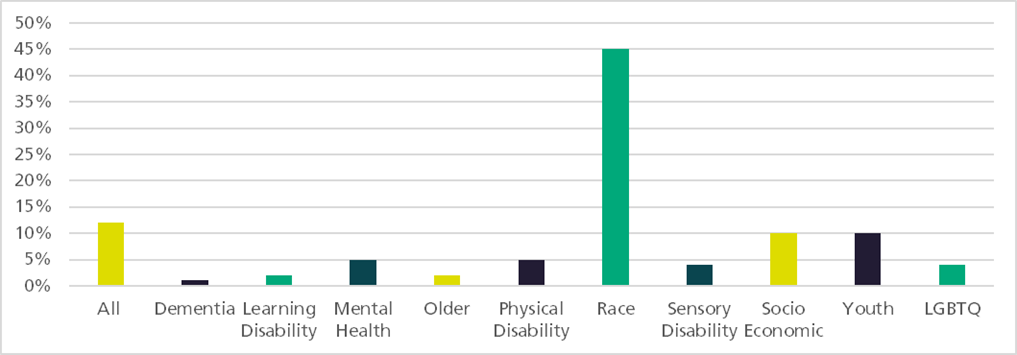
Figure 7 sets out our engagement activity with underrepresented patient groups some of which have protected characteristic through both patient focused initiatives and high footfall community events during 25/26.
Patient inclusion, engagement and insight
During 25/26, we strengthened our commitment to patient inclusion, reducing health inequalities and improving engagement with under-represented communities across the North West. Targeted focus groups were undertaken with Chinese, Jewish, Eastern European, asylum-seeking and refugee communities to explore barriers to accessing ambulance services and identify opportunities to build trust and confidence.
Participants highlighted several challenges, including cultural beliefs, previous experiences of discrimination, and concerns about the recording and use of ethnicity data. These factors influenced both willingness to share personal information and engagement with NHS services. In response, we translated CPR and emergency care information into multiple languages, with plans for wider distribution to improve accessibility, preparedness and confidence.
To support a coordinated and sustainable approach, an internal patient inclusion task and finish group was established. This group brings together service leads to embed the voices of under-represented communities into service planning, reduce barriers to survey participation, and improve the accessibility and inclusivity of ambulance services.
National ambulance service patient experience group (NASPEG): hospital handover project
We participated in a NASPEG project involving 32 patients who experienced hospital handover delays of more than one hour at three North West hospitals, with delays typically ranging from 30 to 120 minutes and disproportionately affecting older and frail patients.
Feedback identified the need for clearer communication from staff, improved comfort during waits, and greater access to basic comfort and distraction items such as blankets, reading materials and sensory aids. Learning from the project was shared nationally with quality improvement, governance and risk directors (QIGARD) and locally with operational leads and has informed the national ‘Handover in 45 Minutes’ improvement programme.
Ambulance awareness days, patient insight and learning
During 25/26, we delivered three ambulance awareness days in Lancashire, Cheshire and Merseyside, engaging large numbers of young people and community members. Events aimed to raise awareness of NWAS services, promote careers and volunteering, increase patient and public panel (PPP) participation, and strengthen relationships with under-represented groups. New stands focusing on mental health and knife-crime prevention were positively received. Two further events are planned for Cumbria and Greater Manchester.
Patient stories are shared bimonthly with the board and across the trust and continue to inform learning and improvement. Examples included:
- Communication barriers for a Chinese community member led to improved engagement through translated CPR materials.
- Missed medication during care transitions for a patient with seizures prompted improvements in continuity of treatment.
- Identification of outdated clinical techniques reinforced the need for ongoing staff training.
Reporting, feedback and key themes
Patient experience is reported through monthly Friends and Family Test (FFT) dashboards to the board, with wider engagement themes shared quarterly and annual summaries included in the quality account, equality delivery return and trust annual report. The survey results as illustrated in table 11 showed 92.9% of respondents felt they were treated with dignity, compassion and respect.
However, engagement activity identified recurring themes, including:
- Limited awareness of ambulance services among migrant and ethnic minority communities
- Confusion about patient transport service (PTS) eligibility
- Language and interpretation barriers, including British Sign Language (BSL) access
- Communication challenges during delays
- Continued demand for reassurance, personalised care and comfort
- Strong interest in CPR and lifesaving skills training
- Ongoing need for inclusive engagement within underserved communities
Learning, improvement and partnership working
Feedback directly informed a wide range of improvements, including:
- Stronger identification of BSL needs through improved GP Connect use and reasonable-adjustment flags.
- Production of translated materials (including Cantonese and Traditional Chinese) to improve access for Chinese, migrant and ethnic minority groups.
- Co-produced training to increase awareness and use of Language Line and interpretation services.
- Provision of loan defibrillators and fundraising support where cost was a barrier.
- Delivery of CPR and lifesaving training across migrant, youth, Chinese and faith communities.
- Development of translated information to improve understanding of PTS eligibility.
- Increased awareness that crews can access real-time patient summaries via GP Connect.
Targeted partnership work with organisations including the Chinese Health Information Centre (CHIC), migrant support groups and faith organisations (Lancashire Council of Mosques) improved confidence, preparedness and trust. Guidance on accessing personal information was strengthened following patient feedback regarding subject access requests.

Learning from the NASPEG hospital handover survey supported improvements in communication, comfort and personalised care, with a neurodiversity communication tool now available on staff iPads. Engagement through initiatives such as the British Islamic Medical Association (BIMA) Lifesavers and Association of Ambulance Chief Executives (AACE) event addressed hesitancy in calling 999 and reinforced community confidence.
Patient experience surveys
Paramedic emergency service (PES), urgent care services (UCS), patient transport service (PTS), and NHS 111 surveys, alongside Friends and Family Test (FFT), are critical for monitoring patient experience. In 25/26, a total of 26,856 survey responses were received across all channels with the highest returns from Patient Transport Service – Friends and Family Test (FFT) as illustrated in table 10.
| Patient Experience Survey | Channel | Completed Returns | % of Total |
| Patient transport service (PTS) – patient experience survey | Via SMS delivery – on-line completion | 1,603 | 5.97% |
| Patient Transport Service – Friends and Family Test (FFT) | SMS text completion | 10,164 | 37.85% |
| Patient Transport Service – FFT | Post cards | 155 | 0.58% |
| Paramedic emergency service – patient experience survey | Via SMS delivery – on-line completion | 1,074 | 4.00% |
| Paramedic emergency service – FFT (see and treat) | SMS text completion | 6,741 | 25.10% |
| Paramedic emergency service – FFT (see and treat) | Post cards | 55 | 0.20% |
| Paramedic emergency service – FFT (comment card – conveyed) | Post cards | 237 | 0.88% |
| Urgent care service – patient experience survey | Via SMS delivery – on-line completion | 614 | 2.29% |
| National NHS 111 service-patient experience survey | Postal | 1,235 | 4.60% |
| Localised NWAS NHS 111 service – patient experience survey | Via SMS delivery – on-line completion | 506 | 1.88% |
| NWAS NHS 111 service-care message survey | Via SMS text completion | 4,472 | 16.65% |
| Total | 26,856 |
Feedback consistently shows high regard for care provided. PES and PTS patients reported being treated with dignity, respect, and compassion (93.4% and 92.7% respectively – Table 11,12 and 13 below). NHS 111 respondents also reported positive experiences, with 88.9% rating overall care as good or very good. Comments highlighted attentiveness, empathy, and professionalism.
| 25/26 patient experience surveys SMS text delivery/postal/online | |||||
| Cared for appropriately with dignity, compassion and respect (strongly agree/agree) | |||||
| Q1 | Q2 | Q3 | Q4 | YTD | |
| PTS | 93.46% | 92.78% | 92.39% | 92.15% | 92.70% |
| PES | 94.38% | 93.97% | 91.60% | 90.78% | 93.39% |
| UCS | 94.44% | 91.72% | 96.17% | 93.66% | 94.14% |
| 111 | 95.48% | 95.00% | 91.27% | 84.62% | 92.09% |
| 25/26 patient experience surveys SMS text delivery/postal/on-line | |||||
| Overall satisfaction received (very satisfied/fairly satisfied – yes) | |||||
| Q1 | Q2 | Q3 | Q4 | YTD | |
| 111 | 86.13% | 86.39% | 86.80% | 82.19% | 85.78% |
| 25/26 patient experience surveys SMS text delivery/postal/on-line | |||||
| Overall experience of service / recommend ambulance service to friends and family (very good/good – extremely likely/likely) | |||||
| Q1 | Q2 | Q3 | Q4 | YTD | |
| PTS | 90.56% | 89.58% | 92.13% | 90.30% | 90.64% |
| PES | 94.38% | 93.21% | 93.88% | 90.78% | 93.02% |
| UCS | 87.50% | 82.07% | 91.80% | 85.21% | 84.53% |
| 111 | 85.86% | 87.07% | 91.63% | 89.95% | 88.90% |
NB Fields above showing ‘not applicable’ indicate that the question was not included in that survey.
Examples of additional narrative in feedback include:
“Care I received by ambulance staff was 100 per cent. They were attentive, caring and treated me with care and respect. Can’t sing there praises enough. Even the lady I spoke to whom booked my ambulance was so helpful well done to all of you and thank you.” (PTS)
93.0% of PES patients, 88.9% of NHS 111 patients and 90.6% of PTS patients also found their overall experience of the respective services either good or very good.
“They went above and beyond the call of duty. Not only did they ensure that I would be in a safe environment, but they also made sure I was emotionally stable to. They made me feel safe, and that even though I needed hospital, everything would be okay.” (PES)
“Having used the 111 service by phone and online recently and for the first time, I can honestly say every bit of advice and help is 100%. I am happy with every aspect of this service. Thank you all very much.” (NHS 111)
Friends and Family Test (FFT)
Patients who have utilised PES and PTS services face-to-face (see and treat) receive FFT surveys monthly surveys via SMS. In 2025/26, 24,818 responses were received – an 11% increase on the previous year. SMS text remains the primary channel (86.14%), followed by online responses (9.7%) and postcards (4.16%) (see Table 14).
| 25/26 Summary of FFT Responses and Channels | |
| FFT received in 25/26 | 24,818 |
| Increase compared to 24/25 | 10.82% |
| Additional supporting comments provided with FFT responses | 17,202 |
| SMS text survey responses | 86.14% |
| Postal postcard surveys | 4.16% |
| Online responses | 9.70% |
Thematic analysis shows a high regard for staff professionalism, care, and compassion, with learning opportunities relating to delays, waiting times, and support for vulnerable PTS patients.
Demographic analysis of patient experience surveys and SMS text FFT
Table 15 below shows the percentage breakdown of survey respondents by demographics for PTS, PES, UCS and NHS 111 surveys, and where we have received FFT feedback via SMS on our PES and PTS service lines.
*Local 111 refers to an additional shorter, NWAS designed 111 patient survey as opposed to the nationally mandated lengthier 111 patient survey.
An analysis of our survey respondent demographics in table 15 shows:
- 95.4% of PTS survey respondents were over 45 years of age.
- 58.6% of NHS 111 respondents identified as female.
- 81.3% of PTS respondents declared a disability.
- On average, 5.9% of respondents were from ethnic minority communities.
- An average of 1.8% preferred not to disclose their ethnicity.
Complaints
Complaints are managed by the Patient Advice and Liaison Service (PALS) and resolution team in line with relevant NHS Complaint Standards and the Parliamentary and Health Service Ombudsman (PHSO) Model Complaint Handling Procedure. We remain committed to addressing concerns in an open, honest and timely way, with the primary aim of achieving meaningful resolution for patients, families and carers.
Throughout 25/26, we have placed sustained emphasis on strengthening and stabilising complaint-handling processes, ensuring consistency, clarity and compassion in how complaints and concerns are managed. Patient and family experience remains the central consideration, particularly in relation to the tone, timeliness and accessibility of all written and verbal communication.
During 25/26, the primary focus has been on the efficient and timely management of complaints in line with service level agreements, while maintaining the quality and integrity of investigations. The PALS and resolution team have worked to ensure that complaints are handled promptly without compromising the depth or transparency of the investigation process. Alongside this, the PALS and resolution team have continued to ensure that people raising concerns feel listened to, supported and respected.
Governance and reporting
Complaints oversight continues to be supported through established governance and assurance arrangements, providing clear lines of accountability and organisational learning.
- Quarterly assurance reports – the Quality and Performance Committee review these reports to ensure accountability and oversight in line with complaint standards and legislation, volume of complaints received, team performance and tracking any themes of learning.
- Reportable events paper – complaints raised to the Parliamentary Health Service Ombudsman are reported in this paper and include information about decision rationale, outcome and actions recommended by the independent reviews.
- Clinical and Quality Group – this group is chaired by the Medical Director and clinical complaints are reported to provide assurance relating to the safety and quality of all clinical activities within the trust across all service lines.
- Area learning forums – these forums discuss actions resulting from complaints and oversee implementation through structured action plans. The forums ensure patient feedback is consistently reviewed, understood and translated into learning opportunities, supporting continuous improvement across the trust.
Complaint figures
In 25/26, 2,073 complaints were raised, of which 89% were recorded as ‘low complexity’ complaints and managed by the PALS team. The PALS team guide appropriate and empathetic apologies within an everyday conversation, as guided by the PHSO’s guidance.
The three most common themes of complaints received, across the range of low, medium and high levels of complaints, related to:
- Delays (699 complaints)
- Professional standards and behaviours (542 complaints)
- Care and treatment (472 complaints)
These themes reflect ongoing operational pressures alongside heightened public expectations, particularly around response times and communication.
Delays
Complaints relating to delays continued to feature as the predominant theme, reflecting challenges associated with system pressures, resource availability and increased demand across both emergency and patient transport services. The impact of long hospital handovers has been identified as a significant contributing factor to our delayed attendances.
| High Complexity | Medium Complexity | Low Complexity | Total |
| 12 | 26 | 661 | 699 |
Whilst delayed attendances may not be avoidable, complaint investigations and responses placed emphasis on:
- Acknowledging the impact experienced by patients and families.
- Providing a clear explanation of contributing factors, for example, long handover delays at hospital.
- Identifying opportunities for operational learning and service improvement.
The table below shows the top three ‘type’ of delayed response complaints received relating to services provided by the paramedic emergency service (PES), patient transport service (PTS) and NHS 111.
| Complaint type | Number of complaints |
| Response time | 325 |
| Cancelled appointments | 191 |
| Late arrival to appointment | 91 |
Professional standards
Complaints relating to professional standards include allegations about staff, driving standards, and general conduct and behaviour.
As shown in the table below, many of these are low-level concerns that can be effectively addressed through open, everyday conversations, helping to clarify misunderstandings or offering a listening, empathetic response during what may have been a difficult experience for our service users.
| High Complexity | Medium Complexity | Low Complexity | Total |
| 9 | 21 | 512 | 542 |
Serious allegations against staff are reviewed and responded to as high complexity complaints and often are referred to local HR and management teams for an internal review and assurance.
Care and treatment
Care and treatment remained a key theme within complaints received during 25/26, across low, medium and high-complexity cases. The issues raised most related to clinical decision-making, assessment processes, and treatment outcomes. These concerns were frequently linked to communication, particularly how clinical decisions and care plans were explained and discussed with patients and their families.
| High Complexity | Medium Complexity | Low Complexity | Total |
| 24 | 119 | 329 | 472 |
| NWAS Service Line | Number of complaints |
| Paramedic Emergency Service (PES) Operations | 335 |
| Integrated Contact Centers (ICC) | 111 |
| Patient Transport Service (PTS) Operations | 25 |
Complaint outcomes
In 25/26, 2,076 complaints were closed, of which 90% were closed in accordance with our service level agreement (SLA) time limits. This is an improvement on the 86% closure within SLA rate reported at the end of 24/25.
Learning from complaints is captured within the Annual Complaints Review that is part of our annual reporting cycle.
| Complaint Outcome | Complaint Level | Total | |
| Upheld | High | 23 | 481 |
| Medium | 56 | ||
| Low | 402 | ||
| Not upheld | High | 13 | 834 |
| Medium | 80 | ||
| Low | 741 | ||
| Partly upheld | High | 14 | 751 |
| Medium | 56 | ||
| Low | 681 | ||
Parliamentary and health service ombudsman
In 25/26, we received nine notifications from the Parliamentary and Health Service Ombudsman (PHSO) regarding complaints submitted for independent review. Of these, six cases remain open as we move into 26/27 and are currently under detailed investigation.
The PHSO concluded and closed six cases during the reporting period of which:
- Four cases were closed following an initial assessment, with no failings found on the part of NWAS
- Two cases were not upheld, with the PHSO identifying no failings by NWAS.
Patient Safety Incident Response Framework (PSIRF)
The Patient Safety Incident Response Framework (PSIRF) promotes a proportionate approach to responding to patient safety incidents by ensuring resources allocated to learning are balanced with those needed to deliver improvements. The principles of PSIRF are to:
- Advocate a co-ordinated and data-driven approach to patient safety incident responses, that prioritise compassionate engagement with those affected by patient safety incidents.
- Embed patient safety incident response within a wider system of improvement and prompt significant cultural shifts towards systematic patient safety management.
Our PSIRF priorities went through a period of consultation with internal and external stakeholders and was approved via our Board of Directors and Lancashire and South Cumbria Integrated Care Board. From 1 August 2025 the priorities identified are:
- Cardiac arrest management
- Maternity care
- Harm relating to patient non-conveyance
PSIRF enables the trust to take a proportionate and learning-focused approach to patient safety events. During 25/26, we identified and commissioned 13 Level 1 learning responses (patient safety incident investigations) and 33 Level 2 learning responses.
A Level 1 learning response is a Patient Safety Incident Investigation (PSII). This is an in-depth review led by a dedicated member of the trust’s Patient Safety team. It looks at complex systemic and human factors to identify systemic issues that require improvement. During a PSII, the patient and family are invited to contribute to the review and receive support from a Patient Engagement Lead. Improvement work is undertaken drawing upon the findings of the review.
A Level 2 response is primarily an After Action Review (AAR). These are structured, ‘round table’ group discussions, involving the staff involved, and typically led by a clinical lead, local to the area or sector. While it looks at the differences between the expected outcomes and what actually happened, but also identifies good practice and those involved help identify improvements that can be shared with colleagues.
Our approach is informed by systems and human factors thinking, recognising the complex, dynamic and socio-technical nature of healthcare delivery. This approach supports greater openness and transparency, enabling staff and teams to describe work as it is carried out in practice (“work as done”) and helping the trust to identify meaningful learning and improvement opportunities.
Over the past 12 months, we have consolidated our transition from the Serious Incident Framework to PSIRF and have continued to strengthen the supporting processes to ensure a consistent, supportive and learning‑orientated response to patient safety incidents.
We have further strengthened our internal processes for managing patient safety incident investigations (PSIIs). These improvements include the introduction of a progress-tracking tool aligned to projected completion timelines, which is reviewed weekly to identify and address barriers to timely completion. A new governance process has also been implemented to ensure commissioned Level 2 learning responses are monitored through to conclusion.
Subject matter experts are embedded within the case conference process, providing assurance on the factual accuracy of draft PSII reports and supporting the development of specific, measurable and improvement-focused learning actions. These actions are designed to reduce the likelihood of recurrence and support sustainable improvement.
To underpin PSIRF implementation, we commissioned three accredited patient safety training programmes; PSIRF training – Introduction to Human Factors; and Human Factors and Patient Safety for Senior Managers. In addition, a Patient Safety Awareness session developed by the patient safety team has been incorporated into our formal induction programme for new starters.
Digital solutions have also been introduced to support patient-facing managers in meeting their regulatory responsibilities, including the effective enactment of the Duty of Candour.
Improvement activity aligned to PSIRF priorities has included:
- Cardiac arrest – Increasing the proportion of patients aged 18–65 presenting in an initial shockable rhythm who achieve return of spontaneous circulation (ROSC) on arrival at the emergency department across Greater Manchester, from a baseline of 50% to 80% by 31 March 2026.
- Maternity – Increasing the use of the pre-hospital maternity decision tool to 75% of appropriate cases across three local areas by 31 March 2026.
- Patient refusal – Increasing completion of mental capacity assessments for selected clinical presentations (suicide attempt, intentional self-harm and intentional overdose) in the Morecambe Bay sector by 50% by March 2026.
Patient safety events
Over the past 12 months, a total of 10,384 patient safety events were reported to our incident management system. Each event is assessed based on the actual impact on the patient, as outlined in table 22.
When a patient safety incident is still under investigation, we review it carefully to confirm the level of harm and understand what happened. If the early assessment indicates that the Duty of Candour applies, we carry out a further review to ensure we are open, honest, and communicate with patients and families as quickly as possible.
At the time of reporting, the level of harm has not yet been confirmed for 742 patients due to ongoing investigations.
| Confirmed level of harm 25/26 | Q1 | Q2 | Q3 | Q4 | Total |
| No physical harm | 2,092 | 1,844 | 2,501 | 2,107 | 8,544 |
| No psychological harm | 32 | 42 | 135 | 93 | 302 |
| Low physical harm | 143 | 135 | 163 | 131 | 572 |
| Low psychological harm | 14 | 15 | 24 | 19 | 72 |
| Moderate physical harm | 20 | 17 | 19 | 22 | 78 |
| Moderate psychological harm | 1 | 1 | 0 | 1 | 3 |
| Severe physical harm | 11 | 5 | 12 | 14 | 42 |
| Severe psychological harm | 1 | 0 | 0 | 0 | 1 |
| Fatal | 7 | 8 | 9 | 4 | 28 |
| Total | 2,321 | 2,067 | 2,863 | 2,391 | 9,642 |
Patient safety event categories
Four patient safety event categories account for almost 81% of all reported patient safety events as described in the table below.
| Category 25/26 | Q1 | Q2 | Q3 | Q4 | Total In category | Proportion against N (N=10,385) |
| Care and treatment | 945 | 916 | 1,118 | 1,009 | 3,988 | 38.4% |
| Call handling | 441 | 555 | 567 | 580 | 2,143 | 20.6% |
| Delays | 351 | 318 | 668 | 379 | 1,716 | 16.5% |
| Accidents and injuries | 107 | 98 | 171 | 146 | 522 | 5.0% |
| Total | 1,844 | 1,887 | 2,524 | 2,114 | 8,369 | 80.5% |
During 25/26 we received 1,761 external incidents from other NHS providers. We raised a further 1,563 patient safety events to other organisations.
| Organisation involvement 25/26 | Q1 | Q2 | Q3 | Q4 | Total |
| External In – incident received from another organisation | 381 | 412 | 633 | 335 | 1,761 |
| External out- NWAS raising an incident with another organisation | 518 | 343 | 308 | 394 | 1,563 |
| Total | 899 | 755 | 941 | 729 | 3,324 |
Incidents (staff and trust)
During the last financial year 8,642 staff and trust incidents were reported. Our incidents are risk scored using our risk matrix to assess the consequence.
| Consequence Score | Value |
| 1 – Negligible | 2,785 |
| 2 – Minor | 4,318 |
| 3 – Moderate | 1,473 |
| 4 – Major | 56 |
| 5 – Catastrophic | 2 |
| Rejected prior to scoring | 8 |
| Total | 8,642 |
During 25/26, we received 193 staff or trust external incidents reported by other NHS providers.
| Year | Q1 | Q2 | Q3 | Q4 | Total |
| 25/26 | 49 | 47 | 68 | 29 | 193 |
In addition to the external incidents coming into the trust, we raise incidents to external agencies and health and social care organisations. During 25/26, we raised 120 incidents to other organisations requesting a review and response to concerns raised by our staff.
| Year | Q1 | Q2 | Q3 | Q4 | Total |
| 25/26 | 35 | 29 | 28 | 28 | 120 |
Clinical safety plan
During 25/26, we implemented version three of our clinical safety plan (CSP), strengthening arrangements to safeguard patient safety and support person-centred clinical decision-making during periods of sustained operational pressure.
The revised plan supports our ‘Safety First and Highly Effective Care’ priorities through more accurate, locality-based assessment of demand and capacity, enabling proportionate and timely interventions across integrated care board (ICB) footprints.
Key enhancements include the introduction of a 24/7 duty senior clinician role, strengthened schemes of delegation, and clearer clinical leadership during escalation. Further refinements to Category 2 segmentation and clinical validation, aligned to national principles, have increased clinical oversight for patients experiencing extended waits. This supports timely reassessment, clinical advice and alternative care pathways, enabling more effective use of ambulance resources and prioritisation of patients with the greatest clinical need.
Improvements to digital dashboards, alongside strengthened risk assessment and incident logging processes, have enhanced real-time oversight. These developments support earlier intervention, greater consistency of response, and improved system collaboration during periods of increased demand.
Freedom to speak up
Speaking up is a fundamental component of delivering safe, effective and person-centred care, and activity during 25/26 aligned closely with the our quality strategy priorities. Throughout the year, we continued to strengthen our ‘Freedom to Speak Up’ (FTSU) arrangements, supporting a culture in which staff feel able to raise concerns safely and with confidence that doing so will lead to learning and improvement.
Feedback from staff highlighted the importance of confidentiality, trust in the process and visible action following concerns being raised. Many staff reported positive experiences of speaking up, particularly where reassurance and feedback were provided:
“I would certainly feel comfortable speaking up again if needed. Following my initial report, the action taken made me happy knowing that these things are taken seriously. I have had no detriment following reporting this incident, highlighting that confidentiality is taken seriously.”
However, some feedback also identified areas for further improvement, particularly in relation to perceived risks of repercussion and the need for clearer communication following incident reporting.
“I am more than happy to share my identity with FTSU Guardians; however, I am sceptical about sharing with management due to potential repercussions.”
“I felt my Datix wasn’t dealt with properly, as I received no response or reassurance from management that any action had been taken. I would speak up again, but I currently have little trust in the process.”
This feedback has informed ongoing work to strengthen communication, feedback loops and reassurance for staff raising concerns.
During 25/26, the FTSU team received 96 concerns, compared with 120 in 24/25, representing a 20% reduction. This reflects a stronger emphasis on early triage and proactive signposting by FTSU guardians, ensuring concerns were directed to the most appropriate route at the earliest opportunity. Enhanced triage supported timely and proportionate resolution through human resources, patient safety and local operational management, while maintaining psychological safety and clarity of process.
Increased capacity, including the appointment of an additional full-time Freedom to Speak Up guardian, improved visibility and accessibility through staff forums, induction programmes and cultural engagement activities. Guardians also increased their participation in assurance meetings and learning forums, ensuring that themes arising from concerns contributed to organisational learning, leadership development, communication improvements and culture change.
Close collaboration with human resources, patient safety, health and safety, local management teams and staff networks has underpinned progress throughout 25/26. This has supported earlier intervention, clearer expectations for staff and shared learning across the organisation. The revised ‘Speaking Up’ policy further clarifies routes for raising concerns, roles and responsibilities, and our commitment to learning rather than blame.
Patient safety concerns remained the second most frequently reported category of concern, demonstrating the continued contribution of FTSU to early risk identification, safer clinical practice and strengthened governance arrangements. The volume and nature of concerns remained proportionate to the size of the workforce, with all concerns recorded in accordance with National Guardians’ Office requirements.
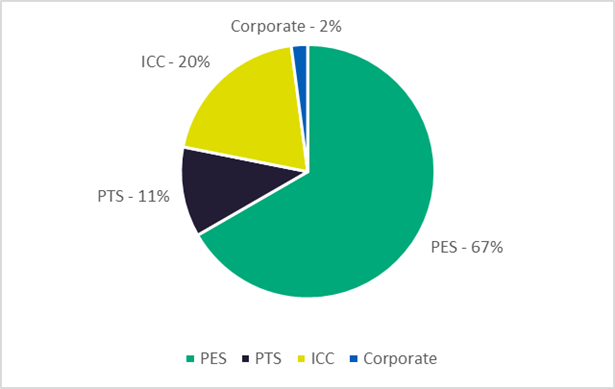
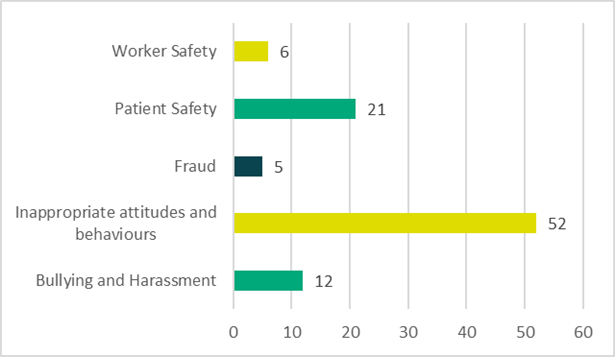
Improvements in the timeliness of resolution have been achieved across all service lines, supported by strengthened internal processes, consistent executive oversight and more frequent engagement with operational leadership. In line with the trust’s quality improvement priorities, FTSU guardians have continued to contribute to safer practice, learning responses and closer integration within management and governance structures. Insights from FTSU activity have informed discussions across service lines, strengthening alignment between speaking up intelligence, risk management, workforce culture and patient safety programmes, and enhancing organisational assurance.
Overall, 25/26 represents a year of consolidation and maturity for the FTSU function, which remains integral to promoting safety, inclusion and high-quality care for both colleagues and patients. This progress has been reflected in positive external audit findings, increased engagement at local and regional learning, assurance forums, and strong staff feedback regarding accessible and psychologically safe routes to speak up.
Looking ahead, priorities for 26/27 include preparing for the transition of national FTSU arrangements following the planned closure of the National Guardians’ Office, further improvements in data triangulation, and continued cultural development. We remain committed to ensuring every colleague feels heard, safe and supported, with speaking up directly contributing to high-quality care.
Staff safety (violence prevention, reduction, and security)
We are committed to ensuring that staff can carry out their roles safely and effectively, free from fear of violence and aggression. During the last financial year, 1,637 incidents of violence and aggression against staff were reported and investigated, representing a 14% reduction compared with the previous year. This reduction reflects sustained organisational focus on prevention, reporting and response.
Throughout the year, there has been a strong emphasis on improving data quality and incident management processes. This has enabled us to better identify higher-harm areas, understand patterns of repeat offending and target preventative action more effectively. Collaborative working with patients, partners and the workforce has contributed to measurable progress in reducing violence and aggression towards staff.
All incidents are reported, reviewed and used as learning opportunities. Incident data is routinely analysed to identify trends, inform preventative activity and support continuous improvement. Where violence or aggression occurs, staff are offered clear post-incident support, including access to physical and psychological care, time to recover, and practical support with police reporting where appropriate.
Prevention remains a core focus of the trust’s approach. Improvements to flagging systems and information-sharing processes have strengthened the early identification of risk. This intelligence is used to inform learning and enhance conflict resolution and de-escalation training across the organisation.
Key initiatives during the year included staff education and awareness sessions; partnership working with police, local authorities, violence reduction units and other healthcare providers; collaboration with staff networks; improved local data sharing to support operational managers; and enhanced support for managers in providing timely and effective post-incident care.
Reported incidents spanned a range of categories, with verbal abuse, threatening behaviour and physical assault accounting for the majority. Ongoing analysis continues to guide targeted interventions and reinforces our commitment to creating a safer working environment for all staff.
| Category | Q1 | Q2 | Q3 | Q4 | Total |
| Verbal abuse | 170 | 168 | 131 | 106 | 575 |
| Threatening behaviour | 126 | 113 | 111 | 110 | 460 |
| Physical assault | 100 | 86 | 112 | 102 | 400 |
| Anti-social behaviour | 31 | 40 | 24 | 19 | 114 |
| Sexual assault – including indecent exposure | 14 | 17 | 21 | 24 | 76 |
| Psychological abuse – including bullying and harassment | 1 | 0 | 1 | 0 | 2 |
| Safety marker information | 0 | 0 | 0 | 8 | 8 |
| Total reports | 442 | 424 | 400 | 371 | 1,637 |
Health and safety
We are committed to providing a safe environment for our staff and for others who may be involved in, or affected by, our activities, so far as is reasonably practicable and in accordance with the Health and Safety at Work Act 1974 and associated legislation.
During 25/26, the Health and Safety team undertook a comprehensive programme of work to review and update health and safety procedures and risk assessments. This has resulted in a more accessible and practical toolkit to support staff, managers and the wider organisation.
In addition, a business-partnering model has been introduced to ensure that each service area receives tailored health and safety advice and support, strengthening local ownership and promoting consistent, proactive risk management across the trust.
Reporting of injuries, diseases and dangerous occurrences regulations (RIDDOR) 2013
During the last financial year 126 incidents were reported to the Health and Safety Executive (HSE) under the RIDDOR regulations.
| Year | Q1 | Q2 | Q3 | Q4 | Total |
| 25/26 | 34 | 28 | 33 | 24 | 119 |
Safeguarding vulnerable children and adults
Safeguarding remains a statutory and core function within NWAS, supporting our quality strategy aims of safety first, highly effective care and person-centred partnerships. The safeguarding team provides expert leadership, advice and assurance across the trust and works in close collaboration with local authorities, health partners, police, integrated care boards (ICBs) and safeguarding partnerships to protect vulnerable children and adults. The team represents NWAS at multi agency statutory forums, including safeguarding adult reviews, domestic abuse related death reviews, child safeguarding practice reviews, child strategy meetings and joint agency reviews, providing information, data and expert professional opinion when required.
In support of our safety-first ambition, robust safeguarding arrangements are maintained across a large and diverse geographical footprint. During 25/26, we made 48,280 safeguarding and early help referrals to 27 local authorities, reflecting staff vigilance in identifying and responding to risk. Rejection rates from local authorities remained consistently low, demonstrating the quality, clarity and timeliness of safeguarding information shared. Safeguarding processes are routinely reviewed in line with national guidance, learning from statutory reviews and emerging risks to ensure practice remains safe, proportionate and effective.
Contributing to highly effective care, the Safeguarding team works across the organisation to improve practice through training, audit and shared learning. Training delivered at induction continues to align with intercollegiate guidance, with mandatory safeguarding training compliance consistently maintained across both clinical and non-clinical roles. Learning from safeguarding adult reviews, child safeguarding practice reviews, domestic abuse related death reviews and Prevent activity continues to inform service development, guidance and training. A safeguarding dashboard provides oversight of activity, themes and performance, supporting targeted quality improvement and trust-level assurance.
Strong, person-centred partnerships underpin safeguarding practice. The Safeguarding team remains actively engaged with integrated care boards (ICB), designated professionals, safeguarding boards and wider partnership arrangements, supporting shared learning and consistent assurance. Internally, accessible resources and regular communications support staff confidence in raising concerns and acting in patients’ best interests.
During 25/26, learning from audits, national and local reviews and updated legislation was embedded to further strengthen safeguarding practice and staff support. Key achievements included meeting all statutory responsibilities amid increasing demand, managing safeguarding capacity during workforce change and using dashboard intelligence to guide learning and assurance. Priorities for 26/27 include reviewing safeguarding provision and training in line with updated statutory guidance, managing rising statutory demand and continuing to provide expert advice and assurance to the trust.
The professionalism, commitment and compassion demonstrated by our staff in safeguarding vulnerable people is reflected in positive partner feedback, increased confidence in referral pathways and growing organisational awareness of safeguarding concerns.
Improving services for people with a learning disability
Following completion of the trust’s Learning Disability and Autism (LD&A) Plan and the introduction of mandatory training, there has been a sustained increase in reporting to the learning from deaths of people with a learning disability and/or autism (LeDeR) programme. This reflects improved awareness and professional curiosity among staff. While early records showed minimal LeDeR notifications, over 100 notifications were submitted during 2025 following diagnosis of death. These support focused reviews with system partners, contributing to national learning and efforts to reduce avoidable deaths and promote highly effective care.
Improvements to the support centre referral form and the electronic patient record (EPR) have strengthened data quality, informed by feedback from system partners. In response to learning from patient safety event case reviews, work is underway to mandate completion of a section within the ‘diagnosis of death’ area of the EPR, requiring staff to consider whether a patient had a learning disability, was autistic, or both. This aims to reduce missed learning and strengthen our contribution to LeDeR.
Engagement with community learning disability and hospital liaison nursing teams across the North West has continued to support person-centred partnership working. Processes are in place to identify patients with complex needs who frequently present to trust services, enabling proactive flags for frontline staff. These provide access to hospital passport information via the clinical hub, highlighting reasonable adjustments and specialist contacts to support personalised care.
Our LD&A practitioner provides specialist support to the Patient Advice and Liaison Service (PALS) and Complaints team for feedback from neurodivergent service users and acts as a direct link to the public. The role also includes engagement with third-sector organisations, delivering accessible education to reduce anxiety for service users and carers and to share information about improvement work.
During 25/26, we secured membership of the National Ambulance Learning Disability and Autism Group (ALDAG), reporting to the Association of Ambulance Chief Executives. Through our LD&A practitioner, we contribute to shaping future ambulance sector practice. Current priorities include the development of dedicated LD&A clinical guidance within JRCALC, supporting consistent, up-to-date and patient-centred care.
Mental health services
Our Mental Health team works at strategic level with system partners to deliver on the aspirations of the NHS Long term Plan (2019) and subsequent 10 Year Health Plan for England 25. The team’s work aims to improve the safety, effectiveness, experience, and outcomes for patients contacting NWAS with a mental health need or in mental health crisis. An overview of the progress and achievements during 25/26 is summarised below.
Mental health practitioners in our integrated contact centres in Greater Manchester
Mental health practitioners employed by mental health trusts have been operating the Mental Health Urgent Triage (MHUT) service 24/7 since November 2025. This model provides triage for patients contacting 999 with a mental health need, clinical advice to NWAS crews and to Greater Manchester Police. In Lancashire and South Cumbria, mental health practitioners continue to triage mental health calls 24/7 via our integrated contact centre in Preston. On-going engagement continues to improve patient outcomes delivered from this model.
The mental health team has worked with Cheshire and Merseyside Integrated Care Board and mental health partners to pilot the transfer of primary mental health category 3-5 calls into local crisis services, with the aim of ensuring that patients in mental health crisis are supported by the most appropriate service to meet their needs. This has been piloted since January 2026 and will become business as usual from April 2026. Work continues with North East and North Cumbria Integrated Care Board and the mental health trust in North Cumbria to improve the response to patients in mental health crisis who contact the ambulance service.
Mental health response vehicles
Throughout 25/26, we have worked with partner mental health trusts to operate seven mental health response vehicles across the North West (Warrington, Bebington, Northwich, Toxteth, Flimby, Salford and Oldham). In collaboration with partners across the region, we have undertaken an evaluation of the model which identified challenges in operational activity levels. In October 2025, all system partners agreed that alternative models delivered by the mental health trusts alone, with a focus on supporting the urgent and emergency care agenda, could provide better value for money and patient outcomes and experience.
As a result, from 1 April 2026, we will no longer be a delivery partner in this service, and the vehicle assets will be transferred to mental health trusts partners in Greater Manchester and Cheshire and Merseyside for the sole operation by mental health trusts.
Mental health training and education
A training needs analysis is currently being undertaken to understand the mental health training and education requirements of all staff across the organisation, this is being completed in line with the Core Skills Education and Training Framework. This work is being shared with the National Ambulance Mental Health Leads group to improve consistency of training across the ambulance sector. Within the current training year, we have developed a new e-learning course on the Mental Capacity Act which will be mandatory for staff working within frontline operations and our patient transport service.
Patient safety collaborative working with the Patient Safety Incident Response Framework (PSIRF) team has seen oversight by the mental health team increasingly embedded within patient safety processes. The team has access to all mental health-related patient safety events and are involved in each aspect of the process from initial event reporting, through to attendance at the Complex Case Review Group (CCRG) and Patient Safety Event Committee (PSEC). Monthly meetings with our legal team also continue to highlight new or emerging risks that require an appropriate learning response.
Infection prevention and control
Infection prevention and control (IPC) measures are vital in protecting the health, safety, and welfare of patients and staff. The Health and Social Care Act (2008) sets out 10 criteria that healthcare organisations should adhere to, and these are set out in the IPC Board Assurance Framework (BAF). The IPC BAF provides assurance that policies, procedures, systems, processes, and training are in place to minimise the risk of transmission of infection to our service users and staff. It also identifies gaps in assurance, IPC risks and mitigations. The IPC BAF and director of IPC report are presented annually to the trust board and are updated with changes in guidance.
To monitor compliance with IPC policies and procedures, IPC audits are completed on all stations, call centres and vehicles. These audits are carried out by the IPC team as well as operational staff. Audit results are obtainable in a Power BI dashboard with assurance reports presented quarterly to the IPC Oversight Group where key themes and areas for improvement are identified.
Staff safety is a priority for the IPC team. Clinical bulletins inform staff of emerging outbreaks of infection; safety alerts associated with products or equipment and any changes in guidance around personal protective equipment (PPE). The team co-ordinates ‘face fit testing’ across the trust with a tester in each area responsible for ensuring all staff are fit tested every two years (in line with COSHH regulations). At the end of March 2026 compliance with fit testing was 92%.
The IPC team leads on the staff flu vaccination campaign. In 25/26 there was a 5% increase in the uptake of the flu vaccination by frontline staff, a target set by NHS England. This was a significant achievement in ten weeks given the geographical footprint of the organisation. In total 43.46% of staff were vaccinated (45%frontline) and 53.3% declined the vaccine.
During 25/26, the IPC team has worked closely with Facilities Management and Fleet to implement the NHS England ‘National Standards of Healthcare Cleanliness’ across trust premises and vehicles which have for the first time included ambulance services. It has been recognised that implementing the standards for vehicle cleaning is difficult with an agreement that we will implement the national standards of cleanliness, with approved derogation to local policy for two specific elements, providing flexibility to continue with existing locally agreed protocols provided these are formally documented. This approach is consistent with the National Ambulance Service IPC Group position statement and has been agreed with NHS England.
We have updated several IPC policies and guidance throughout the year in line with national directive; most notably the A-Z of common diseases. The team has also worked closely with the Resilience team, local infectious diseases consultants and the United Kingdom Health and Security Age (UKHSA) to develop a flowchart for the safe transfer of high consequence infectious disease patients which is available within the A-Z guidance.
The IPC team was invited by the Resilience team to join area wide meetings for Exercise Solaris. The meetings were organised by UKHSA to exercise multi-agency pandemic response arrangements and plans at a local and regional level in preparation for Exercise Pegasus, a Tier 1 national pandemic exercise held throughout September to November 2025.
The team worked alongside other emergency services and representatives from public health, local authority and the integrated care boards to draw on their experience from the Covid pandemic to identify areas which could be included in the design of Exercise Pegasus to plan for any future pandemics.
Maternity
During 25/26, we strengthened the safety, consistency and equity of pre-hospital maternity and neonatal care, aligning with our trust’s quality strategy aims of safety first, highly effective care and person-centred partnerships. We remain a critical access point for unscheduled maternity care, managing high demand across the region, including 24,262 maternity-related 999 calls and 86,201 maternity-related 111 calls. On average, we transport 24 maternity patients per day, with 997 babies born pre-hospital and 1,567 obstetric emergencies recorded.
Safety improvements for maternity care
Key safety work in 25/26 focused on early risk recognition, reliable escalation, and learning from incidents. We completed a thematic maternity incident review and presented our learning through the Regional Clinical Learning from Incidents Group (RCLIG) in January 2026, supporting the patient safety incident response framework (PSIRF) aligned improvement actions and clear priorities for 26/27.
A major milestone for maternity care was the full digital implementation of the pre-hospital maternity decision tool (PMDT) within the electronic patient record (EPR) October 2025. This tool supports a consistent approach to assessment aligned to the modified early warning score (MEWS) and improving timely recognition of maternity concerns at the point of care. We have been identified by NHS England as an exemplar trust, being the first ambulance service in the country to digitally embed the PMDT within EPR, enabling a more reliable, standardised approach to assessing women and escalating risk appropriately. This directly supports delivery of Element 2 (pre-hospital and acute care) of the NHS England maternal care bundle, strengthening assurance around consistent MEWS use and pre-hospital escalation processes.
An audit of babies born before arrival at hospital (BBA) showed 95% completion of the PMDT. A maternity dashboard is being developed supported by the NWAS Improvement Academy and the maternity assessment and management in the ambulance service project (MAMAS) project which focuses on the digital embedding of the pre-hospital maternity decision tool within our electronic systems to improve the recognition, assessment and escalation of maternity risk in the pre-hospital setting as well as strengthening real-time assurance and monitor linked processes such as clinical incident hub (CIH) oversight, structured stage two discussions, pre-alerting and handover of care.
We have enhanced workforce capability through targeted training and clinically focused updates. Staff training using the pre-hospital practical obstetric multiprofessional (PROMPT) approach has progressed, with three courses delivered and 56 advanced paramedic practitioners trained, and a further delivery scheduled to support new recruits and educators. A formal evaluation is underway with early staff feedback highlighting improved preparedness, confidence and practical skills application.
We continued active system collaboration with integrated care boards/local maternity and neonatal system partners, maternity and neonatal networks, and NHS England regional colleagues to improve pathways, reduce variation and address inequalities. A Directory of Services (DOS) review highlighted inequities in maternity pathway provision across the North West and has been shared with commissioners to support targeted quality improvement. We have contributed to development of the NHS England Maternal Care Bundle, ensuring pre-hospital requirements, particularly Element 2, are reflected in regional planning and assurance.
Capability and equipment improvements supported safer newborn care, including exothermic mattresses, preterm masks, NeoHelp suits and neonatal thermometers on vehicles; updated maternity packs; and SBAR handover processes. Magnesium sulphate has been added to the advanced practitioner paramedics medicines offer with further work progressing on NICE-recommended uterotonics for postpartum haemorrhage.
Medicines management
Medicines optimisation continues to be at the heart of patient centred care at NWAS where we strive to have the right medicines available, with the right governance to support their use, ensuring they are available to use and there is the appropriate consideration to safety and sustainability. Some of the work this year included:
- The introduction of five new e-learning modules on medicines in July 2025, providing education and assessment on medicines. This included a module on toxic ingestion and a module explaining common errors and how to do calculations. This supports our learning from errors and keeping staff up to date with latest guidance and emerging trends.
- A new digital pharmacy stock management system was purchased and is currently being implemented, which will provide digital medicines procurement, stock management and distribution. A significant investment supporting the move from ‘analogue to digital’ as per the NHS 10-year plan.
- As part of work on supporting patients to get ‘time critical medicines’ on time, a poster was presented at a conference following an audit. More work is to follow in support of this NHS patient safety priority.
- An audit of the use of medicines to treat acute behavioural disorder was carried out, and this provided assurance around our safe use of medicines.
- A review of the documentation of medicines use was conducted, which led to a reduction in our use of paper and printing, as well as duplication of work for clinicians. This is in line with the commitment to a ‘Greener NHS’.
Our digital work programme
Our 25/26 digital work programme has been central to advancing our quality strategy, delivering substantial progress in the development of our digital strategy and supporting the wider ambitions of our quality improvement plans.
To support our digital safety, we have:
- Strengthened our digital governance arrangements by introducing monthly delivery assurance meetings. These provide structured oversight of milestones, risks and interdependencies across the digital portfolio. This approach has improved early risk escalation, supported proactive planning and reinforced accountability for delivery outcomes, helping maintain momentum and ensuring clearer visibility of any emerging issues.
- Enhanced the clinical safety of digital services by expanding the Clinical Informatics team and recruiting four digital clinicians. New processes now integrate clinical risk assessment much earlier in the lifecycle of health information technology (IT) products, ensuring safer design, review and deployment.
- Delivered significant safety improvements through the development and integration of the maternity tile and the prehospital maternity decision tool (PMDT) into OneResponse which enhances early recognition of obstetric risks, supports consistent evidence-based assessments, and improves communication with maternity units. This leads to safer triage, faster clinical decisions, reduced delays in escalation, and better continuity of care for mothers and babies.
- Developed a hospital handover tile functionality, integrating a ‘Fit to Sit’ checklist and standardised assessment process. Embedding this within the electronic patient record (EPR) improves clinical safety and flow by standardising assessments, supporting timely identification of patients suitable for seated transfer, reducing avoidable trolley use, enhancing communication with emergency departments, and promoting faster, safer hospital handovers.
To support highly effective care, we have:
- Delivered major improvements to computer aided dispatch (CAD) and 111 systems to strengthen operational responsiveness and clinical efficiency.
- Clinical advice service pathways in Cheshire and Merseyside have been introduced, integrating with eight new community providers operating 08:00–18:00 daily, connecting patients to appropriate local care, reducing avoidable conveyance and strengthening our winter resilience plan across the entire region.
- Expanded and enhanced a suite of reports for service delivery colleagues, refreshing activity and performance reporting to improve clarity, consistency, and its contribution to service improvement. We have also strengthened our integrated contact centre (ICC) reporting, with a particular emphasis on clinical delivery, to support targeted improvement and performance optimisation within ‘hear and treat’.
To support person centred partnerships, we have:
- Delivered a two-phase data literacy programme aligned to the 25/26 annual plan objectives. This included hands on, role specific Power BI training delivered in person to operational colleagues at ambulance stations across the trust, as well as a wider online training offer in collaboration with learning and organisational development. The initiative has increased report usage, confidence, engagement with data, and highlighted the value of in person, context led learning.
- Successfully deployed Microsoft Copilot Chat across the trust following a comprehensive evaluation to ensure full compliance with cybersecurity, information governance and data protection requirements. The introduction of Copilot Chat represents a significant step forward in our digital transformation journey. By providing colleagues with reliable, artificial intelligence (AI) enabled support within a secure environment. In doing so we are strengthening digital capability while ensuring confidence and safety remain at the forefront of innovation.
- Recruited a team of dedicated digital trainers across our GM, C&M and C&L regions to strengthen digital skills and support staff development. The trainers provide flexible, tailored training – delivered both in person and remotely – to meet the needs of individual team members and improve performance across all services. They are now fully embedded within local induction programmes, ensuring new starters receive immediate digital support from their first day and feel confident using our systems and tools.
Mandatory training
Statutory and mandatory training
Statutory and mandatory training delivery is a mix of face to face and eLearning for our paramedic emergency services (PES) and patient transport service (PTS) staff, with other staff groups using eLearning only. For 25/26 we increased our compliance target to 90% by year end and our year-end position was 93.25%.
The operational directorates achieved this increased target as follows
- Integrated contact centre (ICC) – 91.58%
- Paramedic emergency service (PES) – 93.05%
- Patient transport service (PTS) – 93.59%
- Resilience – 96.91%
Corporate directorates achieved their target of 95% with overall compliance of 97.85%.
The core of the annual delivery of training is through the NHS Core Skills Training Framework (CSTF) which sets out the approach to statutory and mandatory topics for NHS trusts in England. CSTF subjects are delivered across a mix of face-to-face classroom days and eLearning modules depending upon the staff group.
In addition to the CSTF requirements, we prioritised the following additional subjects in the 25/26 statutory and mandatory programmes. These were determined through collaboration across multi-disciplinary subject matters experts and were informed by incident and risk:
- Major incident, including the joint emergency services interoperability principles (JESIP)
- Maternity and newborn care
- Mental capacity act and informed refusal and consent
- Skills station
- Health inequalities and making every contact count (MECC)
- Healthcare waste management and disposal
- Sexual safety
- Medicines management
- Core clinical supervision
- Records management
- Cyber security.
NHSE statutory and mandatory training project
NHS England is leading work to optimise, rationalise and redesign statutory and mandatory learning. The mandatory learning oversight group (MLOG) provided oversight of mandatory delivery and compliance, with the trust meeting all the 25/26 deliverables set by NHS England.
Learning disability & autism (LD&A)
Through MLOG, we have an agreed plan for the delivery of face-to-face LD&A training to all patient contact staff, to meet our statutory requirement and be compliant with the Code of Practice. This will be delivered in the 26/27 mandatory training programme.
Public Health
Our Public Health team works to ensure our responsibilities against the NHS Oversight Framework and the NHS provider licence regarding population health and health inequalities are fulfilled. The population health and social value objectives in our sustainability strategy 2023 – 2026 and this year’s health inequalities deliverables/projects in the trust’s annual plan guided our work during 25/26
Activities align with the organisational strategic aims to provide highly effective care and person-centred partnerships and have been undertaken to strengthen our capability across the four enabling areas identified within the Association for Ambulance Chief Executives’ (AACE) ‘maturity matrix’ against key objectives in reducing health inequalities; strategic leadership and accountability, data, insight, evidence, and evaluation, building public health capacity and capability and system partnerships.
Strategic leadership and accountability
The role of our trust board is crucial in shaping culture, guiding organisational behaviour and providing operational direction. The board undertook development facilitated by the Public Health team, culminating with clear direction to define our role as an urgent and emergency provider in reducing health inequalities for our patients and population.
Across this year, the Public Health team, using evidence-informed deliberative approaches, engaged with the organisation to identify and come to a consensus on what NWAS’s role is in supporting the reduction of health inequalities in the most vulnerable groups services across 999, NHS 111, and patient transport services. This work was included as a key deliverable in the annual plan 25/26.
The resulting output culminated in the production of our first ‘Health Inequalities Framework’ which identifies clinical areas and vulnerable groups where we can provide targeted support and work with our system partners to address health inequalities. The framework aims to serve as a guide for the organisation when planning and developing improvement work, and it has been embedded into our new strategy and associated strategic plans. The framework and further information on the development is provided in the ‘Exercise of functions in relation to Inequalities’ section in the main annual report.
Data, insight, evidence, and evaluation
Our ‘Population Health Dashboard’ to analyse 999 data, broken down by patient characteristics (age, sex, ethnicity), location and index of deprivation was introduced in 2025. This dashboard is helping to develop our understanding of the healthcare needs of the population calling the ambulance service via 999 and enables identification of population groups at risk of poor access to healthcare, poor experiences of healthcare services, or poor outcomes.
The dashboard was utilised as an important tool in supporting the development of our health inequalities framework, in providing information on the healthcare needs of our population from areas identified in the 20% of highest deprivation, as defined by the Index of Multiple Deprivation.
Throughout this year the Public Health team delivered training sessions across directorates and produced resources on the use of the dashboard enabling greater insight for those leading or participating in improvement projects to tackling health inequalities. Examples of how the dashboard supported identification of areas of high demand to enable targeted action included, analysis on calls related to drug overdoses to support referrals to cessation services, and analysis of cardiac arrest and characteristics of the population in high demand areas to support applications to fund installation of new defibrillators and basic life-support training.
This year support and approval was gained for the expansion of the dashboard to include NHS 111 data, enabling understanding of 1.9 million calls to identify areas of priority for us and our system partners, to support demand management and service provision. Work is underway to develop and launch this ‘phase two’ of the dashboard in the coming year.
Building public health capacity and capability
Collaborative work across the public health, strategy and learning and organisational development teams in 24/25 produced two introductory learning modules to increase awareness and understanding of health inequalities and of ‘making every contact count’ across the workforce.
These two public health introductory modules were approved for inclusion in trust mandatory training programme for 25/26 for staff across all service lines and roles, including frontline and corporate roles. This approval reflected the strong commitment and support from the senior leadership team in shaping a compassionate and inclusive culture, by supporting understanding of the impact of inequalities on population health outcomes across the workforce. Completion figures for the two modules at the end of this financial year were above 95% of circa 8,000 employees. Additionally, a copy of the modules was uploaded to our continuous professional development (CPD) platform so it could also be accessed by the nearly 1,000 NWAS volunteers across community first responder roles, volunteer patient transport drivers, and members of the patient and public panel.
The modules have been shared with other ambulance trusts via our participation in the AACE Reducing Health Inequalities Network and are seen as ‘best practice’ resources within the ambulance sector.
This year, to develop our specialised capacity and capability, we created the role of public health practitioner apprentice, the first of its kind within the organisation. The role supports projects within the Public Health team, and is supported by a grant obtained from NHS England North West Workforce, Training and Education team via a competitive application process. The grant supports release and attendance for the associated Level 6 training programme.
To date, we have three members of staff undergoing the apprentice programme; two individuals who enrolled in the apprenticeship programme last year and did so as part of their own professional development from roles within the paramedic emergency service (PES) and in the patient transport service (PTS), and our public health practitioner apprentice. During their first year of study, the public health apprentices develop their knowledge of public health practice which they used to support projects within the trust, including supporting the consensus work to develop our health inequalities framework. Additional projects to address health inequalities within their own areas of work, included supporting the winter flu vaccination campaign, and project work to improve collection of ethnicity data within their service lines.
We continue to explore partnership opportunities to welcome public health registrars to working within placements within the trust and with academic partners to support Master of Public Health programmes.
This year the public health manager successfully completed her portfolio to become a registered public health practitioner on the UK Public Health Register.
System partnerships
Owing to the internal work undertaken this year to define our internal priorities on tackling health inequalities, limited activity in relation to exercising functions in accordance with plans published under the joint forward plans for ICBs and our partners was carried out. Concurrent to defining our organisational strategic priorities, and in preparation to initiate collaborative partnership working in key areas of focus, the Public Health team and the Partnerships and Integration team undertook a stakeholder mapping process to identify relevant networks and groups during 25/26, providing for the first time a resource to facilitate project initiation and external partnership development.
Sickle Cell Disease is a genetic condition which affects the red cells in the blood and can cause extreme pain and organ damage; the condition is associated with considerable health inequalities. Working with colleagues from London Ambulance Service (LAS), the Sickle Cell Society UK, and the Clinical Audit team, the Public Health team and the Race Equality Network delivered an awareness webinar during Sickle Cell Awareness month. This work resulted in the identification of opportunities to improve clinical care and patient experience. As a result, we are leading on conversations to develop a new referral pathway to the regional specialist unit and developing a training module for clinician informed by collaboration with LAS.
The Public Health team continued to engage in the Cheshire and Merseyside NHS Prevention Pledge Community of Practice and is exploring opportunities to engage across the NWAS region.
Our improvements
During the past year, we have developed a bespoke improvement framework. This has been informed by NHS IMPACT (Improving Patient Care Together) and is aligned with the requirements of the Care Quality Commission (CQC) to clearly define and strengthen our organisational approach to improvement. The NWAS Improvement Approach: Improving Patient Care Together, articulates our vision and ambition to embed a sustainable culture of continuous improvement across the organisation.
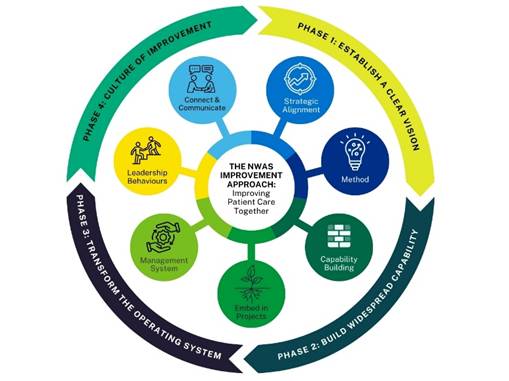
Improvement at its core is about learning, adapting, and finding better ways to deliver the services our patients and communities rely on. It is rooted in curiosity, collaboration, and a willingness to really understand the complexity of problems, test ideas on a small scale and use data to guide decisions and understand what works. Most importantly, improvement is about engaging with colleagues closest to the work and the patients, families, and communities who experience our services first hand.
We use the Institute for Healthcare Improvement’s (IHI) Model for Improvement as the core improvement approach. This is further enhanced by using theories around the psychology of change, systems thinking, measurement for improvement to understand variation and testing changes through plan, do, study, act cycles.
The Model for Improvement asks:
- What are we trying to accomplish?
- How will we know that a change is an improvement?
- What change can we make that will result in an improvement?
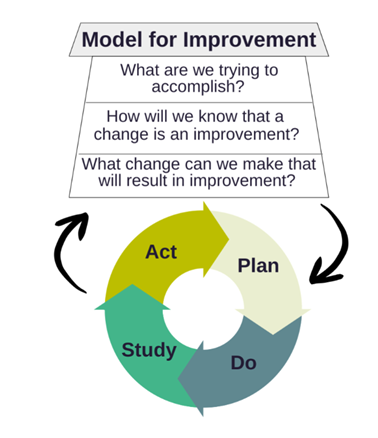
Building improvement capacity and capability
During 25/26 work has been accelerated around developing organisational staff capacity and capability to understand and apply improvement to local delivery areas. We have developed an internal improvement accreditation model which provides a structured pathway for staff to progress from introductory awareness through to skilled application and advanced practice as shown below:

Training offers include:
- Introduction to Improvement: A 20-minute ESR module has been designed and tested in 25/26 to be completed by staff based on the Model for Improvement. This is to be launched in 26/27
- Making a Difference Leading Change Module: Co-designed and delivered with other internal change teams. This training focuses on strategic intent, building a case for change, preparing people for change, leading people through change and embedding and sustaining change.
- Improvement Network: The bi-monthly improvement network has continued to invite individuals and teams to showcase improvement projects they have led or been involved with. The network is supplemented with improvement theory and introduces members to new improvement tools.
- Improvement Foundations: A half day course providing focused improvement training to teams, providing more detailed teaching on the Model for Improvement and Deming’s System of Profound Knowledge.
- Kickstart coaching: A new product launched in 25/26 which provides structured improvement coaching for teams to work through an improvement project.
- Improvement Academy: An annual offer for ten teams attending seven days of classroom teaching across a nine-month period, delivered through a blend of face-to-face and virtual teaching, delivered by the improvement team with the inclusion of external expert speakers. This offer was also run in collaboration with four North West hospital trusts and includes patient and public panel members.
Further bespoke training offers have included master classes with external expert speakers, training for 40 internal staff on the trust’s developing leaders programme and senior managers heads of service programme. To support the delivery of improvement training, extensive resources have been created and shared with staff via an internal continued professional development platform. Work has also been undertaken to build the trust’s organisational improvement brand and promote outcomes of work on professional networking platforms.
Examples of improvement work undertaken in 25/26
Improving cardiac arrest outcomes
Each year over 4,100 people in the North West experience an out of hospital cardiac arrest, with only 32% achieving return of spontaneous circulation (ROSC) on arrival at hospital and around 12% surviving to discharge. Improving outcomes for these patients is a key patient safety priority.
A multidisciplinary team participated in this project to increase ROSC at hospital from a baseline of 50% to 80% by March 2026, focusing on patients aged 18–65 in Greater Manchester presenting in an initial shockable rhythm. Using improvement tools, the team identified barriers to consistently delivering the NHS Chain of Survival. Interventions included a redesigned cardiac arrest training day, and an aide-memoire placed with defibrillators and drug packs.
By February 2026, ROSC for the target group had improved from approximately 50% to 71%. Learning from the project has now been embedded through revised mandatory training, a new monthly ‘Learning from Cardiac Arrests’ panel and roll out of the aide memoire to support continued improvement in survival outcomes.
MAMAS-maternity assessment and management in the ambulance service project
The MAMAs project focused on embedding the Pre-Hospital Maternity Decision Tool into electronic systems to improve the recognition, assessment, and escalation of maternity risk in the pre-hospital setting. This addressed known variation in the management of pregnant and recently pregnant women, where time-critical risk may be difficult to identify and presentations are often unfamiliar to clinicians. Embedding the tool within routine digital workflow aimed to support safer, more consistent decision-making and increase visibility in practice.
Using improvement methodology, the project brought together colleagues from maternity, digital, audit, communications, frontline teams, patient representation, and quality improvement to design, implement, and evaluate the change. Engagement was a key focus, including hands-on sessions with senior paramedics in Cheshire and Merseyside, presenting to over 100 staff at the NWAS International Women’s Day event, and gathering insight from midwives across three North West hospitals.
These insights reinforced the need for accessible expert maternity support, recognising that paramedics may encounter only one maternity case per year on average. The team explored perceptions of clinical autonomy during mandatory training, shared learning through a podcast, and developed a maternity dashboard with the Business Intelligence team to support ongoing use and visibility.
The tool has been successfully embedded into the electronic patient record as a prompting mechanism when pregnancy is selected, supported by staff feedback and patient representative input throughout the project. It is now used in 88.4% of maternity incidents and has contributed to reduced om-scene times, demonstrating measurable improvement in both practice and patient care.
Mental Capacity
‘See me, hear me – why mental capacity matters’ is an improvement project to improve Mental Capacity Assessment (MCA) completion for patients presenting with suicide attempt, intentional self-harm or overdose in the Morecambe Bay sector by March 2026. The project aimed to increase appropriate MCA completion by 50% by 2026. Using staff surveys, targeted audits and CPD training, gaps in confidence and documentation were identified and addressed. Audit compliance improved from 8% to 32%, with trained staff showing over a 50% increase in MCA completion, supporting safer, more consistent practice. The work will continue through ongoing audits, training and planned scale and spread across the trust.
Clinical Supervision
This project aims to improve the experience, effectiveness and recording of clinical supervision for emergency ambulance clinicians. Using staff feedback, process mapping and improvement methodology, the team codesigned and tested a new approach to clinical supervision and clinical leadership contact shifts, supported by a redesigned digital template. The work focused on increasing access, consistency and psychological safety while reducing variation across services. The programme is continuing, with plans to embed learning into business as usual and scale and spread the approach across the trust to ensure sustainable and equitable access to high quality clinical supervision.
Net zero heroes project
The ‘Net Zero Heroes’ team are driving to cut utility use by 20% at Bury and Rochdale ambulance stations by April 2026. The aim of the project is to build environmentally sustainable ambulance stations. The team has been testing a range of improvement ideas. These include a full lighting redesign with the introduction of sensors, dimmers, and banks; switching to solar generation for electricity demand; improving the efficiency of on-site equipment; and multiple behaviour change initiatives. The team is monitoring decreases in electricity and gas use, along with the associated costs and carbon emissions. The project has seen positive outcomes in reducing utility usage. The learning from this project is being built into a change package to support the option for large scale delivery across NWAS.
Information governance improvement project
The Information Governance (IG) team holds a statutory responsibility to investigate data breaches involving sensitive patient or staff information, with high-risk breaches requiring reporting to the Information Commissioner’s Office within 72 hours. At the outset, the team faced significant delays, with investigations taking an average of 26 days and some remaining open for up to 162 days. Communication challenges between the IG team and investigating managers further hindered progress.
Using improvement methodology, including process mapping and “5 Whys” analysis, the team identified root causes and tested changes to improve processes and communication. As a result, the average time to investigate and close a data breach reduced to 14 days, a 46% improvement, exceeding the project aim.
Additional benefits included improved relationships with investigating managers, more effective communication, and greater use of data to support improvement. The team has sustained and spread improvement methods beyond the initial project, embedding continuous improvement into everyday practice.
ECG dots
This improvement project aims to reduce avoidable patient harm caused by skin injuries during the removal of ECG electrodes by September 2026. Local level testing has been undertaken within one sector, focusing on standardising removal practice, improving staff awareness, and testing alternative, less adhesive ECG dots. Early testing has shown that the new electrodes have caused no harm to patients. Using improvement methodology, the work addresses variation in practice and equipment use. The project is ongoing, with plans to scale and spread learning and improvements across the trust.
Local level improvement plans
A pilot project was launched in the Greater Manchester paramedic emergency services (GM PES) area to trial a digitised improvement plan. The aim of the project was to link improvement plans to localised patient safety learning, so the organisation has a single point for the cascade of all clinical learning and improvement. The team tested different methods to engage frontline staff to ensure their insights form part of area learning and improvement discussions. Work was completed to establish a standardised process for triaging items to be discussed at the GM PES Area Learning Forum. The project team worked with DCIQ and the patient safety learning team to test the DCIQ Learning Module and how this will work as a single repository for learning, offering NWAS-wide visibility of learning themes. This step was crucial to understand what improvement work needs to be done. A digitised improvement plan is now being tested to understand the process by which learning is identified, improvement work is scheduled and improvement projects carried out.
Quality aims 26/27
The strategic quality plan for 2026 – 2031 builds on the previous three-year quality strategy. We aim to embed quality improvement and learning by focussing on getting the basic of our care right every time. To do this we will drive improvement through learning, focussing on what is right for the patients we serve across the North West. Our quality aims will strengthen our safety culture, reduce avoidable harm, improve outcomes across major clinical pathways, and embed the patient’s voice and continuous improvement into everyday practice.
Objective 1: Reduce avoidable harm by 30% (notifiable incidents) for our Patient Safety Incident Response Framework (PSIRF) priorities.
To deliver outstanding care for everyone we must identify what contributes to avoidable harm and take steps to address these systematically.
What will success look like?
- We will identify the main contributors to avoidable harm and progress improvement programmes to deliver a sustainable reduction in harm events.
- We will progress the thematic reviews and improvement priorities of the PSRIF Framework to focus early year attention on the priority areas of cardiac arrest, harm related to non-conveyance and pre-hospital maternity and newborn care.
- We will review and improve the organisational approach to infection prevention and control (IPC) including establishing and auditing new cleaning standards.
- We will explore technology options to better support high intensity users.
- We will strengthen safeguarding arrangements for those we serve by inter-agency communication and collaboration and improving recognition and onward referral for those in need.
- We will implement senior leadership walkarounds.
- We will progress the early warning system.
- We will improve tracking and monitoring of medicines using digital solutions to reduce risks in current systems and processes – digital stock pharmacy management system and electronic controlled drugs register.
Objective 2: Improve the effectiveness of care by prioritising improvement activity for patients who experience sub-optimal care because of recognised health inequalities.
Outstanding care is effective care, and the effectiveness of care can be impacted by inequalities in the way the care is delivered or unwarranted variation which may not cause harm but is less effective than it could be.
What will success look like?
- We will review inequalities and outcomes for people with mental health needs, frail people, pregnant women, people with a learning disability and autism, and people living with respiratory or cardiovascular disease.
- We will identify key opportunities in making every contact count and equip our staff with the skills required to do this.
- Following initial scoping of inequalities and outcomes we will identify an appropriate percentage improvement expected from the delivery of remedial activities. This will enable us to monitor the effectiveness of our activity and demonstrate improved outcomes for our patients.
- We will improve our ethnicity capture as per requirements of NHSE ethnicity recording improvement plan.
- We will scope areas of improvement in our activity for patients who experience sub-optimal care because of recognised health inequalities. This scoping will provide insight into any areas of deficit to enable us to prioritise remedial action in a targeted and measurable manner.
Objective 3: We will improve the clinical outcomes for our patients to be in the top quartile of ambulance quality indicators.
Whilst the effectiveness of care can be measured by the outcome of interventions for example resuscitation and the application of standardised pathways or care bundles, there is not a comprehensive set of outcomes by which to measure outstanding care. Therefore, the first requirement will be to scope the measures by which the outcomes of contact, assess and respond elements can be measured.
What will success look like?
- We will adopt and integrate the Advocating and Educating for Quality Improvement (A-EQIP) model for the clinical workforce to ensure all clinicians have regular access to supportive, developmental and restorative supervision.
- We will scope the opportunity for improvement in each of the ambulance quality indicators (AQI).
- We will progress the ‘what good looks like’ dashboard.
- We will explore technology options to better support high intensity users.
- We will redesign the quality assurance and quality control mechanisms to better support improvement.
- We will produce and embed a replacement clinical audit tool that enables us to use learning and insight to enhance clinical effectiveness and improve performance against ACQIs.
- We will complete the rollout of the Defibrillator Replacement Project (Phase 3) to ensure that patients receive effective and reliable care.
Objective 4: We will drive continuous enhancements in patient experience by ensuring the patient voice is central to shaping and improving clinical services, achieving a 5% uplift in experience and embedding meaningful patient involvement across improvement activity.
Outstanding care is characterised by an excellent patient experience, and we know from patient feedback that their experience of our services is impacted by the timeliness of our response but also by the effective and compassionate communication with our staff. To deliver an outstanding experience for everyone we will seek to increase the feedback particularly from hard-to-reach groups and identify specific improvements that will improve how patients experience our care.
What will success look like?
- We will share learning from patient experience, particularly from under-represented groups, working with other teams to inform greater insights.
- We will review the current use of patient feedback by area and service line together with any potential barriers or misperceptions.
- We will design and implement a measurement system to assess the level of patient experience involvement and the timeliness of the involvement.
Formal statements on quality
Review of services
During 25/26 we have provided and/or sub-contracted NHS urgent and emergency care services across the North West. The income generated by the NHS services reviewed represents 100% of the total income generated from the provision of relevant health services by our trust for this period. We have reviewed all the data available on the quality of care in the NHS services provided.
Participation in clinical audits
This year the Clinical Audit team supported by the Project Management Office has procured a new clinical audit tool and are currently working through the implementation of the tool with the intention for this to go live during 26/27. The aim of this tool is to drive efficiencies within the clinical audit team and provide a better oversight of the work undertaken by them and by local clinical leadership teams across the organisation, with the aim of improving clinical care provided to our patients.
Clinical leadership and specialist clinical teams work alongside the Clinical Audit team to produce a yearly locally held clinical audit workplan. Teams such as maternity, medicines and public health have participated in this work, which has enabled a wide variety of local audits to be completed, which has contributed to improvements in clinical care.
Several notable clinical audits were undertaken during the year. This included an audit of care provided to patients with sickle cell disease, the findings of which have informed improvement work to support more direct access to specialist care. This work was also shared in collaboration with the Public Health team during Sickle Cell Awareness Month, through the webinar, “Moments That Matter: Patient and Staff Experiences of Ambulance Care.”
In addition, audits focusing on the care of patients presenting with acute behavioural disturbance and seizures were completed. These audits have supported the Medicines Management team in understanding current clinical practice and ensuring that any decisions regarding the introduction of new medicines or changes to existing medications are informed by evidence‑based practice.
Participation in clinical research
We continue to strengthen our contribution to pre-hospital urgent and emergency care research, demonstrating a sustained commitment to building the evidence base underpinning safe, high-quality care and improved patient experience. Research activity spans a wide range of areas, including clinical trials of emergency care interventions, clinical decision-making, service delivery models, organisational culture and workforce practice.
Research leadership is provided by our research lead, consultant paramedic (Clinical Directorate) and the Research and Development (R&D) team, with executive oversight from the executive medical director. The R&D team ensures that all research activity is delivered in line with NHS research governance frameworks, national regulation and local trust policies, and that National Institute for Health and Care Research (NIHR) activity is delivered to time and target. This work is supported through close collaboration with directorates and teams across the organisation.
The R&D team’s strategic focus is to increase participation in high-quality healthcare research, enhance the visibility and support for research across the organisation, expand research networks and collaborations, and build research capacity and capability. Together, this approach supports the embedding of research as a core component of service delivery within NWAS.
During the year, NIHR funding supported the continuation of senior research fellow and research paramedic roles, enabling wider staff engagement and increased patient participation in research activity. In 25/26, confirmation of capacity and capability and subsequent research approval was granted for ten projects defined as research by the NHS Health Research Authority. Of these, five were NIHR Research Delivery Network (RDN) portfolio studies, with 927 staff and patients recruited into research projects.
For the sixth consecutive year, we exceeded our NIHR RDN recruitment threshold, triggering research capability funding to support strategic development of research capacity and capability. The trust maintained strong partnerships with NIHR RDN North West, local NIHR Applied Research Collaborations, health and care providers and higher education institutions, while also establishing new collaborations. Our colleagues acted as co-applicants on new research bids, supporting the development of a pipeline of future research opportunities.
| Financial Year | 22/23 | 23/24 | 24/25 | 25/26 |
| Number of Studies Open to Recruitment | 10 | 9 | 5 | 5 |
| Number of Participants | 923 | 936 | 1,067 | 927 |
Table 30: Shows NIHR RDN Portfolio Performance at North West Ambulance Service NHS Trust (data cut 01 April 26)
The R&D team remained active contributors to national and regional research networks, including the Association of Ambulance Chief Executives National Ambulance Research Steering Group, the NIHR RDN North West Research Delivery Operations Group, the North West Research Community Group, and national forums hosted by the NHS R&D Forum and the Royal College of Paramedics.
Engagement with staff, patients, the public and the wider research community continued throughout the year. Research opportunities and achievements were shared through multiple communication channels, ensuring visibility of research activity and reinforcing our position as a research-active organisation.
CQC rating
We welcomed the Care Quality Commission (CQC) in 2022 when they carried out a focused inspection of the Lancashire and South Cumbria Integrated Care System (ICS) and Cheshire and Merseyside ICS. The scope of the inspection included the following service lines: emergency and urgent care, emergency operations centre and NHS 111. Whilst this was not a well led inspection, we maintained our ‘Good’ rating.
| Safe | Effective | Caring | Responsive | Well-led | Overall | |
| Provider Wide | Good | Good | Good | Good | Good | Good |
| Emergency and Urgent Care | Good June 2020 | Good June 2020 | Good June 2020 | Outstanding June 2020 | Good June 2020 | Good June 2020 |
| Emergency Operations Centre | Good June 2020 | Good June 2020 | Good June 2020 | Good June 2020 | Good June 2020 | Good June 2020 |
| Resilience | Good Nov 2018 | Good Nov 2018 | Not applicable | Good Nov 2018 | Good Nov 2018 | Good Nov 2018 |
| 111 | Good Jan 2017 | Good Jan 2017 | Good Jan 2017 | Good Jan 2017 | Good Jan 2017 | Good Jan 2017 |
| Patient Transport Service | Good Jan 2017 | Good Jan 2017 | Good Jan 2017 | Good Jan 2017 | Requires improvement Jan 2017 | Good Jan 2017 |
Throughout 25/26, we have continued to hold regular and routine engagement meetings with the CQC, responding to information requests and maintaining open lines of communication.
In parallel, we have proactively adapted and strengthened our internal quality assurance and governance arrangements to align with the CQC’s evolving assessment framework. We will continue to review and refine our assurance processes to ensure they remain aligned with the CQC’s approach as the framework continues to mature and develop.
NHS Oversight Framework
In 25/26, NHS England implemented the NHS Oversight Framework for 25/26, establishing a clear and consistent method for evaluating integrated care boards, NHS trusts, and foundation trusts. The framework promotes transparency and public accountability for performance, while setting out how NHS England work with systems and providers to drive improvement.
It provides a framework for NHS England to oversee systems and providers against a range of metrics, with specific metrics for ambulance services that reflect the 25/26 NHS priorities and the planning guidance for 25/26.
As part of this oversight, each provider receives an individual organisational delivery score which is derived from performance against these metrics and segmented from one to four, benchmarked against the rest of the country. The highest performance score is one and four indicates intervention may be applied or further action is required to address specific concerns. Segmentation data is published by NHS England on a quarterly basis.
During 25/26, the trust was assessed under the NHS Oversight Framework as segment 1 for the entirety of the reporting period, reflecting sustained delivery against national requirements and effective governance arrangements. We were also ranked first nationally in the ambulance oversight league tables, providing further assurance on operational performance and system leadership. In addition, NHS England rated the trust ‘green’ through its provider capability assessments, indicating there is strong leadership, effective governance and the organisational capability required to sustain delivery and manage risk.
Stakeholder feedback
We work in collaboration with all partners and the Quality Account has been shared with our external provider organisations including commissioners, councils, Patient and Public Panel members, Overview and Scrutiny Committee, Healthwatch and neighbouring ambulance services.
Statement from Lancashire and South Cumbria Integrated Care Board
“Lancashire and South Cumbria Integrated Care Board (LSCICB) welcomes the opportunity to review and comment on North West Ambulance Service NHS Trust’s (NWAS) Quality Account for 2025/2026. We recognise the scale and complexity of the services NWAS provides across a diverse region, and we appreciate the Trust’s continued commitment to improving safety, effectiveness and patient experience during a period of sustained operational pressure.
We would like to acknowledge the dedication of NWAS staff and volunteers who continue to deliver care at some of the most critical moments in people’s lives. The Quality Account reflects significant progress in several areas, including strengthened response performance, enhanced digital capability, and continued development of the Integrated Contact Centre model.
We are pleased to note the Trust’s achievements during 2025/26, including:
- Sustained improvement in Category 1 and Category 2 response times, delivering the fastest performance since the pandemic, despite rising demand and hospital handover pressures.
- Expansion of the hear and treat model, now supporting around 17% of patients without dispatching an ambulance, improving resource utilisation and enabling care closer to home.
- Delivery of Phase 3 of the Integrated Contact Centre, integrating 999, NHS 111 and PTS call handling into a single, resilient operating model.Significant investment in frontline capacity, including £17 million funding enabling 1,300 additional ambulance hours per week.Strong patient experience results, with 93% of patients recommending the service and over 92% reporting dignity, compassion and respect.Strengthened safeguarding practice, with over 48,000 referrals and low rejection rates.Advances in digital innovation, including enhancements to command and dispatch systems, new maternity tools within the electronic patient record, and deployment of AI enabled technology.Improved workforce capability, with over 300 colleagues trained in improvement methodology and 93% compliance in mandatory training.
- Progress in reducing violence and aggression towards staff, alongside strengthened staff safety and wellbeing initiatives.
These achievements demonstrate a maturing organisational focus on quality, improvement and resilience.
We welcome the Trust’s continued efforts to strengthen patient and public involvement, including:
- Increased Friends and Family Test responses (24,818)
- Expansion of the Patient and Public Panel
- Broader engagement in service development and improvement activity
The Quality Account highlights meaningful engagement in patient experience, and we recognise the value of the Patient and Public Panel in shaping service design. However, we would welcome further detail on how community insight is influencing safety and clinical effectiveness, particularly for groups experiencing poorer outcomes or barriers to access.
Given the scale of NWAS’s footprint, there is an opportunity to deepen engagement with local communities, including those who may be under represented in traditional feedback routes.
We note the Trust’s continued investment in improvement capability through the Improvement Academy, leadership development programmes, and the introduction of a structured accreditation framework. The embedding of improvement methodology from board to frontline is a positive step, and the Quality Account demonstrates a clear commitment to learning and continuous improvement.
The Trust’s implementation of the Patient Safety Incident Response Framework (PSIRF) is also welcomed, with targeted improvement work in:
- Cardiac arrest
- Clinical assessment and treatment of women during maternity care that is managed outside of Joint Royal Colleges Ambulance Liaison Committee (JRCALC) guideline of trust policy.
- Harm associated with refusal of care without documented consent or capacity assessment
These priorities are appropriate and reflect areas of known risk. We would welcome future reporting on the measurable impact of these programmes, including reductions in avoidable harm and improvements in clinical outcomes.
While the Quality Account provides a comprehensive overview of activity and performance, we would welcome additional focus in future years on:
- Health inequalities, including variation in outcomes across different communities and how NWAS is addressing these through targeted improvement.
- Mental health pathways, given the increasing complexity of presentations and the Trust’s role in crisis response.
- Non conveyance safety and outcomes, particularly as hear and treat and see and treat models expand.Workforce wellbeing and retention, including the impact of violence and aggression and the effectiveness of mitigation measures.
- System flow and hospital handover delays, with clearer articulation of the Trust’s contribution to system wide improvement.
These areas would strengthen the Quality Account’s alignment with national priorities and provide greater assurance on the Trust’s role within the wider urgent and emergency care system.
LSCICB acknowledges the significant progress NWAS has made during 2025/26 and commends the Trust for its continued focus on delivering safe, effective and compassionate care. The Quality Account reflects an organisation that is strengthening its improvement capability, investing in digital innovation, and working collaboratively with partners to improve patient outcomes.
We look forward to continuing to work with NWAS as it delivers its new Quality Strategy for 2026–2031, and we support the Trust’s ambition to reduce avoidable harm, improve clinical outcomes, and enhance patient and community involvement in shaping services.”
Statement from Lancashire County Council Democratic Services
“The Health and Adult Services Scrutiny Committee acknowledged receipt of the request to review the North West Ambulance Service (NWAS) Quality Account for 2025/26.
Whilst the Committee was unable to provide comments on the 2025/26 Quality Account at this time, it confirmed its continued interest in the performance and service delivery of NWAS. The Committee remains committed to maintaining a constructive and ongoing dialogue with the Trust throughout 2026/27 and looks forward to future engagement opportunities to support scrutiny and improvement.”
Statement from Cumberland Council, Health Overview and Scrutiny Committee
A presentation of the Quality Account was delivered, followed by a structured question-and-answer session. Queries regarding NWAS response times in rural areas and learning from Prevention of Future Death (PFD) reports, issued under Regulation 28, were addressed. The presentation was well received.
Statement from North East Ambulance Service NHS Foundation Trust
“Overall the report gives a strong narrative and clearly demonstrates a commitment to quality and improvement.
- Community engagement: There is good, meaningful involvement through the Patient and Public Panel and targeted outreach to diverse groups, with clear examples of feedback influencing improvements (e.g. translated materials, CPR training). Further strengthening the link to clinical outcomes and safety priorities would add value.
- Additional priorities: Consider giving greater prominence to delays and system flow, health inequalities outcomes (not just activity) and data quality/documentation, as these are recurrent themes impacting care.
- Approach to quality improvement: The organisation shows a well embedded and mature approach, with strong use of PSIRF, improvement methodology and capability building. The next step is to more clearly demonstrate sustained impact and outcomes for patients, linking improvement activity to measurable benefits.
It is a comprehensive and credible account; strengthening the focus on impact, inequalities, and system pressures would further enhance it.”
Appendices
Glossary of terms
AACE. The Association of Ambulance Chief Executives provides ambulance services with a central organisation that supports, coordinates and implements nationally agreed policy
APs. Advanced paramedics offer a high level of clinical skills and leadership. They co-ordinate and provide clinical advice for some of the more complex incidents we attend, whilst also being responsible for a team of senior paramedics.
BAF. Board assurance framework is used to record and report an organisational key strategic objectives, risks, controls and assurances to the board.
C1. Category one: An immediate response to a life-threatening condition, such as cardiac or respiratory arrest. Response time to 90% of all incidents is 15 minutes.
C2. Category two: A serious condition, such as stroke or chest pain, which may require rapid assessment and/or urgent transport. Response time to 90% of all incidents is 40 minutes.
C3. Category three: An urgent problem, such as an uncomplicated diabetic issue, which requires treatment and transport to an acute setting. Response time to 90% of all incidents is two hours.
C4. Category four: A non-urgent problem, such as stable clinical cases, which requires transportation to a hospital ward or clinic. Response time to 90% of all incidents is three hours.
Cardiac arrest. A medical condition wherein the heart stops beating effectively, requiring Cardiopulmonary resuscitation (CPR) and sometimes requiring defibrillation.
CEO. Chief Executive Officer.
CFR. A community first responder is a member of the public who volunteers to provide an immediate response and first aid to patients requesting ambulance assistance.
CHUB. The clinical hub is a department within our emergency operations centres that is a multidisciplinary team including clinicians, dispatchers, navigators and managers.
CPR. Cardiopulmonary resuscitation is a lifesaving technique used when someone’s breathing or heart has stopped.
CQC. Care Quality Commission is the independent regulator of all health and social care services in England.
CSTF. NHS Core Skills Training Framework sets out the training approach to statutory and mandatory topics for NHS trusts in England.
DOC. Duty of candour. Every health and care professional must be open and honest with patients and people in their care when something that goes wrong with their treatment or care causes, or has the potential to cause, harm or distress.
DOS. Directory of Services. A comprehensive central directory belonging to each sub-ICB that provides information about healthcare services including emergency departments, urgent treatment centres, GPs, midwives, trauma units, pharmacies.
ED. The emergency department is for serious injuries and life-threatening emergencies.
EPS. Enhanced priority service is a service for PTS patients receiving renal dialysis or cancer treatment.
HALO module. Hospital arrival screens (HAS) are used to show what time an ambulance arrives at hospital; what time a patient handover occurs and what time a vehicle is cleared to attend another job. Since October 2022, hospital arrival screens have a new capability to capture when patient delays occur via the HALO module.
Hear and treat. An incident when a person does not require an ambulance, but a clinician is able to provide treatment and advice over the phone.
ICB. Each Integrated care system (ICS) will have an Integrated Care Board (ICB), a statutory organisation bringing the NHS together locally to improve population health and establish shared strategic priorities within the NHS.
ICC. Integrated contact centres. Our 111, 999, patient transport service (PTS) and clinical hub call-handling services have been brought together as one integrated contact centre.
ICS. Integrated care systems are partnerships between the organisations that meet health and care needs across an area, to coordinate services and to plan in a way that improves population health and reduces inequalities between different groups.
IPC. Infection prevention and control.
JESIP. Joint emergency services interoperability principles (JESIP) established in 2012 is a standard framework used in the UK to ensure that police, fire and ambulance services along with other responders work together effectively during major incidents
JRCALC. Joint Royal Colleges Ambulance Liaison Committee provides gold standard clinical practice guidelines that dictates how patients should be assessed and treated before they reach hospital.
LD&A. Learning Disability & Autism.
MAMAS. Maternity assessment and management in the ambulance service project focuses on the digital embedding of the Pre-Hospital Maternity Decision Tool within NWAS’s electronic systems to improve the recognition, assessment and escalation of maternity risk in the pre-hospital setting.
MEWS. Modified Early Warning Score is a tool which improves the detection.
NHS England. NHS England leads the National Health Service (NHS) in England.
NHS Pathways. NHS Pathways is a clinical tool used for assessing, triaging and directing the public to urgent and emergency care services.
NIHR Applied Research Collaborations. The National Institute for Health Research (NIHR) is the nation’s largest funder of health and care research and provides the people, facilities and technology that enables research to thrive. NIHR Applied Research Collaborations (ARCs) support applied health and care research that responds to and meets, the needs of local populations and local health and care systems.
NWAS. North West Ambulance Service NHS Trust.
Paramedic. A state registered ambulance healthcare professional.
PES. Paramedic emergency service responds to 999 emergency ambulance calls.
PDSA cycles. The Plan-Do-Study-Act cycle is shorthand for testing a change i.e., by planning it, trying it, observing the results and acting on what is learned. This is the scientific method, used for action-oriented learning.
PSIRF. The Patient Safety Incident Response Framework outlines how providers should respond to patient safety incidents and how and when a patient safety investigation should be conducted.
PTS. Patient transport service is a non-emergency transport service that provides for hospital transfers, discharges and outpatients appointments for those patients unable to make their own travel arrangements.
Power BI. Power BI is a collection of software services, apps and connectors that work together to turn your unrelated sources of data into coherent, visually immersive and interactive insights.
PPP. Our Patient and Public Panel consists of volunteers who live in the North West of England and are involved in public and patient engagement activities e.g. responding to surveys, giving feedback on publications, focus groups activities, attending committees or formal meetings.
ROSC – Return of Spontaneous Circulation. It is the return of a normal heartbeat and blood circulation following cardiac arrest, indicating that resuscitation has been successful.
See and convey ED. Any patient conveyed to a consultant-led emergency department (or if department is not specified) including stroke/PPCI units.
See and treat. An incident with face-to-face response, but no patient conveyed including patient refusal, deceased, or not found, ambulance staff arranged an alternative appointment or follow up visit, or ambulance staff attended and gave clinical advice.
Single Assessment Framework. The Care Quality Commission (CQC) has introduced a new way of assessing health and social care services in England, known as the Single Assessment Framework (SAF).
SJR. Structured judgement reviews are a methodology used for investigations.
SMART programme. Our internal digital and quality improvement programme.
SPTLs. Senior paramedic team leader working as part of a crew or as a solo responder to attend urgent and critical emergency situations in a variety of environments. They use advanced clinical skills and manage a clinical team.
Statistical process control. An analytical technique that plots data over time. It helps us understand variation and in so doing guides us to take the most appropriate action.
STEMI. ST segment elevation myocardial infarction is a heart attack that involves a total blockage in a coronary artery. This specific pattern is displayed during an ECG.
UEC – Urgent and emergency care. NHS services that provide immediate treatment for people with serious or potentially life-threatening conditions, as well as urgent health issues that need prompt attention but are not life-threatening.
UCS – Urgent care service. Part of the paramedic emergency service, providing responses to lower acuity calls and delivering care for non-life-threatening conditions.
Utstein. The framework used to define and report on cardiac arrest survival data.
Research publications 25/26
In the financial year 25/26 (data cut 21 Feb 2026), there were 15 peer reviewed research publications by authors affiliated with NWAS as listed in the Ambulance Research Repository, AMBER, which is managed by the Library and Knowledge Service for NHS Ambulance Services in England. All publications are available online:
Al-Mubarak, A., Ahilan, B., Dasgupta, T., Silverio, S. A., Mistry, H. D., Al-Harbi, L., Aldakhail, J., Heys, S., von Dadelszen, P., and Magee, L. A. (2025). The Impact of Culture on Access to and Utilisation of Maternity Care Amongst Muslim Women in High-Income Countries: A Qualitative Systematic Review. BJOG: an international journal of obstetrics and gynaecology, 132(13), 1996-2008. Available at https://doi.org/10.1111/1471-0528.18290
Alqurashi, N., Bell, S., Alzahrani, A., Lecky, F., Wibberley, C., and Body, R. (2025). Current challenges and future opportunities in on-scene prehospital triage of traumatic brain injury patients: A qualitative study in the UK. Injury, 56(5), 112203. Available at: https://doi.org/10.1016/j.injury.2025.112203
Bell, S. (2025). Simulation-based assessment in the context of paramedic education: A scoping review. The clinical teacher, 22(1), e13834. Available at: https://doi.org/10.1111/tct.13834
Bower, P., Soiland-Reyes, C., Bennett, C., Brunton, L., Burch, P., Cameron, E., Chandola, T., Chatzi, G., Cotterill, S., French, D. P., Gellatly, J., Hann, M., Hawkes, R., Heller, S., Holland, F., Howarth, E., Howells, K., Kontopantelis, E., Lowndes, E., Marsden, A., Mason, T., McManus, E., Meacock, R., Miles. L., Mistry , M., Murray, E., Parkinson, B., Ravindrarajah, R., Reeves, D., Ross, J., Sanders, C., Stokes, J., Wallworth, H., Watkinson, R., Wattal, V., Whittaker, W., Wilson, P., Woodham, A., and Sutton, M. (2025). The effectiveness and cost-effectiveness of the NHS Diabetes Prevention Programme (NHS-DPP): the DIPLOMA long-term multimethod assessment. Health and social care delivery research, 13(19), 1-47. Available at: https://doi.org/https://dx.doi.org/10.3310/MWKJ5102
Brown, T. P., Andronis, L., El-Banna, A., Leung, B. K., Arvanitis, T., Deakin, C., Siriwardena, A. N., Long, J., Clegg, G., Brooks, S., Chan, T. C., Irving, S., Walker, L., Mortimer, C., Igbodo, S., & Perkins, G. D. (2025). Optimisation of the deployment of automated external defibrillators in public places in England. Health and social care delivery research, 13(5), 1-179. Available at: https://doi.org/10.3310/HTBT7685
Couper, K., Ji, C., Deakin, C. D., Fothergill, R. T., Nolan, J. P., Long, J. B., Mason, J. M., Michelet, F., Norman, C., Nwankwo, H., Quinn, T., Slowther, A.-M., Smyth, M. A., Starr, K. R., Walker, A., Wood, S., Bell, S., Bradley, G., Brown, M., Brown, S., Burrow, E., Charlton, K., Claxton, A. Dra’gon, V., Evans, C., Falloon, J., Foster, T., Kearney, J., Lang, N., Limmer, M., Mellett-Smith, A., Miller, J., Mills, M., Osborne, R., Rees, N., Spaight, R.E.S., Squires, G.L., Tibbetts, B., Waddington, M., Whitley, G.A., Wiles, J.V., Williams, J., Wiltshire, S., Wright, A., Lall, R., and Perkins, G.D (2025). A Randomized Trial of Drug Route in Out-of-Hospital Cardiac Arrest. The New England journal of medicine, 392(4), 336-348. Available at: https://doi.org/10.1056/NEJMoa2407780
Fahmi, A., Yang, Y.-T., Zhong, X., Pate, A., Sharma, A., Watts, S., Ashcroft, D. M., Goldacre, B., MacKenna, B., Massey, J., Mehrkar, A., Bacon, S., McMillan, B., Dark, P., Hand, K., Palin, V., & van Staa, T. P. (2025). Antibiotics for common infections in primary care before, during and after the COVID-19 pandemic: cohort study of extent of prescribing based on risks of infection-related hospital admissions. Journal of the Royal Society of Medicine, 118(4), 126-137. Available at: https://doi.org/10.1177/01410768251328997
French, M., Waddington, M., Dixon, P., Potts, K., Igbodo, S., Simpson, J., & Preston, N. (2025). Deprivation is associated with hospital conveyance among patients who are terminally ill. Emergency Medicine Journal (EMJ), 42(9), 565-571. Available at: https://doi.org/10.1136/emermed-2023-213742
Galdas, P., Bailey, D., Bell, S., Bosanquet, K., Chew-Graham, C., Ekers, D., Gilbody, S., Littlewood, E., Mawhinney, M., Stevens, H., Webb, K., & McMillan, D. (2025). Behavioural activation for low mood and anxiety in male frontline NHS workers (BALM): a pre-post intervention study. BMJ open, 15(6), e094214. Available at: https://doi.org/10.1136/bmjopen-2024-094214
Gilman, J., Abdulrhman, A., Hann, M., Carlton, E., Cooper, J.G., Cook, E., Siriwardena, A.N., Phillips, J., Thompson, A., Bell, S., Kirby, K., Rosser, A., and Body, R. (2026). Diagnostic Accuracy of a Novel Point of Care High-Sensitivity Troponin Assay in the Prehospital Environment. Academic Emergency Medicine, 33(1): 1-9. Available at https://onlinelibrary.wiley.com/doi/10.1111/acem.70213
Heys, S., Pegler, D., Elahi, A., Heazell, A. E. P., Watson, K., Hope, H., Fullwood, C., and Soltani, H. (2025). Disparities in Access to the Northwest Ambulance Service during pregnancy, birth and postpartum period and its association with neonatal and maternal outcomes [DiAAS]: a retrospective cohort study and qualitative framework analysis. In BMC Pregnancy & Childbirth (Vol. 25, pp. 1-7). Available at: https://pmc.ncbi.nlm.nih.gov/articles/PMC12535044/
Heys, S., Rhind, S., Main, C., & Pegler, D. (2025). Rethinking early warning scores. British Journal of Midwifery, 33(8), 463-465. Available at: https://doi.org/10.12968/bjom.2025.0064
Holland, M., & Rawson, B. (2025). Understanding how and why users might use NHS repositories: A mixed methods study. Health Information and Libraries Journal, 42(4), 456-466. Available at: https://doi.org/10.1111/hir.12566
Lunn, J., Brennan, L., Brewster, L., Hindocha, A., Patel, P., Stowell, C., & Isba, R. (2025). Burnout and staff experiences of health inequalities in children’s hospitals: a qualitative analysis. BMJ open, 15(2), e095418. Available at: https://doi.org/10.1136/bmjopen-2024-095418
Weeks, J., Bell, S., Nelson, T., & Tyrrell-Marsh, I. (2025). Estimated caseload for a rotary wing prehospital extra-corporeal cardio-pulmonary resuscitation service in North West England: A retrospective eligibility study. Resuscitation plus, 23, 100948. https://doi.org/10.1016/j.resplu.2025.100948
Contact details
If you have any questions or concerns after reading this report, please contact us via e-mail: [email protected]
Should you wish to access any of our publications mentioned in this Quality Account, they can be accessed on our website at: www.nwas.nhs.uk