



Reducing health inequalities
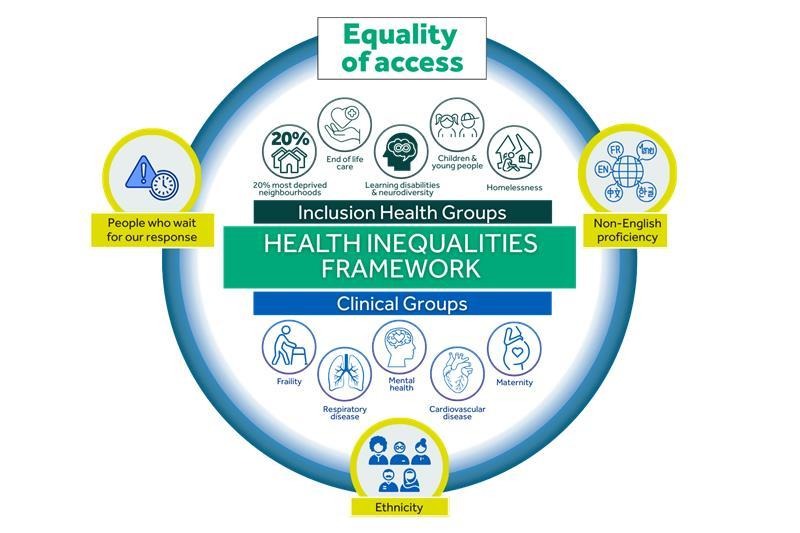
Our Health Inequalities Framework explains where we think we can make the biggest difference. It’s based on evidence, data and conversations with the people we serve and work with.
The framework follows the Core20PLUS5 principles and presents the vulnerable groups for targeted and coordinated action:
- Equality of access
The ambulance service is the access point for urgent, emergency and planned care, and we need to ensure that our population feels safe to access our care and there are no barriers (such as communication difficulties) which might affect the quality of service we provide.
- Clinical groups
Aligned to Core20PLUS5, ICB priorities across our region, and our top-demand reasons – frailty, respiratory disease, mental health, cardiovascular disease and maternity. These are the clinical areas where we feel we can have the most impact on health inequality over the period of this strategy.
- Inclusion health groups
Identifying unwarranted variation and working with our system partners on initiatives which support patients living in areas of highest deprivation, calling us with end-of-life care needs, patients with learning disabilities and neurodiversity, children and young people, and patients facing homelessness.
- Culturally aware care and patient experience
We need to ensure that our people are confident and competent to deal sensitively with the individual needs of their patients. We will also actively engage with our patients to listen and learn from their experiences.
Importantly, we need to continue to work in collaboration with our system partners to achieve these.
Core20PLUS5 is a national NHS England approach to inform action to reduce healthcare inequalities at both national and system level. The approach defines a target population – the ‘Core20PLUS’ – and identifies ‘5’ focus clinical areas requiring accelerated improvement.