



Building an inclusive culture
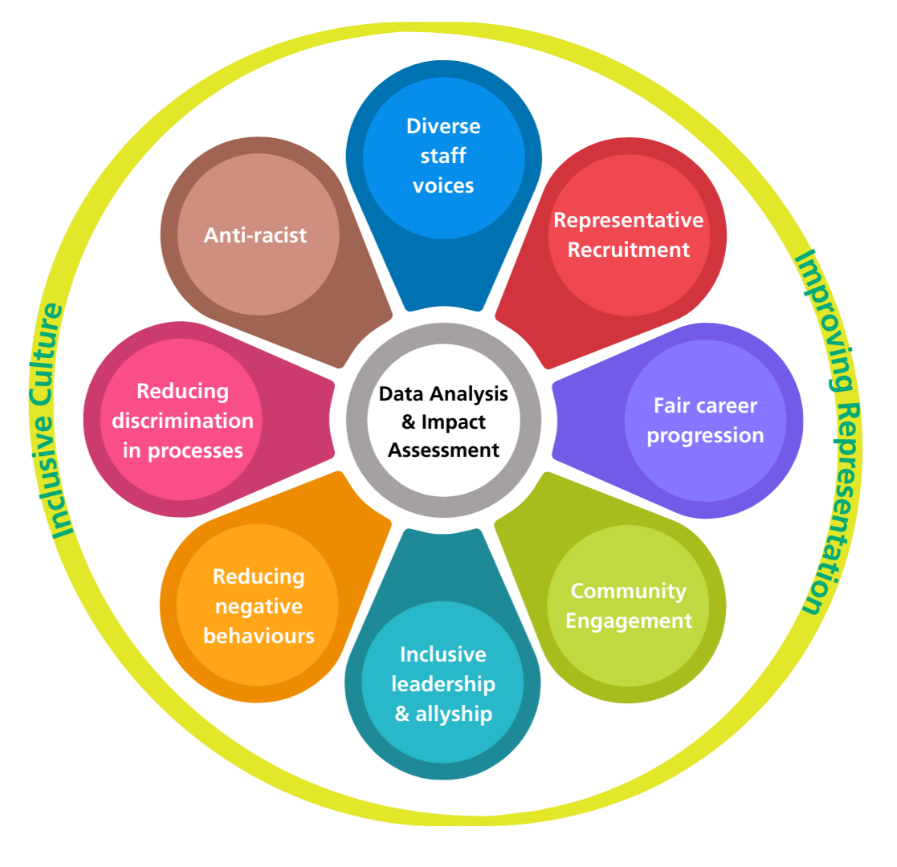
Creating a truly inclusive culture for our workforce is critical to delivering high-quality, inclusive care and improving health inequalities. This core theme identifies two underpinning priorities for improvement: improving representation and inclusive culture.
Core to delivering improvements in these areas is the effective capture and analysis of diverse data, and the use of impact assessment tools to identify and eliminate inequality. These principles and tools will underpin our approach across all our strategic plans.
Improving representation
To deliver high-quality, inclusive care, we need a workforce which reflects the diversity of our population at all levels. This enhances the diversity and creativity of our thinking, helps us to deliver social value and improves the life opportunities for our communities.
Our data show that our workforce differs from our community profile, particularly by race, and that staff from diverse backgrounds and genders are under-represented in leadership positions. Our recruitment processes often undervalue diversity, and our people feel career progression is unfair.
Our priorities in this area are therefore:
- Representative recruitment
Improving the attraction of diverse groups, eliminating discrimination in our recruitment processes, and taking positive action to improve representation.
- Fair career progression
Improving development opportunities for all; ensuring our processes for career progression are fair and equitable; removing barriers to progression; increasing flexibility in leadership roles.
- Community engagement
Actively promoting careers within our communities; creating employment opportunities for under-represented groups.
Inclusive culture

Our aim is to develop an environment where diversity is truly valued. We recognise that discrimination exists in society, in our workplaces and in healthcare. Our commitment is to take proactive steps to address inequalities. The creation of an inclusive culture where everyone can thrive is a shared responsibility at NWAS.
Our data currently tells us that the experiences of our staff with different protected characteristics (such as age, gender, disability and sexual orientation) is different. Exposure to negative experiences such as bullying, harassment, discrimination or sexual misconduct remains too high. Turnover in some groups is higher than the average. Entry into management processes such as discipline and performance management is higher for people from ethnic minority backgrounds and disabled staff. This leaves some of our people feeling under-valued and unfairly treated. They cannot give their best to patients unless the culture and environment support them and value them.
Our priorities in this area are therefore:
- Inclusive leadership and allyship
Our leaders should be visible role models for inclusion and act as positive allies. Inclusion needs to be at the heart of our leadership development, building confidence and competence to support their diverse teams. We also need to hold our leaders to account for the environments they create.
- Reducing negative behaviours
We will continue to build confidence in speaking up; taking positive action to address negative behaviours such as bullying and harassment; sexual safety and discrimination.
- Reducing discrimination in processes
We will actively measure the differing impacts of our processes and take steps to address inequalities which are identified.
- Anti-racist
We aim to bring our anti-racism statement to life. To confront racism in any form. To actively identify, challenge and change policies, systems, attitudes and beliefs that perpetuate racist ideas and actions.
- Diverse staff voices
We will engage our staff in change and the decisions that affect them; ensuring that the voices of all groups are actively sought out and that our staff networks are vibrant and supported.
Back Next